
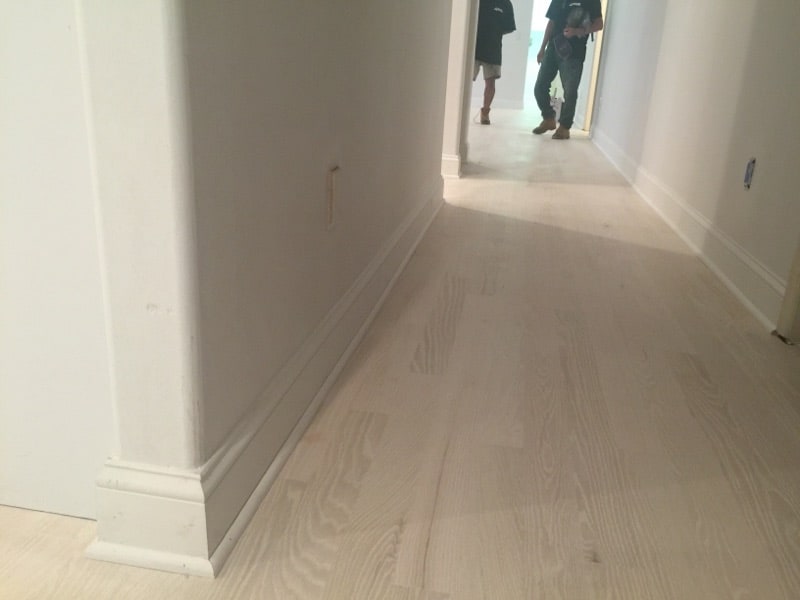
You’ve already done the hard part — you found a few contractors, got some quotes, and you’re trying to figure out who’s actually worth hiring. That’s exactly where most people get tripped up. Not because they’re making careless decisions, but because stair and railing work has a few specific ways it can go sideways that aren’t obvious until you’re already mid-project.
Nassau County homes — a lot of them built in the postwar era and now well past the 50-year mark — come with their own set of quirks when it comes to staircases. The original railings in homes across Levittown, Great Neck, and Freeport were built to different standards than today’s code requires. Here’s what to watch for before you commit to anyone.
What Stairs and Railings Contractors Should Tell You Before You Sign Anything
The conversation you have before a contract is signed tells you more than the contract itself. Most homeowners focus on price, which makes sense — but price is actually one of the last things worth comparing if you haven’t asked the right questions first.
Two quotes can look similar on paper and represent completely different levels of service, accountability, and finished quality. The three red flags below aren’t about price. They’re about how a contractor operates — and once you know what to look for, they’re not hard to spot.
Red Flag #1: They Can’t Tell You Who’s Actually Doing the Work
This is the one most homeowners never think to ask about. You call a flooring company, you meet with someone from that company, and you reasonably assume the crew that shows up to do your stair railing is also from that company. That assumption is wrong more often than you’d expect.
A lot of flooring contractors quietly hand off stair and railing work to a separate subcontractor — someone you’ve never met, whose work you can’t vet, and who has no direct relationship with you as the homeowner. When it goes smoothly, you might not even notice. When it doesn’t — when the finish doesn’t match your floors, when something is installed incorrectly, when the timeline slips — you’re suddenly stuck between two parties who are each pointing at the other.
The question to ask is simple: “Does your own team do the railing installation, or do you use a subcontractor for that?” A contractor who does the work themselves will answer that directly and confidently. One who hedges, changes the subject, or gives you a vague answer about “our network of professionals” is telling you something important.
This matters even more when you’re doing a combined floors and stairs project. If two different crews are working from two different standards, the results will look like it. The stain won’t sit the same way. The sheen won’t match. The transition between your floor and your treads will feel slightly off in a way that’s hard to name but impossible to unsee.
The only way to get a seamless result is to have one team that understands both surfaces and is accountable for both. At KO Floors, Inc., our own trained team handles every part of the job — floor installation, refinishing, stair treads, and railing work. That’s not a small thing. It’s the difference between a project that looks cohesive and one that looks like two separate contractors tried to meet in the middle.
Red Flag #2: The Estimate Is Vague and the Scope Isn’t Written Down
Stair railing projects have a lot of moving parts — the number of balusters, the condition of the existing newel posts, whether the treads need refinishing or full replacement, the type of finish, and whether a permit is required. A legitimate estimate accounts for all of that. A vague estimate doesn’t, and the gap between what’s written and what the project actually requires is where surprise charges live.
There’s a pattern that shows up repeatedly in homeowner complaints about contractor work: a low initial number gets the contract signed, and then the charges start accumulating once the work is underway. “That wasn’t included in the quote.” “We didn’t realize the newel post needed to be replaced.” “Reinstalling the railing is a separate line item.” By that point, you’re already committed — your staircase is partially disassembled and you don’t have a lot of leverage.
When you don’t know what something should cost, you don’t know if you’re being quoted fairly. That uncertainty is exactly what a vague estimate exploits.
What a legitimate estimate should include: a clear description of the scope, materials specified by type and finish, labor broken out separately, and an honest answer about whether a permit is needed. In Nassau County, home improvement work — including stair and railing installation — may require a permit depending on scope.
A contractor who doesn’t mention permits at all during the estimate process is either not thinking about it or actively avoiding it. Neither is a good sign. Ask for the estimate in writing. Ask what’s not included. Ask what would cause the price to change. If a contractor can’t answer those questions clearly, that’s your answer.
Staircase Railing Contractor Questions Nassau County Homeowners Should Always Ask
Beyond the two red flags above, there’s a third one that tends to surface later in the process — sometimes not until the home inspection before a sale. Nassau County’s housing stock skews older.
A lot of homes in communities like Levittown, North New Hyde Park, and Freeport were built in the 1950s and 1960s, and their original railings have been there ever since. That’s not necessarily a problem — well-maintained wood railings can last a long time. But original railings from that era frequently don’t meet current New York State building code, and a contractor who doesn’t bring this up is leaving you exposed.
Red Flag #3: No One Mentioned Building Code — Not Once
New York State’s residential building code has specific requirements for stair railings. Guardrails need to be a minimum of 34 to 36 inches high, measured from the stair tread. The spacing between balusters has to be tight enough that a 4 3/8-inch sphere can’t pass through — that’s a child safety requirement. And the railing structure itself has to be able to withstand a 200-pound point load at any location along its length.
Handrails on stairs must also be continuous across four or more risers, staying within a height range of 34 to 38 inches. These aren’t obscure technicalities. They’re the standard that every licensed contractor working in Nassau County is expected to know and follow.
If a contractor gives you an estimate for railing installation and never once mentions code compliance, permits, or inspections, that’s a red flag — not because the work will definitely be wrong, but because it suggests they’re not thinking through the full picture of what the job requires.
This becomes a real problem at home sale. Nassau County home inspectors routinely flag railings that don’t meet current code — loose handrails, balusters spaced too far apart, rails that are too low. If unpermitted work was done on your staircase, that can complicate the sale and cost you more to remediate than it would have cost to do it right the first time.
The question to ask: “Will this work require a permit, and if so, will you handle pulling it?” A contractor who knows what they’re doing will give you a straight answer. They’ll tell you whether the scope triggers a permit requirement in Nassau County, and if it does, they’ll build that into the process — not treat it as your problem to figure out.
How to Know If a Staircase Railing Contractor Is Actually Licensed in Nassau County
Nassau County requires home improvement contractors to hold a Nassau County Home Improvement Contractor license, administered through the Nassau County Office of Consumer Affairs. This isn’t optional. A contractor performing railing installation or replacement in Nassau County without that license is operating outside the law — and if something goes wrong, you have significantly less recourse.
The way to verify this is straightforward: ask for the license number before you sign anything. A licensed contractor will have it ready. If someone gets defensive, changes the subject, or tells you it’s “not necessary for this type of work,” walk away.
Insurance matters too. Contractors are required to carry general liability insurance and workers’ compensation. If a worker is injured on your property and the contractor doesn’t have proper coverage, you can be held liable. This is especially worth checking when a company is using subcontractors, because coverage gaps are more common in those arrangements.
Beyond licensing and insurance, the other thing worth verifying is whether the contractor has a real track record in Nassau County specifically — not just Long Island in general. Contractors who work regularly in Nassau County know the local permit process, know what inspectors look for, and have relationships with suppliers who stock materials appropriate for the area’s housing stock. That local familiarity isn’t something you can fake, and it shows in how confidently they answer your questions.
We’ve been working in Nassau County communities — Great Neck, Roslyn, Plandome Heights, North New Hyde Park — for years. When a homeowner in this area calls us about stair railing work, we’re not figuring it out as we go. We know what the homes here look like, what the original construction typically involves, and what it takes to bring an aging railing up to current code without losing the character of the house.
How to Choose a Staircase Railing Contractor You Can Actually Trust
The three things worth checking before you hire anyone: find out if their own team does the work, get the scope in writing with nothing left vague, and make sure code compliance and permits are part of the conversation from the start. None of those questions are unreasonable. Any contractor worth hiring will answer them without hesitation.
Nassau County homes deserve work done by someone who understands them — the age of the construction, the local permit process, and what it actually takes to match new railing work to existing hardwood floors so the finished result looks intentional, not patched together.
If you’re at the point where you’re comparing contractors and want a straight conversation about what your project actually involves, reach out to KO Floors, Inc. We’ll give you an honest assessment and a clear quote — no pressure, no surprises.