
You’ve seen those wide, warm-toned planks in a showroom or on your phone at midnight, and now you want them under your own feet. Fair enough. European oak flooring on Long Island is beautiful, but it comes with questions the photos never answer. How thick is the top layer? What happens to wide boards when July humidity gives way to dry February heat? Can you sand them again in fifteen years? We install, sand, and refinish hardwood across Nassau and Suffolk Counties, so here’s what we’d want you to know before you spend a dollar. First, what makes this oak its own thing.
What Makes European Oak Different From American White Oak?
European oak is the golden, slightly wavier cousin of American white oak. The color runs warmer, the grain is bolder, and the boards usually come wider and longer—often 7 to 10 inches or more. It also carries more tannin, so oils, smoking, and reactive stains can hit it harder than a sample card suggests.
One thing the glossy photos skip is that both oaks move with humidity. European oak is not a no-movement wood, whatever a sales sheet implies. Wide planks make that movement easier to see, which is why most wide European oak sold today is engineered, with a real oak top layer over a stable core. That construction is also where your long-term options get decided.
How Thick Should the Wear Layer Be on Engineered European Oak?
Engineered doesn’t mean fake. The top layer, called the wear layer, is solid oak. What matters is how much of it you get, because that’s the part a sander cuts into.
A typical refinish removes roughly three-quarters of a millimeter to a millimeter. Wear layers on engineered floors range from about half a millimeter to 6 millimeters. The practical line for refinishing sits at 3 millimeters or thicker, and even then you can expect two or three refinishes over the life of the floor. A 3/4-inch solid floor, by comparison, can be sanded around ten times.
Do the math and the pattern shows up fast. A thin layer might give you one tired-looking floor you can’t fix. A 4 to 6 millimeter layer can be refinished many times, and the thickest ones start to approach solid wood.
That’s why the best question you can ask any salesperson or installer is also the simplest: what’s the wear layer thickness in millimeters? Ask it before the deposit, not after. Product listings usually carry the number, and a good installer will look it up with you.
We bring this up because we think about the day you’ll want the floor to look new again. Traffic paths dull in front of the kitchen sink and the dining table, and the finish wears. Since we both install and refinish, we have no reason to steer you toward a floor that turns into a dead end. If a thinner board is the right fit for your budget or your slab, we’ll tell you plainly what that means for refinishing later, so it’s a decision you made and not a surprise.
How Long Island’s Humidity Swings Affect Wide-Plank European Oak
Long Island gives a floor two very different indoor climates. In July, with humid air outside and the AC running, indoor humidity can climb to 60 or 70 percent. By February, heated air can pull it down to 25 to 35 percent or lower. The National Wood Flooring Association recommends keeping a wood floor between 35 and 55 percent for its whole life.
Wood answers to that swing. Dry winters show up as gaps between boards, and humid summers can show up as cupping or crowning. Wide planks feel it more. For wide-plank flooring, the moisture difference between subfloor and flooring should stay within about 2 percent, versus about 4 percent for narrower strip flooring. That’s a tight tolerance, and it’s why acclimating the material and checking moisture before anything gets nailed down isn’t optional.
Engineered construction helps. Engineered floors move roughly 50 to 70 percent less than solid and typically need 1 to 3 days of acclimation, versus 3 to 7 for solid. It’s also why we steer people away from solid hardwood in basements, and why concrete slabs need moisture testing before any wood goes over them.
A few local habits matter too. Keeping winter humidity from sliding far below that 35 percent line does more for gapping than any product label. Near the water on Long Island, beach sand and wet boots do more damage than foot traffic, so a good mat and a defined spot at the door protect a floor better than a harder species ever will.
Refinish or Replace: Should You Restore Your Long Island Hardwood First?
Before you price new European oak, look down. Plenty of Long Island homes, especially the 1950s and 60s Capes and ranches around Nassau County, have original red oak sitting under carpet, and it can often be saved.
Refinishing is usually the cheaper path when the boards qualify. It can save 50 to 75 percent compared with replacement, and refinishing costs typically run $3 to $8 per square foot. New wide-plank European oak makes sense when the old floor is too thin or damaged, or when you’re changing the layout. Neither answer fits every house, which is why we look at both before we recommend one.
How Do You Know If Your Hardwood Floors Can Be Refinished or Need Replacing?
Start with the boards themselves. Solid hardwood that hasn’t been sanded much usually has plenty of life left. Floors that have been sanded several times, or that show nail heads near the surface, are running low. Water damage, dark staining, or badly cupped boards are a different story, and finishing over an active moisture problem only buries it.
Refinishing is also more than a quick buff. It means sanding, checking moisture, choosing a stain and a finish, and deciding between water-based and oil-based. We bring samples and past projects to your home, and we put stain samples right on your floor so you see the color in your own light before we commit the whole room. A swatch under showroom lighting tells you very little about how a tone will read in your living room.
Then there’s the matching question nobody warns you about. If you’re adding European oak in a new kitchen or open-plan space and the hallway is older red oak, the two won’t look alike, and the doorway, threshold, or staircase between them becomes a design decision. Sometimes the answer is refinishing everything to one color. Sometimes it’s a clean break at a threshold. Stairs are a common source of surprise costs, so we’d rather they come up in the estimate than halfway through the job.
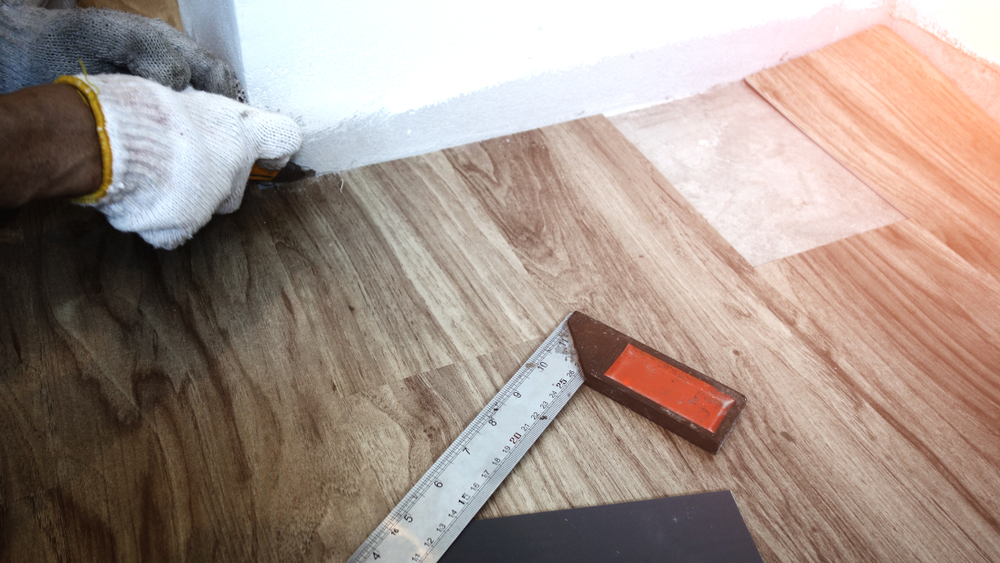
We’ve also done the bigger version of this. One customer had vinyl laid over vinyl and plywood in a kitchen and dining area. We pulled it all up, leveled the subfloor, and laid new oak. Whatever your situation, the honest answer to “can this be refinished?” should come from someone standing on your floor, not from a phone call.
What Should You Ask a Hardwood Floor Contractor in Nassau or Suffolk County?
Once you know what you want, the next question is who. On Long Island, start with the license. Nassau County requires a home improvement contractor license through its consumer affairs office, and Suffolk County has its own. They’re separate from each other and from state credentials, so whether your house is in Lawrence or Kings Park, ask to see the license and check it. Ask about insurance too. Liability and workers’ compensation certificates should be available on request.
Then get it in writing. A solid estimate spells out the species, stain color, finish, number of coats, timeline, and payment schedule. A deposit, a second payment when materials arrive, and the balance at completion is a common structure, and full payment up front is a red flag. Be careful with the lowest bid, too. A full sand and refinish under $2 to $3 per square foot is a warning sign, because the savings usually come out of prep.
The worry we hear most about floor work is a job that drags on. So ask for start and finish dates, and ask what happens if the schedule slips.
Here’s how we run ours. We start with a real conversation about what you want. We bring samples and past work to your home, test color on your actual floor, and move your furniture out and back when the job is done. We’re family-run, and customers tell us the quick replies matter as much as the finished floor. We work in homes and in businesses, including restaurants in Huntington, so tight timelines aren’t new to us. Ask us everything on this list. You should ask anyone you’re considering.
Planning European Oak Flooring on Long Island? Start With a Free Estimate
European oak can be a great floor for a Long Island home, as long as you go in with open eyes. Ask for the wear layer in millimeters, plan for the swing between humid summers and dry winters, and look at what’s already under your feet before you replace it. Then make sure your contractor is licensed for your county and puts the scope, timeline, and payments in writing.
If you’d like a second set of eyes on your floors or your plans, KO Floors, Inc. is happy to take a look. We’ll talk through what you want, show you samples on your own floor, and tell you straight whether new European oak or a refinish makes more sense for your home in Nassau or Suffolk County.