
You’ve done some research. Maybe you’ve walked the flooring aisle at Home Depot, looked at LVP samples, and thought — this seems fine, it’s cheaper, and it’s waterproof. Why spend more?
That’s a completely reasonable place to be. And honestly, for some rooms in your home, LVP might be the right call. But for a lot of Nassau County homes — especially the Cape Cods, colonials, and split-levels built between the 1940s and 1970s that make up so much of the county’s housing stock — the decision is more nuanced than the big-box display makes it seem.
Here’s the honest breakdown.
What You’re Actually Comparing: Engineered Hardwood vs. Luxury Vinyl Plank
The most important thing to understand is what these two products actually are.
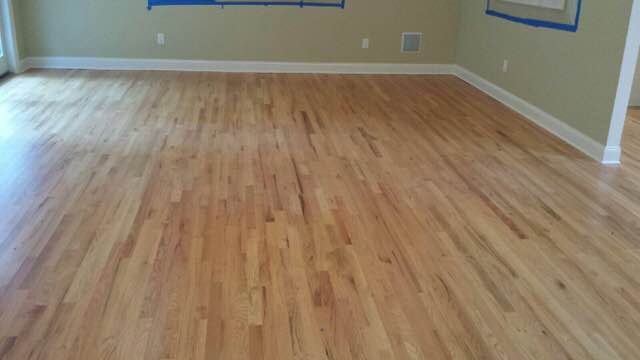
Engineered hardwood is real wood. The surface layer — called the wear layer or veneer — is genuine hardwood, typically oak, maple, hickory, or walnut. Underneath it is a multi-ply plywood core that gives the floor its dimensional stability. What you’re walking on is real wood, with real grain variation, real depth, and a surface that can be sanded and refinished when it eventually shows wear.
LVP — luxury vinyl plank — is a synthetic product. It has a photographic print layer that mimics wood, protected by a clear wear layer on top. Modern LVP looks remarkably good. But the surface is a photograph of wood, not wood itself. That distinction matters more than it might seem, especially in Nassau County’s real estate market, where buyers can tell the difference and appraisers factor it in.
The Refinishing Question: Why Wear Layer Thickness Actually Matters
This is where the comparison gets interesting — and where a lot of homeowners get incomplete information.
LVP cannot be refinished. When the surface wears down, you replace it. Most quality LVP carries a lifespan of roughly 15 to 25 years. After that, you’re pulling it up and starting over.
Engineered hardwood, on the other hand, can be refinished — but only if the wear layer is thick enough. A wear layer of at least 2mm is the minimum required for refinishing; 4mm or more gives you the best results and allows for two to four full refinishing cycles over the floor’s life. Each refinishing adds years of life and lets you change the stain color if your tastes or your home’s style evolves. Over a 30 to 40 year horizon, that’s a significant advantage.
Here’s where Nassau County homeowners need to pay close attention: a lot of the engineered hardwood products on display at big-box stores have thin wear layers — sometimes less than 2mm — which means they can’t actually be refinished at all. You’d be paying more than LVP for a product that behaves like LVP when it comes to longevity. The difference between quality engineered hardwood and budget engineered hardwood isn’t always visible on the surface. It’s in the veneer thickness and the core construction — details that matter enormously over the life of the floor.
We help Nassau County homeowners understand what they’re actually buying, not just what’s on the sample board. A floor that costs more upfront but can be refinished twice over 40 years is a fundamentally different investment than one that needs full replacement in 20.
Where Each Floor Actually Belongs in Your Home
The honest answer to the engineered hardwood versus LVP debate is often: both, depending on the room.
LVP is genuinely the better choice in high-moisture environments. Kitchens, bathrooms, basements, laundry rooms — anywhere water exposure is a real daily possibility, LVP’s fully waterproof construction is a meaningful advantage. Engineered hardwood handles humidity better than solid hardwood because of its plywood core, but it’s not waterproof. A flooded basement or a slow leak under a dishwasher can damage it in ways LVP would shrug off.
Engineered hardwood is the right choice for living rooms, dining rooms, bedrooms, hallways, and any above-grade space where aesthetics and long-term value matter. In Nassau County’s housing market — where homes regularly transact at prices that make every renovation decision financially meaningful — the floor in your main living areas is not just a cosmetic choice. It’s part of what buyers see, feel, and factor into what they’re willing to pay.
There’s also a scenario that comes up constantly in Nassau County homes that doesn’t get enough attention: older homes with original hardwood floors buried under carpet or vinyl. If your home was built between the 1940s and 1970s, there’s a real chance you have original red or white oak hardwood underneath whatever’s currently on the floor. Uncovering and refinishing that original floor, or installing new engineered hardwood that matches it in adjacent rooms, is a completely different situation than starting from scratch — and it’s one that requires an experienced eye, not a big-box sample kit.
Engineered Hardwood Flooring Installation in Nassau County: The Process and What It Requires
Installation method matters more than most homeowners realize. Engineered hardwood can be installed three ways: floating (click-lock), glue-down, or nail and staple-down. Each method has different subfloor requirements, and the right choice depends on what’s underneath your existing floor, the moisture conditions in the space, and the specific product being installed.
Solid hardwood, by contrast, generally has to be nailed down — which limits where it can go and how it can be installed. LVP is primarily a floating installation. Engineered hardwood’s flexibility is a genuine practical advantage, particularly in Nassau County homes where subfloor conditions vary widely depending on the age and construction of the house.
Subfloor Preparation: Why It Determines Everything That Comes After
A flooring installation is only as good as what’s underneath it. This is where the difference between an experienced installer and a rushed one shows up — not in the wood itself, but in the prep work that happens before a single plank goes down.
Subfloor preparation for engineered hardwood installation includes checking for levelness, addressing any soft spots or structural issues, and — critically — testing moisture content. For concrete subfloors, industry standards call for a moisture content of 6 to 12 percent before engineered hardwood can be safely installed. Skip that step, and you’re setting the floor up for problems: cupping, gapping, squeaking, and in serious cases, adhesive failure.
Nassau County’s climate adds a layer of complexity here. Long Island’s summers are hot and humid, and its winters are cold and dry. That seasonal swing — amplified in coastal communities like Long Beach, Atlantic Beach, and Oceanside — means wood floors expand and contract throughout the year. Engineered hardwood’s cross-ply plywood core is specifically designed to handle this better than solid hardwood, but proper installation still matters. Expansion gaps around the perimeter of the room, correct underlayment, and acclimating the wood to the home’s environment before installation are all steps that protect the floor’s long-term performance.
Our crew at KO Floors, Inc. has over 50 years of combined experience working in Nassau County homes of every age and construction type. We’ve seen original subfloors from the 1950s, concrete slabs in converted basements, and everything in between. That experience means we know what to look for before the first plank goes down — and how to handle what we find.
Does Engineered Hardwood Add More Resale Value Than LVP in Nassau County?
This is the question Nassau County homeowners should be asking more often, and the answer is consistently yes — real wood floors, including engineered hardwood, perform better in home sales than LVP or laminate.
Real estate data shows that homes with hardwood floors sell faster and for more money than comparable homes without them. In a market like Nassau County — where Garden City, Manhasset, Great Neck, and Port Washington regularly see home sales well into the high six and seven figures — the flooring in your main living areas is visible to every buyer who walks through the door. Buyers in this market know the difference between engineered hardwood and a photographic print on a vinyl plank. Appraisers factor it in.
The upfront cost difference between engineered hardwood installation and LVP is real — LVP can save $3,000 to $8,000 on a 1,000-square-foot installation compared to mid-range engineered hardwood. But when you factor in LVP’s fixed lifespan of 15 to 25 years, the cost of replacing it when it wears out, and the resale value gap in Nassau County’s competitive market, the lifetime math often shifts in engineered hardwood’s favor.
There’s also the refinishing calculation. Engineered hardwood with a 4mm or thicker wear layer can be sanded and refinished two to four times over its life, with refinishing running $3.50 to $5 per square foot — a fraction of full replacement cost. Over 30 to 40 years in a Nassau County home, that’s a meaningful difference in total cost of ownership, not just aesthetics.
Making the Right Choice for Your Nassau County Home
If you’ve made it this far, you already know the answer isn’t one-size-fits-all. Engineered hardwood is the stronger long-term investment for above-grade living areas in most Nassau County homes — especially older homes with existing hardwood floors to match, and especially in a real estate market where authenticity shows up in sale prices. LVP earns its place in kitchens, bathrooms, and basements where moisture is a daily reality.
What matters most is making the decision with accurate information, not just whatever’s on the display at the big-box store. Wear layer thickness, subfloor conditions, moisture levels, and room-by-room use all factor into what’s actually right for your home.
If you’re working through this decision and want a straight answer from someone who’s been doing this on Long Island for decades, reach out to KO Floors, Inc. for a free, no-obligation quote. We’ll look at your space, give you an honest assessment, and help you make a choice you’ll still feel good about ten years from now.