
Pull back the carpet in almost any Levittown Cape Cod, Merrick ranch, or Garden City colonial built before 1975, and there’s a reasonable chance you’ll find solid oak hardwood underneath — boards that have been protected from foot traffic for decades, waiting to be rediscovered. Nassau County’s postwar housing stock is one of the most flooring-rich environments on Long Island, and most homeowners don’t realize it until they’re already mid-renovation.
Whether you just bought a home, you’re getting ready to sell, or you’ve been staring at worn floors for years wondering if they’re worth saving — this is the page that gives you a straight answer.
Hardwood Floor Installation in Nassau County: Why the Housing Stock Changes Everything
Nassau County isn’t just any suburban market. It’s one of the most concentrated collections of postwar American housing in the country — Cape Cods, colonials, ranch homes, and split-levels built in a compressed window from the late 1940s through the 1970s, most of them with the same original flooring: solid red or white oak strip, typically three-quarters of an inch thick.
That thickness matters more than most people realize. It means the floors in your Wantagh colonial or your Hicksville split-level aren’t just old — they’re built to be refinished multiple times over a lifetime. The original builders weren’t cutting corners. They were using materials that were meant to last, and in most cases, they still can.
What’s Actually Under the Carpet in Nassau County Homes?
Starting in the late 1970s and through most of the 1980s and 90s, carpet became the renovation choice of the moment. It was warmer underfoot, it was fashionable, and it was easy to install right over whatever was already there. Across Nassau County — in Massapequa, Oceanside, Valley Stream, Plainview, and dozens of other communities — homeowners laid carpet over original hardwood floors and largely forgot about them.
The result is that a significant number of Nassau County homes have floors in surprisingly good condition hidden just below the surface. When those floors have been covered for 30 or 40 years, they’ve been shielded from foot traffic, sunlight, and the kind of surface wear that makes floors look tired. When you pull up old carpet and find solid oak underneath, it’s not unusual for those boards to sand and finish beautifully — sometimes better than floors that were left exposed the whole time.
This is one of the most common scenarios we encounter when working in Nassau County. A homeowner buys a house, starts pulling up old carpet during a renovation, and calls us not knowing what they’ve got. More often than not, what they’ve got is worth saving. The boards are intact, the thickness is there, and with the right sanding and finishing approach, those floors can look like they were just installed.
The hidden floor discovery isn’t a guarantee, of course. Sometimes the subfloor was damaged before the carpet went down, or moisture got in over the years. But the point is: don’t assume the worst before someone who knows what they’re looking at takes a look. A proper assessment takes the guesswork out of it, and it’s the right first step before making any decisions about replacement.
If you’re in the middle of a renovation or you’ve just purchased a home in Nassau County and you’re not sure what’s under your floors, that’s exactly the kind of question we’re built to answer.
How Nassau County’s Coastal Climate Affects Your Hardwood Floors
Long Island sits between the Atlantic Ocean to the south and Long Island Sound to the north. That geography creates a climate with real seasonal swings in humidity — warm and humid summers, cold and dry winters — and solid hardwood floors feel every bit of it.
Wood expands when it absorbs moisture and contracts when it dries out. In a home that’s been cycling through Long Island summers and winters for 60 or 70 years, that movement adds up. It’s why so many Nassau County homeowners notice gaps between boards in January, cupping along the edges in August, or squeaking that seems to come and go with the seasons. These aren’t signs that your floors are ruined. They’re predictable responses to the environment, and they’re largely addressable.
The challenge is that postwar homes were built before modern HVAC systems with humidity control were standard. The floors in a 1955 Levittown Cape were never designed to live in a perfectly climate-controlled environment — they were designed to move. Understanding that distinction matters when you’re deciding how to approach refinishing or repair. A contractor who’s worked on Nassau County homes for decades understands this in a way that a generalist simply doesn’t.
We’ve been working on Long Island floors for over 50 years, which means we’ve seen what the climate here actually does to original oak strip over time. The squeaking, the gapping, the surface crazing — these are familiar patterns, and they inform how we approach each job. The goal isn’t just to make the floor look good on the day we finish. It’s to make sure it holds up through the next decade of Long Island weather.
If your floors have visible gaps, soft spots, or boards that have started to cup, that’s worth addressing before refinishing — not after. Getting that assessment right is the difference between a refinishing job that lasts and one that reveals a bigger problem six months later.
When Refinishing Isn’t Enough: Hardwood Floor Replacement in Nassau County
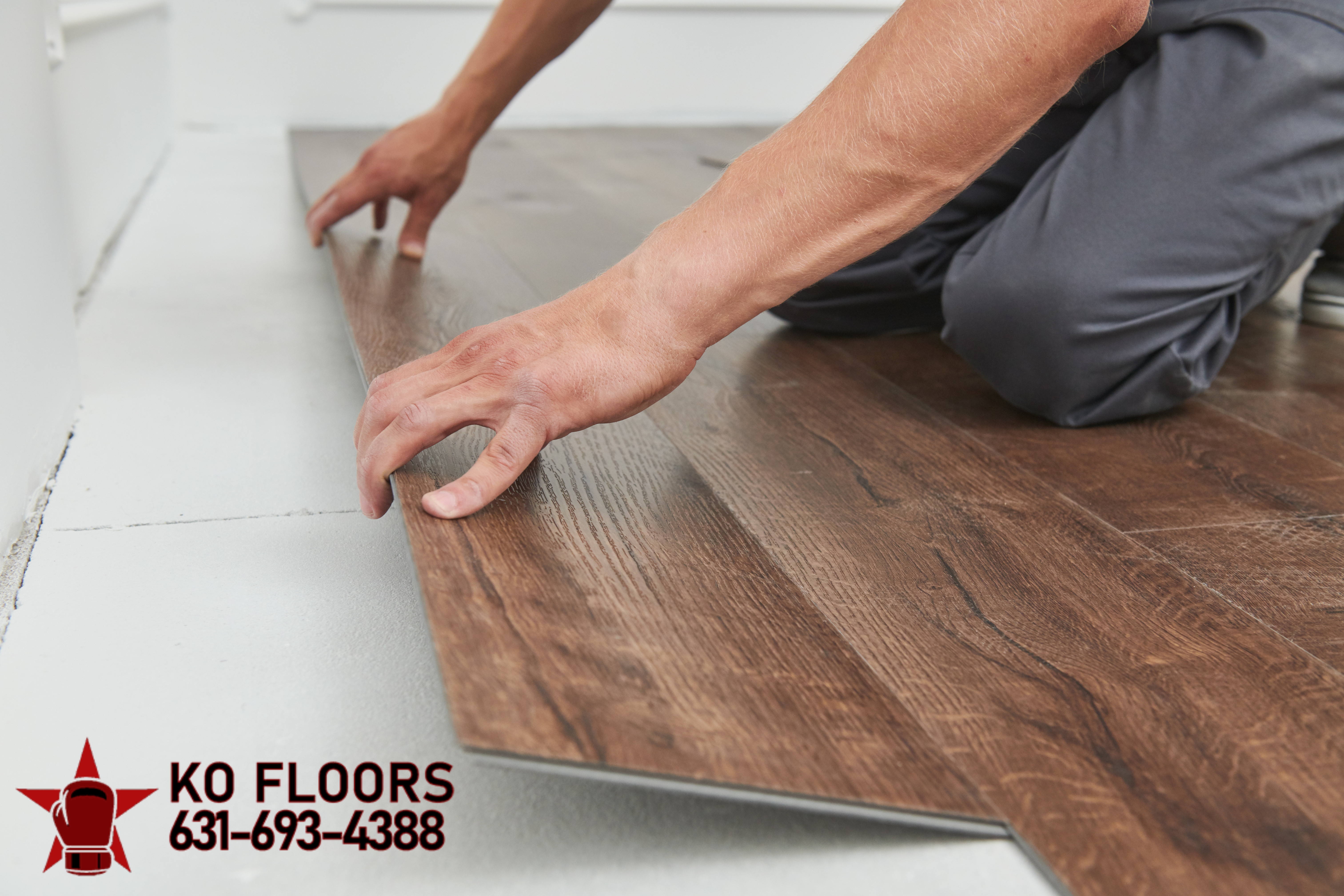
Floor Refinishing is the right answer for most Nassau County postwar floors. But not always. Sometimes the boards are too thin from previous sandings, too damaged from water, or too structurally compromised to hold a finish well. In those cases, new hardwood floor installation is the better path — and it’s worth knowing what that involves before you commit.
New installation in a postwar home isn’t as straightforward as it sounds. The subfloor needs to be assessed, moisture levels need to be checked, and the species and grade of wood need to match the character of the home. Getting those decisions right matters, and it’s part of what separates a contractor who understands Nassau County homes from one who doesn’t.
How to Tell If Your Nassau County Floors Need Refinishing or Full Replacement
The most common mistake homeowners make is deciding too early. They see worn floors, assume the worst, and start pricing out full replacement before anyone has actually looked at the boards up close. In most cases, that’s the wrong sequence.
The right starting point is a proper assessment of what you actually have. For Nassau County’s original oak strip floors, the key question is board thickness. Three-quarter-inch solid hardwood can be sanded multiple times over its lifetime. If the floors in your home have been refinished once or twice before, there may still be enough material left for another full sand-and-finish cycle. If they’ve been sanded down significantly — you can sometimes see this at the edges near baseboards, where the original thickness is preserved — replacement might make more sense.
Beyond thickness, the other factors are structural. Are the boards cupping or warping in ways that suggest a moisture problem underneath? Are there soft spots that indicate subfloor damage? Is there rot at the edges near exterior walls? These are the kinds of issues that a surface refinishing job won’t fix, and that a good contractor will identify before starting work rather than after.
For most of the homes we work on across Nassau County — in Rockville Centre, Bethpage, Lynbrook, East Meadow, and communities like them — the answer is refinishing, not replacement. The floors were built with enough material to last multiple generations, and with the right approach, they can look genuinely beautiful again. But the only way to know for sure is to have someone look at them who can give you an honest read rather than a sales pitch for the more expensive option.
Finding a Flooring Contractor in Nassau County You Can Actually Trust
If you’ve already started getting estimates, you’ve probably noticed that the quotes vary more than you expected. That’s not unusual in this market, and it’s one of the things Nassau County homeowners consistently find frustrating. The prices are all over the place, and without a clear way to compare what each contractor is actually offering, it’s hard to know what’s fair.
A few things are worth paying attention to when you’re evaluating a flooring contractor in Nassau County. First, do they ask questions before they give you a number? A contractor who quotes you over the phone without seeing the floors isn’t giving you a real estimate — they’re giving you a placeholder. The condition of the boards, the species, the finish type, and the specific layout of your home all affect what the job actually involves.
Second, do they explain their process? There’s a meaningful difference between a contractor who walks you through what they’re going to do and why, and one who gives you a one-line quote and a start date. The process matters — especially for postwar floors that may have quirks, repairs needed, or specific finishing requirements.
Third, and maybe most importantly: do they handle the whole job? One of the things we hear most often from Nassau County homeowners is that they struggled to find a single contractor who could handle floors, stairs, and railings together. Coordinating multiple contractors for what should be one cohesive project is frustrating and usually unnecessary. We refinish stairs and stair handrails as part of the same engagement, so the visual flow of your home — from entry to upper level — comes out consistent.
We’ve been working on Long Island homes for over 50 years. Kevin Zaharios founded KO Floors, Inc. on the idea that the work should speak for itself and that homeowners deserve straight answers, not upsells. If you call us and your floors don’t need replacing, we’ll tell you that. If they do, we’ll tell you that too — and explain exactly why.
What Nassau County Homeowners Should Do Before Calling a Flooring Contractor
You don’t need to have all the answers before you reach out. Most homeowners don’t know what species of wood they have, how many times the floors have been sanded, or whether their subfloor is in good shape — and that’s fine. What matters is finding someone who can assess what you’ve got and give you an honest recommendation without a stake in steering you toward the more expensive option.
Nassau County’s postwar hardwood floors are genuinely worth understanding before you make any decisions. The housing stock here is older, the climate is specific, and the floors have a history that affects how they should be handled. Getting that right from the start saves time, money, and the kind of regret that comes from replacing something you didn’t need to replace.
If you’re in Nassau County and you want a straight read on what your floors actually need, reach out to KO Floors, Inc. for a free, no-obligation quote. We’ll come take a look and tell you exactly where things stand.