
Planning a home renovation in Nassau County, NY is exciting — until you start making calls. Estimates come back all over the place. One contractor handles everything; another handles one piece and leaves the rest to you. Someone gives you a number on the phone, and by the time the job is done, it looks nothing like what you agreed to. If you’ve been through it before, you already know. If you haven’t, this guide is here to save you the education. We’re going to walk through what to actually look for when hiring home renovation contractors on Long Island — and why the decision most homeowners make last should probably be made first.
Finding a Reliable Flooring Contractor on Long Island
The flooring contractor market on Long Island is busy, and not all of it is worth your time. Some contractors are seasoned professionals with licensed crews, written contracts, and a track record you can verify. Others are cash-in-hand operations that disappear once the deposit clears. Knowing how to tell the difference before anyone sets foot in your home is the most important skill a Nassau County, NY homeowner can develop.
Start with licensing. Nassau County law explicitly requires a home improvement contractor license for floor refinishing — it’s not optional, and it’s not a formality. The county also requires proof of insurance and, for homes built before 1978 (which describes a large share of Nassau’s housing stock), RRP lead certification from an EPA-accredited program. If a contractor can’t produce these on request, that’s your answer.
What Questions Should You Ask a Flooring Contractor Before Hiring?
Most homeowners ask about price first. That’s understandable — but it’s also why so many renovations go sideways. Price is easy to quote and easy to manipulate. A low number gets you in the door, and then the “extras” start appearing. The better approach is to slow down and ask the questions that reveal how a contractor actually operates.
Ask for their Nassau County home improvement contractor license number and verify it. Ask whether they carry general liability insurance and workers’ compensation — and ask to see the certificates, not just hear about them. Ask who will be doing the work: their own crew, or subcontractors? Ask what the estimate includes and what it doesn’t. Ask what happens if something goes wrong after the job is done. A contractor who gets defensive about any of these questions is telling you something important.
References matter too, but ask for recent ones. A contractor who did excellent work five years ago may not be the same operation today. You want to talk to someone whose floors were done in the last year or two — someone who can tell you whether the crew showed up on time, whether the final result matched the quote, and whether any issues were handled without a fight.
One thing Nassau County homeowners consistently say they wish they’d asked earlier: does the contractor handle furniture? Living through a flooring project is disruptive enough without also managing where your couch goes. The contractors worth hiring handle the prep, the move, and the cleanup — not just the floor itself. When you find one who does all of it, that’s worth something. It’s surprisingly hard to find.
Reviews on Google and Yelp are useful, but read them critically. Look for patterns, not just star ratings. A contractor with forty reviews that all say “great price, fast work” is telling you something different than one with reviews that describe specific details — the crew arriving on time every day, a problem that got fixed without being asked twice, a family that felt genuinely taken care of. That level of detail is harder to fake and harder to earn.
Should You Refinish or Replace Your Hardwood Floors During a Renovation?
This is one of the most common questions Nassau County, NY homeowners face — and the answer is almost always refinish, not replace, at least until someone qualified has taken a look at the actual floor.
Nassau County has a lot of mid-century housing. The Cape Cods and ranches that went up in Levittown and spread across the county in the 1940s and 1950s were often built with solid hardwood floors — oak and maple that’s been sitting under decades of carpet, waiting. When homeowners pull up that carpet and see what’s underneath, the instinct is sometimes to assume the worst. Scratches, discoloration, old finish that’s completely worn through — it looks like a replacement job. In many cases, it isn’t.
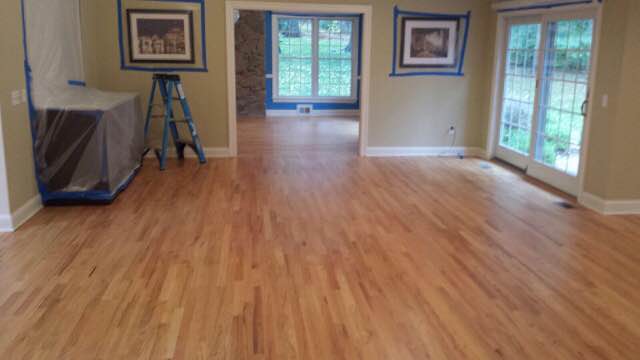
Professional floor refinishing can restore floors that appear far beyond saving. The process involves sanding down to bare wood, addressing gaps and surface damage, applying a stain if the color is changing, and finishing with multiple coats that protect the floor for years to come. Done properly, it can extend the life of a floor by a decade or more — and the cost is a fraction of full replacement.
The key word there is “properly.” There’s a significant difference between a professional refinishing job and what happens when someone cuts corners on surface preparation or rushes the drying time between coats. The results look similar for the first few months. Then they don’t. This is why the contractor you choose matters as much as the decision to refinish in the first place.
If your floors are genuinely too thin to sand again — solid hardwood can typically be refinished multiple times over its life, but there’s a limit — a knowledgeable contractor will tell you that honestly and explain your options. What they shouldn’t do is push you toward replacement without first assessing whether refinishing is viable. Get that assessment from someone who has actually looked at your floors, not someone quoting you over the phone.
Hardwood Floor Contractors and the Renovation Decisions They Affect
Here’s something most renovation guides don’t tell you: the floor is the decision that makes every other decision easier — or harder. Paint colors, furniture, cabinet finishes, lighting — they all respond to the floor. Choose the floor last, and you’re working backwards, trying to make everything else fit around something that’s already done. Choose it early, and the rest of the renovation falls into place with far less friction.
This is especially true in Nassau County’s older homes, where original architectural details — crown molding, built-ins, original doors — create a specific visual context. A floor that works with those details makes the whole space feel intentional. One that fights them makes a renovated room feel like a renovation, which is not the goal.
How Do Hardwood Floors Affect the Rest of Your Home Renovation?
Interior designers who work on Long Island renovations will tell you this consistently: the floor anchors everything. It’s the largest continuous surface in any room, and it sets the tone for every other material choice. A warm, medium-toned oak floor opens up a completely different palette than a dark walnut or a bleached white ash. When homeowners try to make that decision at the end of a renovation — after the paint is on the walls and the furniture is picked out — they often find themselves locked into something that doesn’t quite work.
The practical implication is that if you’re planning a broader renovation, the flooring conversation should happen early. That might mean bringing in a flooring specialist before the general contractor finalizes the scope of work, or at minimum, getting a floor assessment and stain consultation before committing to a paint color. It sounds like a small thing. It saves a lot of backtracking.
For Nassau County homes specifically, the humidity factor is worth understanding. Long Island’s summers are humid, and its winters are dry. That seasonal swing causes wood to expand and contract, which is normal — but it affects which species and finishes perform best in your specific home. Wider planks are more susceptible to movement. Certain finishes hold up better through humidity changes than others. A flooring contractor who knows Long Island’s climate and has worked in Nassau County homes for years will factor this in. One who doesn’t may not.
Staining is another area where the renovation sequence matters. If you’re changing the floor color — going lighter, going darker, or trying a custom tone — that decision interacts directly with your wall colors and your cabinetry. Doing a stain sample on your actual floor, in your actual light, before committing is standard practice for experienced contractors. It’s not an upsell. It’s how you avoid a result you’ll regret.
What Types of Renovation Contractors Should Nassau County Homeowners Know About?
A well-executed home renovation on Long Island typically involves more than one professional. The general contractor manages the overall scope and coordinates trades. The flooring specialist handles the floors — and if they’re good, they handle everything that comes with it. Interior designers help homeowners make cohesive decisions across materials, finishes, and furnishings. Home stagers, particularly for homeowners preparing to sell, know exactly which improvements move the needle on sale price and which ones don’t.
Each of these professionals serves a different part of the renovation process, and the best outcomes usually come from people who communicate well with each other. A flooring contractor who can work alongside a GC without creating scheduling conflicts, who can provide a stain sample to an interior designer before the paint decision is finalized, who can tell a home stager honestly whether the floors need refinishing or are fine as-is — that kind of professional is worth knowing about and worth holding onto.
For Nassau County, NY homeowners specifically, the licensing piece applies across all of these trades. General contractors, home improvement contractors, and specialty tradespeople operating in Nassau County are subject to county-level licensing requirements. New York State does not issue a single statewide contractor license — that’s handled locally, and Nassau County takes it seriously. Before any work begins, verify that whoever you’re hiring holds a current Nassau County home improvement contractor license. The county’s consumer affairs office maintains that information and it’s not hard to check.
One more thing worth knowing: the contractors who have been working in Nassau County for decades — not just operating there, but genuinely embedded in the community — tend to have a different relationship with their work. They have reputations to protect in a way that a regional chain or a new operation doesn’t. They’ve worked in the older homes, they know the subfloor quirks, they’ve seen what happens when humidity does its thing to a wide-plank floor in a Syosset colonial. That experience isn’t something you can shortcut, and it shows in the finished product.
Finding the Right Home Renovation Contractor in Nassau County, NY
The renovation contractor market on Long Island is big, and the quality range is wide. The homeowners who end up happiest are the ones who slow down before they sign anything — who verify licensing, read reviews carefully, ask the right questions, and think about the floor before they think about the paint.
If your renovation involves hardwood floors — whether that’s refinishing original wood you discovered under old carpet, installing new floors throughout, or simply deciding whether what you have is worth saving — that conversation deserves the same care as every other decision in the project.
We’ve been working in Nassau County, NY homes for over 50 years. If you want an honest assessment of what your floors need and what it would take to get there, KO Floors, Inc. is a straightforward call to make.