
Your floors aren’t ruined. They’re just tired. The finish has dulled out, there are light scratches catching the light at certain angles, and the warmth that used to be there feels like it’s faded. You’re wondering if you need to go through the whole refinishing process again — the sanding, the days out of the room, the dust — or if there’s a smarter option.
There is. It’s called screen and recoat, and for the right floor, it’s one of the most practical maintenance moves you can make. But it doesn’t work for every floor. Here’s exactly what you need to know before you decide.
What Is Screen and Recoat Hardwood Floors — and How Does It Actually Work?
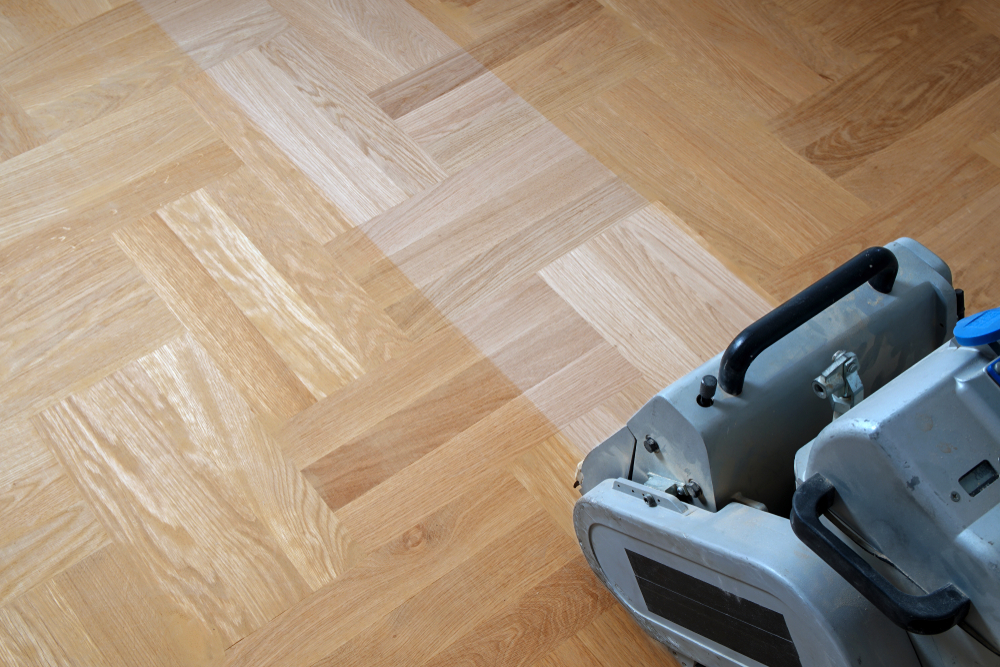
Screen and recoat is a two-step process: a light abrasion of the existing finish followed by a fresh topcoat of polyurethane. The “screen” refers to a mesh abrasive pad — similar to a large sanding screen — that scuffs the surface of your current finish just enough to give the new coat something to grip. No wood is removed. The finish is barely touched. It’s essentially a controlled roughening of the surface so the new layer bonds properly.
The result is a floor that looks refreshed, protected, and noticeably cleaner — without the cost, dust, or downtime of a full sand-and-refinish. For most Nassau County households, the whole job is done in a day, and you’re walking on it again the next morning.
Buff and Recoat Hardwood Floors: Is It the Same Thing?
Yes — completely. “Buff and recoat hardwood floors,” “screen and coat,” “screen and recoat,” and sometimes just “recoat” all describe the same service. The terminology varies by contractor and region, but the process is identical: abrade the existing finish lightly, clean the surface thoroughly, apply a new topcoat. If you’ve seen these terms used interchangeably online or heard different contractors use different names for what sounds like the same job, that’s because they are the same job.
What actually determines the quality of the outcome isn’t the name — it’s the prep work. A floor that isn’t cleaned and degreased properly before the new coat goes down will have adhesion problems regardless of what you call the process. A floor that hasn’t been screened thoroughly enough won’t bond well either. The terminology is just regional shorthand. The execution is what separates a great result from a coat that starts peeling within months.
Screen and recoat is not the same as sanding. Full sanding cuts through the finish entirely and removes a thin layer of the wood itself — roughly 1/32 of an inch per pass. Screen and recoat never touches the wood. It only works within the existing finish layer. That distinction matters for Nassau County homeowners whose floors have already been through multiple full refinishes over the decades, because those floors have limited sanding life left. Every full sand brings the floor closer to the point where refinishing is no longer possible. Regular recoating, done on schedule, protects that remaining thickness.
When Screen and Recoat Won’t Work — and What to Look For
Screen and recoat only works when the existing finish is still largely intact. If the finish has worn through to bare wood in high-traffic areas — in front of the kitchen sink, at the base of the stairs, along a heavily used hallway — a new topcoat won’t bond to raw wood the way it bonds to an existing finish layer. Those bare spots will look worse after a recoat attempt, not better.
The other major disqualifier is contamination. If you’ve been using consumer floor care products — the kind sold at grocery stores and home improvement centers, often marketed as “floor rejuvenators” or “shine restorers” — there’s a real chance those products contain silicone or wax. Both substances coat the surface of your existing finish and prevent a new coat from adhering properly. The result is what we call “fisheye” — bubbles, streaks, or peeling in the new finish coat. It looks terrible, and it’s not fixable without stripping the contamination first. This happens more often than you’d think, and it’s one of the most common reasons a screen and recoat fails when done by someone who skipped the assessment step.
There are a few other situations where screen and recoat isn’t the right answer: deep gouges or stains that have penetrated the wood itself, floors with significant structural damage or cupping, and — importantly — any situation where you want to change the color of your floors. Color change requires full sanding to bare wood and restaining. A recoat can only refresh the existing color. If you’re hoping to go from a dark walnut stain to a light natural finish, a recoat won’t get you there.
We always perform an adhesion test before committing to a recoat — a small spot test that confirms the new finish will bond to the existing surface. Any contractor who skips this step is cutting a corner that can cost you the entire job.
How Often to Refinish Hardwood Floors — and Where Recoat Hardwood Floors Fits In
“Refinishing” is a term people use loosely, but it helps to be specific. A full sand-and-refinish — where the floor is sanded to bare wood, stained if desired, and coated from scratch — is typically needed every seven to ten years under normal residential use. Screen and recoat, on the other hand, is a maintenance step that should happen every three to five years, or sooner in high-traffic areas.
The two services work together. Regular recoating extends the time between full refinishes significantly. Done consistently, it can push a full refinish out almost indefinitely — because you’re continuously protecting the finish before it breaks down to the point of no return.
Why Nassau County Homes Are Especially Good Candidates for Regular Recoating
Nassau County’s single-family housing stock averages about 73 years old. Most of those homes were built during the post-World War II suburban expansion — the era of Levittown and the surrounding developments — when solid hardwood floors were standard construction, not an upgrade. Those floors are still there in kitchens, living rooms, and bedrooms across Garden City, Rockville Centre, Floral Park, New Hyde Park, Mineola, and dozens of other communities throughout the county.
Here’s what that means practically: a floor installed in 1952 has had seven decades of foot traffic, furniture moves, pet claws, holiday gatherings, and Long Island winters. If it’s been fully sanded even three or four times over that period, it’s used up a meaningful portion of its remaining wood thickness. Each full sanding removes approximately 1/32 of an inch. That doesn’t sound like much, but it adds up — and once a floor has been sanded too many times, it can’t be sanded again safely.
For these floors, screen and recoat isn’t just a cost-saving option. It’s a preservation strategy. Keeping the finish in good shape with regular recoating means you’re not burning through the remaining wood every time the floors start to look worn. You’re extending the life of something that genuinely can’t be replaced without significant expense — and in a market where Nassau County homes regularly sell in the high six figures, that’s not a small consideration.
Long Island’s climate adds another layer. Humid summers — with relative humidity regularly running between 60 and 80 percent — cause hardwood to expand slightly at the seams. Cold, dry winters, combined with road salt and moisture tracked in from outside, accelerate finish wear, particularly near entryways and in kitchens. Floors here take a harder seasonal beating than in many other parts of the country, which is exactly why staying on a regular recoating schedule matters more, not less.
Recoat Hardwood Floors Before You List — What Nassau County Sellers Should Know
Nassau County’s real estate market moves fast. With nearly 10,000 residential properties changing hands in the past year and median home values sitting between $684,700 and $800,000, the condition of your floors on showing day matters more than most sellers initially expect. Real estate professionals consistently rank refinished hardwood floors among the highest-return interior improvements a homeowner can make before listing — and a screen and recoat is the fastest, most cost-effective way to get there.
A full sand-and-refinish before a listing can take several days and requires the home to be largely unoccupied during the process. A screen and recoat is typically a one-day job, with floors ready for light foot traffic the next morning. For sellers working on a tight timeline — which in Nassau County’s spring market often means weeks, not months — that difference is significant.
The key is getting an honest assessment first. If your floors have bare spots, deep scratches, or staining that goes into the wood, a recoat won’t make them show-ready — it might actually highlight the damage by adding sheen over imperfections. We’ll look at your floors honestly and tell you what they actually need, rather than defaulting to whichever service is easier to sell.
Is Screen and Recoat the Right Move for Your Nassau County Floor?
If your floors are dull, lightly scratched, and the finish is still mostly intact — and you haven’t been using consumer polish products on them — there’s a good chance a screen and recoat is exactly what they need. It costs a fraction of a full refinish, takes a day instead of several, and done on a regular schedule, it’s the single best way to protect hardwood floors for the long term.
If your floor has bare spots, deep damage, or you want a color change, a recoat won’t get you there — and we’ll tell you that upfront rather than take your money for a job that won’t hold.
The most important step is getting an honest look at what you’re working with. We offer free, no-obligation quotes for Nassau County homeowners — no pressure, no guesswork, just a straight answer about what your floors actually need and what it will take to get them there. Reach out and let’s take a look.