
You’ve already decided you want to stain your hardwood floors. You’re not here for a lesson on why wood floors are beautiful — you know that. What you want to know is what it’s actually going to cost, how the process works, and whether the contractor you’re about to call is going to give you a straight answer or dance around the number until they’re standing in your living room.
That’s exactly what this page is for. We’re going to give you real price ranges, walk you through what drives costs up or down, and help you go into that first conversation knowing what’s fair — and what isn’t.
Hardwood Floor Staining: What the Process Actually Includes
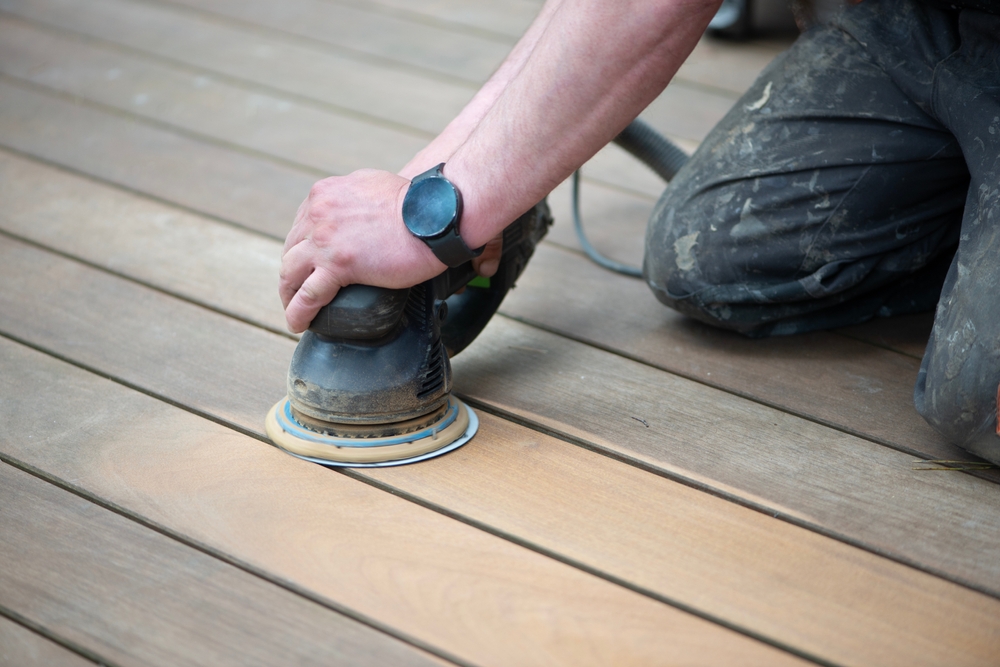
Staining is one step inside a larger refinishing process — and that distinction matters when you’re comparing quotes. You can’t apply stain directly over an existing finish. The floor has to be sanded down first to bare wood, which opens the grain and allows the stain to absorb evenly. Skip that step, and the color will be blotchy, uneven, or won’t bond at all.
The full sequence looks like this: we assess the floor for damage or thin boards, then sand from coarse to fine grit, thoroughly clean away all dust, apply the stain, allow it to dry, seal it, and finish with two to three coats of polyurethane — with light buffing between coats. On a typical Nassau County project, that process takes a few days from start to finish, though drying and curing time extends the full timeline before the space is back to normal use.
How Much Does It Cost to Stain Hardwood Floors in Nassau County?
Here’s what most contractors won’t put in writing before they show up: staining hardwood floors professionally runs $3 to $8 per square foot for the complete refinishing project, which includes sanding, staining, and finishing. The staining step itself typically adds $1 to $3 per square foot on top of the base refinishing cost. If you’re looking at staining as a standalone service — on floors that have already been properly prepared — the range is $2 to $6 per square foot, though Nassau County pricing generally runs toward the higher end of that range given local labor costs.
For a practical sense of what that means on a real project: a 500 square foot main floor at $5 per square foot comes to around $2,500 for the full refinishing and staining process. A smaller bedroom at 200 square feet might run $600 to $1,000 depending on the condition of the floors and the finish selected. If you’re adding stairs — which most Nassau County homes have — expect $40 to $75 per stair, because the work is done by hand and takes significantly more time than open floor sections.
A few things push costs higher. Floors in poor condition require more aggressive sanding passes, which takes longer and uses more materials. Exotic wood species or wide plank floors need specialized handling. Custom stain colors, especially anything requiring multiple test applications to get right, add time. And if you want a dustless sanding process — which is worth considering if anyone in the home has allergies or respiratory sensitivities — that method runs $5 to $8 per square foot.
What keeps costs lower is straightforward: floors in good structural shape with minimal damage, standard wood species like red oak or white oak, and a single standard stain color applied in one pass. The cleaner the prep work, the more efficient the job.
Why Nassau County Homes Often Need More Prep Than Expected
A significant portion of Nassau County’s housing stock was built during the post-war boom of the late 1940s through the early 1960s. Levittown, which sits right in Nassau County, NY, became the national template for suburban development during that era — and those homes, along with thousands of others built around the same time in communities across the county, almost universally came with solid red oak hardwood floors. Those floors are now 60 to 80 years old.
That’s actually good news in one sense: solid hardwood can be sanded and refinished multiple times over its life, and a well-maintained original floor from that era is often in better structural shape than people expect. But age does create complications. Old finish layers can be thick and uneven. Previous DIY attempts at refinishing — or decades of floor wax buildup — can affect how the new stain absorbs.
In some cases, boards that have been repeatedly exposed to Long Island’s coastal humidity have swollen, cupped slightly, or developed gaps that need to be addressed before staining can produce an even result. This is why the assessment step at the beginning of the process matters so much. We walk in, evaluate the floor’s actual condition, and give you a price based on what we find — not a generic estimate that assumes every Nassau County home’s floors are the same.
Long Island’s humidity is also worth factoring into your timeline. In the summer months especially, the coastal air can extend drying times for oil-based finishes significantly. Water-based finishes tend to perform more predictably in humid conditions and dry faster — usually allowing light foot traffic within 24 to 48 hours — which is worth discussing when you’re planning the project schedule.
Hardwood Floor Stain Colors: What’s Popular Right Now and How to Choose
Color choice is where a lot of homeowners get stuck — and where a lot of projects go sideways when the process isn’t handled carefully. The stain color that looks right on a small chip in a showroom can look completely different on your actual floor, because wood species, grain direction, age, and residual finish all affect how the stain absorbs. What reads as a warm medium brown on a sample board might pull orange or gray on 70-year-old red oak.
The only reliable way to choose a stain color is to see it applied directly on your floor — a small test section, dried and finished, before any commitment is made. That’s how we handle it, and it’s the step that gives homeowners real confidence before the full project begins.
Wood Floor Stain Colors Trending in 2026
The gray floor trend that dominated the last decade has largely run its course. What’s replacing it in 2026 is a return to warmer, more organic tones — golden oak, honey pine, chestnut, and greige (a warm blend of gray and beige that reads as neutral without feeling cold). These tones work particularly well in Nassau County homes, where natural light varies significantly depending on whether you’re in a north-facing colonial or a south-facing ranch with large windows.
Mid-tone warm neutrals are the most versatile choice for most homes. They complement a wide range of furniture finishes, photograph well for real estate listings, and age gracefully without looking dated in five years. Lighter natural finishes are also gaining ground — they brighten smaller rooms and work well in the cape cods and split-levels common throughout Nassau County communities like Levittown, Wantagh, and Massapequa.
Darker stains — ebony, dark walnut, jacobean — remain popular for homeowners who want a dramatic, high-contrast look. They can be stunning in the right space. But they’re less forgiving: dark stains highlight sanding marks and grain inconsistencies if the prep work isn’t thorough, and they show dust and pet hair more readily in daily life. If you’re going dark, the quality of the sanding matters even more than usual.
Stain color affects how different rooms connect visually. If you’re staining floors throughout the main level and your stairs connect to the same space, matching the stain on the stairs to the floor is something to plan for from the start — not as an afterthought. Getting the color consistent across both surfaces requires the same stain batch and finish sequence, applied close together in time.
Do Nassau County Homeowners Really Need to Move Out During Floor Staining?
This is one of the most common questions we hear, and the honest answer is: it depends on the finish and the scope of the project, but it’s usually less disruptive than people fear.
With water-based finishes, light foot traffic is typically possible within 24 to 48 hours. Full curing — the point at which the finish has hardened completely and you can move furniture back without risk of indentation — takes longer, usually 7 to 30 days depending on the product. During that curing window, the floors are usable, but you want to be careful with heavy furniture and avoid dragging anything across the surface.
Oil-based finishes take longer to dry — 48 to 72 hours before foot traffic — and the fumes are stronger. If you have young children, pets, or anyone with respiratory sensitivities in the home, water-based finishes are worth the conversation. They’re lower odor, they dry faster, and they’ve improved significantly in durability over the past decade.
For whole-home projects, we can work through the home in sections, allowing one area to dry while the next is being prepared. It takes more coordination, but for families who can’t easily relocate for several days, it’s a practical option that keeps disruption to a minimum.
On furniture, many homeowners assume they need to empty the house themselves before work begins. On a full project, we handle it — disassembling and moving pieces out of the way so you don’t have to coordinate a separate moving situation on top of everything else. That’s something our Nassau County customers have specifically called out as unexpected and genuinely appreciated, and it’s part of how we approach a job from start to finish rather than just the sanding and staining portion.
Getting a Straight Answer on Hardwood Floor Staining in Nassau County
The short version: staining hardwood floors in Nassau County costs $3 to $8 per square foot for the full refinishing project, with staining adding $1 to $3 per square foot to that base. Stairs run $40 to $75 each. Costs vary based on floor condition, wood species, stain complexity, and finish type — and Nassau County’s aging housing stock and coastal humidity are real factors that affect both the prep work and the timeline.
What doesn’t vary is the value of getting a written, line-item estimate before anyone touches your floors. Vague quotes lead to surprise charges. A contractor who’s willing to put the numbers in writing before the job starts is a contractor who’s confident in what they’re doing.
If you’re ready to get a real number for your home — not a ballpark, not a range that could mean almost anything — KO Floors, Inc. offers free, no-obligation quotes with transparent pricing and no hidden fees. We’ve been working on Long Island floors for over 50 years, and we’ll tell you exactly what your project will cost before we start.