
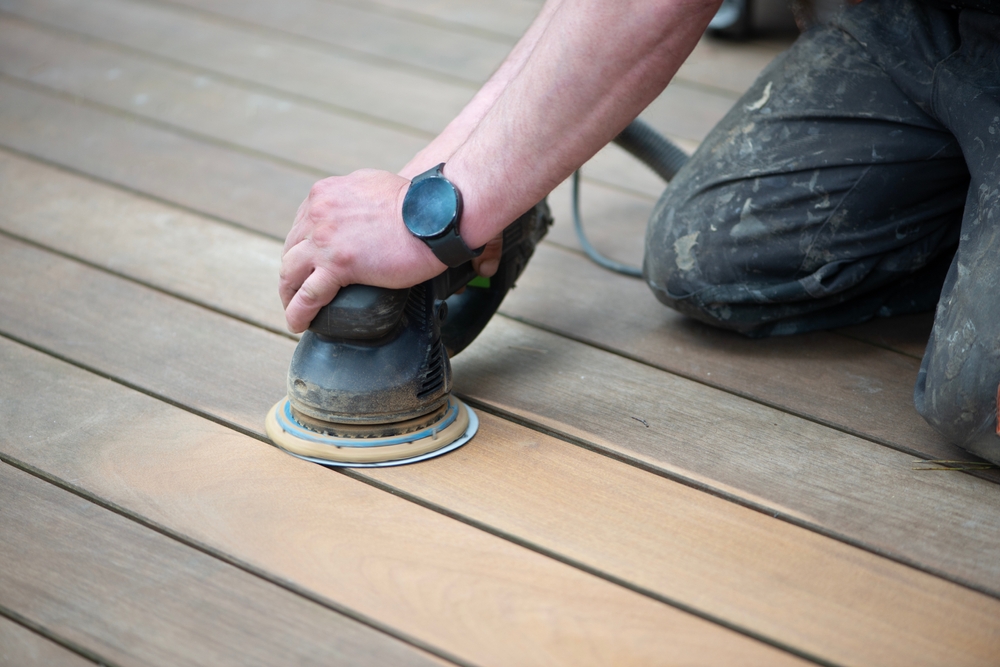
You searched the cost, saw something around $797, and then got a quote that was noticeably higher. Now you’re not sure if the contractor is overcharging you or if that national number was just wrong to begin with. The answer is almost always the latter. Nassau County is not an average market. Labor costs more here, materials cost more here, and the houses themselves — most of them built in the 1940s through 1960s — come with their own set of variables that generic cost guides don’t account for. Here’s what you actually need to know before you call anyone.
Average Cost to Refinish Hardwood Floors and Stairs on Long Island
Nationally, the average cost to refinish stairs runs from $326 to $1,268 for a standard staircase, with a national average of $797. That number comes from markets across the country — many of them with significantly lower labor costs than the New York metro area.
In Nassau County, NY specifically, you’re looking at an all-in range of roughly $6.41 to $12.83 per square foot for hardwood refinishing work, with labor alone running $5 to $7 per square foot. That’s not a contractor markup — it reflects a cost of living that runs about 74% above the national average.
For stairs specifically, real-world per-step pricing in this area tends to land around $80 per step for a full sand, stain, seal, and finish. A standard 13-step staircase comes in around $850 under normal conditions, though that number moves depending on what the stairs actually look like when the work begins.
Why Nassau County Stair Refinishing Costs More Than the National Average
The gap between what you read online and what you’re quoted locally isn’t a red flag — it’s a reflection of where you live. Nassau County has one of the highest costs of living in the country, and that flows directly into what skilled tradespeople charge for their time. When our flooring crew spends a full day sanding, staining, and finishing a staircase in Rockville Centre or Great Neck, our costs — fuel, materials, insurance, overhead — are priced for this market, not for somewhere in the Midwest.
There’s also the nature of stair refinishing itself. Unlike flat floors, stairs require hand sanding in tight corners, careful finish application on vertical surfaces to prevent drips, and detailed prep work around balusters and railings. It’s more labor-intensive per square foot than refinishing an open living room floor, and that shows up in the price.
Then there’s the housing stock. The average Nassau County single-family home is about 73 years old. That means most of the staircases we work on were originally built in the postwar era — solid hardwood construction, but often buried under decades of carpet, adhesive, paint, or all three. Pulling up carpet from a 1955 Cape Cod in Levittown and finding tack strip holes, paint overspray, and surface damage that needs to be addressed before sanding even starts adds real time to the job. That prep work is where a lot of the cost variation lives, and it’s also where you want a crew that knows what they’re doing rather than one that skips steps to hit a lower price point.
One more thing worth understanding: stair refinishing and flat floor refinishing are not priced the same per square foot, even though they involve the same basic process. The geometry of a staircase — the nosing, the risers, the tight angles — slows everything down. A drum sander, which is the primary tool for flat floors, can’t be used on stairs. Everything has to be done by hand or with orbital equipment, which takes longer and requires more skill to do cleanly. That’s a legitimate reason for the per-square-foot cost on stairs to be higher than what you’d pay for the rest of your floors.
What Drives the Final Stair Refinishing Cost Up or Down
The per-step estimate is a starting point, not a guarantee. Several factors can move the final number in either direction, and understanding them helps you compare quotes intelligently rather than just defaulting to the lowest number.
The condition of the wood is the biggest variable. If the treads are structurally sound and just worn or discolored, a full sand and refinish is straightforward. If there are squeaky steps, loose treads, or boards that have been damaged by moisture or heavy use, those need to be addressed before finishing — and repair work typically runs $40 to $150 per hour depending on what’s involved.
On a 70-year-old staircase in Island Park or Nassau Shores, where homes sit closer to the water and wood has been exposed to more humidity over the decades, finding some damage isn’t unusual. We’ve seen this pattern repeatedly across waterfront and near-waterfront Nassau County properties.
The stain color you choose matters too, but not because darker or lighter stains cost more — it’s about how many passes are needed to achieve an even result and whether you’re trying to match the stairs to an existing floor finish. Color matching is one of the more technically demanding parts of this work. When it’s done well, you don’t notice it. When it’s done poorly, the transition between your landing and your floor looks off, and there’s no easy fix once the finish has cured.
The type of finish also affects cost and outcome. Water-based polyurethane dries faster and has a cleaner, clearer look with lower VOC off-gassing during the project. Oil-based polyurethane adds a warm amber tone and tends to be more durable under heavy foot traffic, but it takes longer to dry and has a stronger smell during application. Professional-grade products like PoloPlaz and Bona Traffic HD are what contractors who care about the result actually use — and they cost more than what you’d find at a home improvement store, which is part of why professional refinishing holds up longer than a DIY attempt.
Finally, if your stairs include a railing, banister, or decorative balusters, that adds scope. Ornate or curved staircases can roughly double the cost compared to a straight run, simply because every curved or carved surface has to be done entirely by hand.
Floor Refinishing Cost vs. Stair Refinishing: Should You Do Both at Once?
If you’re already having your hardwood floors refinished, adding the stairs to the same project almost always makes sense — financially and visually. Mobilizing a crew, setting up dust containment, and coordinating the project schedule all have fixed costs. Doing the stairs separately means paying those setup costs twice.
More importantly, when the same team handles both surfaces in the same session, color matching between your floors and stairs is precise in a way that’s genuinely difficult to achieve when two different contractors do the work at two different times.
The average cost to refinish hardwood floors in the New York metro area runs $4 to $10 per square foot, with the higher end of that range reflecting Nassau County’s labor market. Combining floor and stair refinishing into a single project is typically more cost-effective than scheduling them separately.
Is Stair Refinishing Worth It, or Should You Replace Instead?
This is one of the most common questions homeowners ask before committing to a project, and the answer for most Nassau County homes is clear: refinishing is almost always worth it when the wood is structurally sound.
A full stair refinishing project on Long Island typically runs $900 to $3,800 depending on staircase size, condition, and scope. A standard stair remodel starts at $4,000 and a full replacement can run $15,000 to $50,000 or more. For a home with original solid hardwood stairs — which describes the majority of Nassau County’s postwar housing stock — refinishing delivers a result that looks genuinely new at a fraction of the replacement cost.
There’s also the ROI angle. Hardwood floor refinishing in the New York market averages a 147% return on investment, which is a meaningful number when you’re selling a home with a median value around $800,000. Buyers notice worn, scuffed, or mismatched stairs. Sellers who refinish before listing reduce buyer negotiating leverage and typically see faster offers. In Nassau County’s active real estate market — nearly 10,000 residential sales in the past year — pre-sale refinishing is a routine and financially rational decision.
The only scenario where replacement makes more sense than refinishing is when the treads are structurally compromised — too thin from repeated sanding over the decades, cracked through, or damaged beyond what surface work can address. Solid hardwood can typically be refinished five to seven times over its lifetime, so unless the stairs have been refinished repeatedly or were damaged by water or heavy impact, the wood almost certainly has life left in it. A proper on-site assessment will tell you where yours stand.
Questions Nassau County Homeowners Ask Before Booking Stair Refinishing
How long does stair refinishing take, and when can I use the stairs again? A standard staircase typically takes one to two days for the sanding and staining portion. After the finish coats are applied, you’ll want to stay off the stairs for at least 24 hours for initial cure, though full hardness takes longer — usually several days to a week depending on the finish type and conditions in your home. We’ll give you a specific timeline when we assess your project, because it varies based on the number of coats, the finish product, and the humidity levels in your home at the time of the work.
Will the stairs match my existing hardwood floors? This depends on the condition of your floors and how recently they were refinished. If your floors are relatively new or were recently refinished, matching the stain is straightforward — we work with professional-grade stain products and test color on an inconspicuous area before committing to the full application.
If your floors have aged significantly and taken on a patina, achieving a perfect match is more nuanced. In Nassau County homes where the original floors may be 50 or 60 years old, we’ve seen everything from beautifully aged red oak to floors that have been stained multiple times over the decades. We’ll tell you honestly what’s achievable before we start.
What’s the difference between refinishing and a screen-and-recoat? A screen-and-recoat — sometimes called a buff-and-coat — scuffs the existing finish lightly and applies a new topcoat over it. It’s faster and less expensive, but it only works on surfaces that are lightly worn with no significant scratches or damage. Full refinishing means sanding down to bare wood, which removes old finish entirely, addresses surface damage, and allows for a stain color change if you want one. If a contractor quotes you a screen-and-recoat and calls it “refinishing,” those are not the same thing, and it’s worth asking the question directly.
Does stair refinishing include the railings and balusters? Not automatically. Stripping, sanding, and refinishing the treads and risers is the core scope of stair refinishing. Railings, balusters, and newel posts can be included, but they add to the project scope and cost because of the detailed hand work involved. If you want the full staircase addressed — treads, risers, and all the surrounding woodwork — make sure that’s explicitly included in whatever quote you’re reviewing.
Getting a Stair Refinishing Quote in Nassau County That You Can Actually Trust
The most important thing you can do before booking any stair refinishing project is understand what you’re being quoted for. A lower number that excludes prep work, covers fewer finish coats, or glosses over existing damage isn’t a better deal — it’s a different project. Ask what’s included, ask about the finish product, ask whether the quote covers the full scope of your staircase or just the treads.
Nassau County homes have their own character — decades of history, original hardwood that’s been waiting under carpet in a lot of cases, and real value worth protecting. When the work is done right, a refinished staircase doesn’t just look better. It holds up, it matches your floors, and it adds to a home that’s already worth protecting.
If you’re ready to get a real number for your specific staircase, KO Floors, Inc. offers free, no-obligation quotes for stair refinishing across Nassau County, NY. No pressure, no guesswork — just an honest assessment of what your stairs need and what it will cost.