
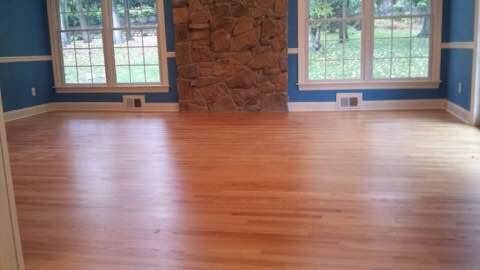
You just had your hardwood floors refinished — or you’re about to — and now the staircase is the elephant in the room. The treads are worn, the railing wobbles, and the carpet you’ve been meaning to pull up for years is still there. You know something needs to happen, but you’re not sure who handles this kind of work, what it actually involves, or how to make sure it doesn’t end up looking patched together. A stair remodel covers a lot more ground than most people expect, and knowing what’s involved from the start makes the whole process easier.
What a Stair Remodel Contractor Actually Does
A stair remodel contractor assesses what you have, determines what needs to go and what can stay, and handles everything from the structural bones of the staircase to the finished surface you see every day. That includes the treads, the risers, the balusters, the handrail, and the newel posts — the full system, not just the top layer.
A refinish addresses the surface. A remodel addresses the staircase. Those are different scopes, and confusing them is one of the most common reasons homeowners end up disappointed with the result or surprised by the cost.
Stair Refinishing vs. Stair Replacement: How to Know Which One You Need
Refinishing makes sense when the wood underneath is still in good shape — structurally sound, with enough material left to sand without going too thin. The existing treads get sanded down, stained to the color you want, and finished with a protective topcoat. Done well, it can look completely new.
Replacement becomes the right call when the treads are too worn, too thin from previous sandings, or the wrong species to match new flooring going in elsewhere in the home. This is especially common in Nassau County, NY’s older colonial and split-level homes, where the original staircase might be fifty or sixty years old and has seen significant use. Replacing the treads and risers lets you choose the right wood species, get a clean install, and match the finish to your floors precisely.
Here’s where a lot of homeowners run into trouble: they hire a flooring company that can refinish but doesn’t do replacement, or they hire a carpenter who can replace treads but doesn’t understand hardwood finishing. The result is a staircase that looks almost right — which, in a prominent entryway, is worse than it sounds.
The structural piece matters too. Before any surface work begins, the staircase needs to be checked. Loose treads, a wobbly newel post, stringers that have shifted — these aren’t cosmetic issues, and they don’t go away with a coat of stain. A contractor who skips the structural assessment is setting you up for squeaks, movement, and callbacks.
What Happens When Floors and Stairs Are Handled by Two Different Contractors
This is the scenario Nassau County, NY homeowners describe most often when something goes wrong: the floors look great, the stairs look almost right, and no one can quite agree on whose responsibility the difference is.
Finish matching is harder than it looks. Wood species absorb stain differently. Red oak and white oak read differently under the same stain color. The sheen level — matte, satin, semi-gloss — needs to be consistent across the floor and the treads or the eye catches it immediately, especially in natural light. When two contractors are working independently, each applying their own products with their own technique, that consistency is very difficult to guarantee.
There’s also the coordination problem. If your flooring contractor finishes the floors in early October and your stair contractor comes in three weeks later, the floors may already be occupied, furniture is back in place, and the conditions in the home have changed. Acclimation, humidity, and traffic all affect how wood behaves and how finishes cure. A single contractor handling both scopes controls those variables from start to finish.
The accountability gap is the part no one talks about until something goes wrong. When two contractors are involved and the result doesn’t match, each one has a reasonable argument that the other is responsible. When one contractor handles both, there’s no gap — there’s one point of contact, one standard, and one person who owns the outcome.
We handle floors and stairs as a single integrated scope. That’s not a selling point we invented — it’s the answer to a problem we’ve watched homeowners deal with for decades.
Staircase Railing Contractor: The Part of the Remodel Most People Underestimate
The railing system — balusters, handrail, and newel posts — is often treated as an afterthought in a stair remodel. It shouldn’t be. The railing is what people touch every time they use the stairs, it’s what guests notice at eye level when they walk into your home, and in Nassau County, NY, it’s subject to building code requirements that vary by municipality.
A railing that wobbles, a newel post that isn’t anchored to a structural member, or balusters spaced too far apart aren’t just aesthetic problems. They’re safety issues, and in some cases, they’re code violations.
Stairs and Railings Contractors: What the Full Scope of Railing Work Involves
A railing replacement isn’t just pulling out the old spindles and putting in new ones. It starts with the newel post — the large post at the base and top of the staircase that anchors the entire railing system. If the newel post isn’t properly secured to the structural framing, nothing above it will feel solid. This is a detail that cosmetic railing work often skips, and it’s why some “new” railings still wobble.
Balusters — the vertical spindles that run between the treads and the handrail — need to be spaced at or under four inches apart to meet standard building code. Nassau County, NY contains over sixty incorporated villages, each with its own building department, and the specific permit requirements for railing work vary by town. Some municipalities require a permit for structural railing replacement; others don’t for in-kind cosmetic work. Knowing the difference, and knowing which category your project falls into, is part of what a contractor with real local experience brings to the table.
The handrail itself needs to be at the correct height, graspable along its full length, and returned to the wall at both ends in most residential applications. These aren’t arbitrary preferences — they’re code requirements that a failed inspection will flag.
Design matters too. A railing system that’s technically correct but visually mismatched with the rest of the home is a missed opportunity. Custom railing work — selecting the right baluster profile, the right newel post scale, the right handrail shape for the space — is what transforms a staircase from functional to finished. We’ve seen Nassau County, NY homes where a railing update alone changed the entire feel of the entryway.
Nassau County, NY Stair Remodel FAQs: What Homeowners Ask Before They Start
**Do I need a permit to replace my stair railing in Nassau County, NY?**
It depends on the scope and the municipality. Nassau County, NY’s building permits are handled at the local level — your town or village building department — and the rules vary. Structural work, including replacing a newel post or making changes to the railing system’s attachment points, typically requires a permit. Cosmetic work, like swapping balusters in-kind or repainting, often doesn’t. The safest approach is to work with a contractor who knows the local requirements and will pull the correct permits when they’re needed. Unpermitted structural work can create problems when you sell, and it can fail inspection if the work is ever reviewed.
**How do I match new stair treads to my existing hardwood floors?**
This is one of the most common concerns we hear, and it’s a legitimate one. The match depends on three things: wood species, stain color, and finish sheen. If your floors are red oak with a medium walnut stain and a satin finish, the treads need to be the same species, stained from the same product line, and finished to the same sheen level. Even small differences are visible, especially in the natural light that comes through Nassau County, NY homes’ entry windows and sidelights. The only reliable way to get a true match is to have the same contractor handle both scopes — or at minimum, to have the stair contractor work directly from a sample of the finished floor.
**How long does a stair remodel take?**
A refinish on an existing staircase can be completed in one to two days, with a cure period before heavy traffic resumes. Tread and riser replacement takes longer — typically three to five days depending on the scope — and a full railing overhaul adds time on top of that. The staircase will be out of commission during the work, which is a real consideration for households with children or anyone who relies on it daily. Planning the project around a period when the disruption is manageable makes a significant difference.
**Can a flooring contractor handle stairs and railings, or do I need a separate specialist?**
Some flooring contractors can — but only if they have genuine in-house capability for both. Many flooring companies subcontract stair and railing work to a third-party carpenter, which reintroduces the coordination and finish-matching problems described above. The question worth asking any contractor is direct: does your own crew do the stair and railing work, or does someone else come in for that? The answer tells you a lot about what your experience will look like.
How to Choose the Right Stair Remodel Contractor in Nassau County, NY
The right contractor for a stair remodel isn’t necessarily the one who specializes only in stairs. It’s the one who understands how the staircase connects to everything else in your home — the floors, the light, the entryway, the way the whole space reads when someone walks through your front door.
For Nassau County, NY homeowners, that means finding someone with real local experience: knowledge of the permitting landscape, familiarity with the housing stock, and the ability to match finishes to existing hardwood floors without guessing.
We’ve been doing this kind of work on Long Island for over fifty years. If you’re trying to figure out what your staircase actually needs — whether that’s a refinish, a replacement, a railing overhaul, or all three — KO Floors, Inc. is happy to take a look and give you a straight answer. No pressure, no obligation.