
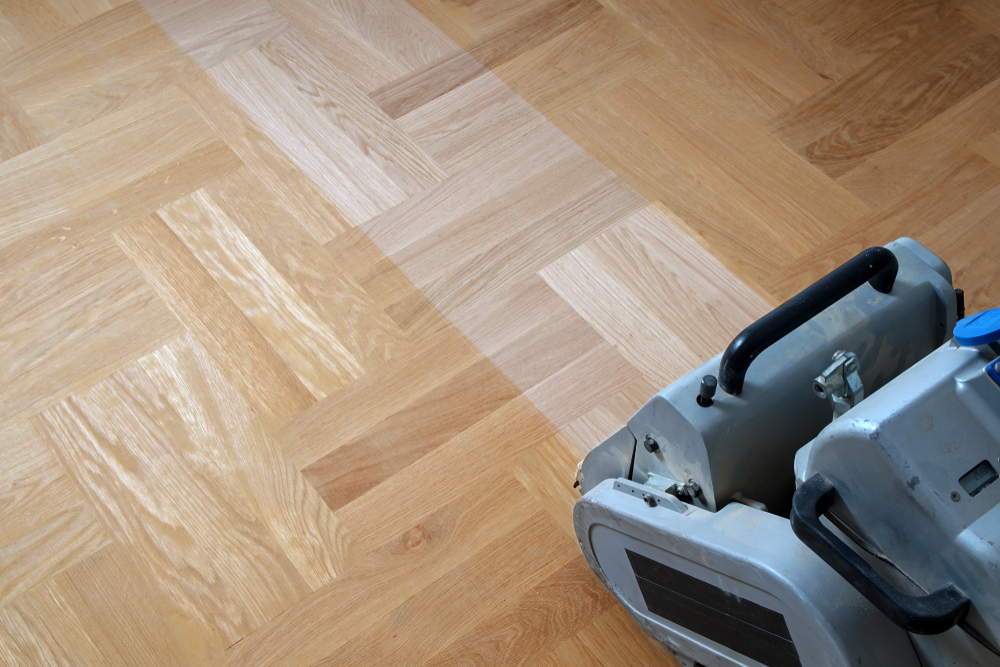
You’ve been staring at your floors for a while now. Maybe they’ve lost their color. Maybe you’ve moved into an older Nassau County, NY home and pulled back the carpet to find original hardwood underneath. Maybe you just want to change the stain from that orange-tinted oak finish that was everywhere in the ’90s to something more contemporary.
Whatever the situation, you’ve started searching — and now you’re drowning in terms that seem to mean the same thing but probably don’t. Restaining. Refinishing. Resurfacing. Recoating. Every contractor uses them differently, and almost no one stops to explain the distinction.
That’s what this page is for.
How to Resurface Hardwood Floors — and What That Actually Means
“Resurfacing” is one of those words that sounds technical but rarely gets defined. In practice, most contractors use it interchangeably with “refinishing” — meaning the floor gets sanded down to bare wood, stained if desired, and sealed with a new finish coat. It’s a comprehensive process, and it’s what most people picture when they think about restoring old hardwood floors.
Where it gets confusing is that some contractors use “resurfacing” to describe a lighter touch — closer to a buff-and-recoat — while others use it to mean a full sand-and-stain. Before you agree to any scope of work, ask us exactly what steps are included. The difference in both time and cost can be significant.
Resurface wood floors vs. recoat: When the lighter option is enough
Not every floor needs to be sanded to bare wood. If your finish is dull or lightly scratched but the wood itself is in decent shape, a process called a screen-and-recoat — sometimes called a buff-and-recoat — can restore the sheen without the cost or disruption of a full refinish. This involves lightly abrading the existing finish to help a new topcoat bond, then applying fresh finish over it. No stain is involved, and the color doesn’t change.
The catch is that this only works when the existing finish is still intact and uncontaminated. Here’s a problem we see regularly in Nassau County homes: homeowners use consumer-grade “floor refresher” products — things like Rejuvenate, certain Bona polishes, or Murphy’s Oil Soap — thinking they’re maintaining their floors. These products leave behind a residue that looks fine on the surface but prevents any new professional finish from bonding properly.
When we later try to buff-and-recoat a floor treated with these products, the new finish can peel, bubble, or never fully cure. What should have been a straightforward maintenance coat turns into a full strip-and-sand job. This is one of the most common and avoidable problems we encounter.
If you’ve been using any of these products, mention it before we start work. We’ll test the surface and tell you honestly what you’re dealing with — rather than discovering it midway through the job. The screen-and-recoat is a legitimate, cost-effective option when conditions are right. It’s also genuinely the correct recommendation for floors that don’t need more than that.
What restaining hardwood floors actually requires — and when it makes sense
Restaining is specifically about changing or renewing the color of your wood floors. And here’s the thing most people don’t realize: you cannot apply stain over an existing finish. Stain needs to penetrate bare wood to work. That means restaining always involves sanding — you have to get down to raw wood before any new color can be introduced.
This is why restaining and refinishing are closely related but not identical. Refinishing can mean applying a clear topcoat over an existing surface (if conditions allow), or it can mean a full sand-and-finish process. Restaining specifically means sanding to bare wood, applying a new stain color, and then sealing with a protective finish on top. It’s the right choice when you want a different look — going from a dated orange oak to a cooler gray-brown, for example, or from a very dark walnut down to something lighter.
Going darker with a new stain is generally straightforward. Going lighter is more involved, because you’re not just adding color — you’re removing it. Lighter stains require more aggressive sanding to strip away the old color fully, and the result depends heavily on the wood species and how many times the floor has been refinished before.
For Nassau County, NY homeowners, this comes up constantly. A significant portion of the homes here were built between the late 1940s and the 1970s — the post-war suburban boom that Levittown helped define. Many of those homes have original oak strip floors that were covered with carpet decades ago and have never been touched since. When homeowners pull up that carpet and find solid hardwood underneath, they’re often looking at floors that have never been refinished at all. That’s actually a good position to be in: plenty of wear layer left, and the freedom to choose any stain color you want.
We’ve worked on floors like this throughout Nassau County, and the results are usually striking.
Wood floor refinishing: The full process, explained
A full wood floor refinishing job — the kind that involves sanding down to bare wood — is the most comprehensive option and the one that addresses the widest range of problems. Deep scratches, old stain colors, surface damage, uneven sheen from years of spot treatments: all of it gets removed and replaced.
The process moves in stages. First, the floor is sanded progressively with finer and finer grits to strip the old finish and level the surface. Then the wood is cleaned thoroughly to remove all dust and debris. If staining is part of the job, that comes next — applied evenly and allowed to penetrate before any topcoat goes down. Finally, multiple coats of finish are applied and allowed to cure fully before the floor can be used again.
Hardwood floor refinishing: How many times can it be done?
This is one of the most common questions we hear, and the honest answer is: it depends on the floor. Solid hardwood has a wear layer — the thickness of wood above the tongue-and-groove — that’s typically around a quarter inch or more. Each refinishing removes a small amount of that layer through sanding. With proper technique and professional equipment, a solid hardwood floor can usually be refinished multiple times over its lifetime. The National Wood Flooring Association considers this refinishability the defining advantage of solid wood over other flooring types.
Engineered hardwood is a different story. The veneer layer on engineered floors varies widely by product — some have enough thickness to be refinished once or twice, while others don’t have enough material to survive even a single aggressive sand. The NWFA uses a benchmark of 2.5mm as the minimum wear layer thickness for safe refinishing. If you’re not sure whether your engineered floors can be refinished, we recommend a professional assessment before any work starts. Sanding through the veneer to the core layer underneath isn’t a recoverable mistake.
One thing worth knowing: more sanding is not better. Over-sanding is a real problem that shortens the remaining life of your floor. We sand as much as necessary and no more. If someone’s proposal involves heavy sanding on a floor that’s been refinished several times already, ask how they’re assessing the remaining wear layer before they start.
For older Nassau County, NY homes — particularly the Cape Cods and split-levels built in the 1950s and ’60s — the floors may have been refinished once or twice before, but rarely more than that. In many cases, especially where floors were covered rather than maintained, there’s more life left than homeowners expect.
Hardwood floor refinishing before selling: Is it worth it on Long Island?
If you’re preparing to sell a home in Nassau County, NY, hardwood floor refinishing is consistently one of the highest-return projects you can do before listing. Buyers notice floors immediately — they’re one of the first things people see when they walk through a door, and worn or discolored floors can drag down the perceived value of an otherwise well-maintained home.
The Nassau County real estate market is active and competitive, particularly in spring. Sellers who put their homes on the market in March, April, or May are competing against a lot of other inventory, and presentation matters. Fresh floors don’t just photograph better — they change how buyers feel in the space. That emotional response is real and it affects offers.
There’s also a practical timing consideration specific to Long Island: the coastal humidity here, especially from late June through August, can extend drying times for oil-based finishes. If you’re planning to refinish before a summer listing, working with a contractor who understands how humidity affects the curing process — and who can advise on finish selection accordingly — makes a real difference in the final result. Water-based finishes cure faster and are less sensitive to humidity, which is worth factoring into the conversation depending on your timeline.
One more thing for the pre-sale context: if you’re refinishing floors before listing, stairs and railings matter too. Buyers walk through a home as a whole, and refinished floors paired with worn, mismatched stair treads create a visual disconnect. We offer staircase and stair handrail refinishing alongside floor work, so the entire wood surface of your home can be matched and finished consistently.
Not sure which service your floors need? Here’s how to think about it
The short version: if your floors are dull but the finish is intact and uncontaminated, a buff-and-recoat may be all you need. If you want a color change, or if the wood itself is scratched, stained, or damaged, you’re looking at a full restaining or refinishing job. And if someone is telling you that you need the most expensive option without first assessing what’s actually going on with your floor, that’s worth questioning.
The right answer depends on your specific floor — its species, age, wear layer, finish history, and what you’ve used to clean or maintain it over the years. There’s no universal formula, and any contractor who quotes without looking closely at the floor first isn’t giving you a real answer.
We’ve been doing this work across Nassau County, NY, Suffolk County, and Queens for over 30 years. If you’re trying to figure out where your floors stand and what they actually need, we’re happy to take a look — no obligation, no pressure. Reach out to KO Floors, Inc. and we’ll start with an honest assessment.