
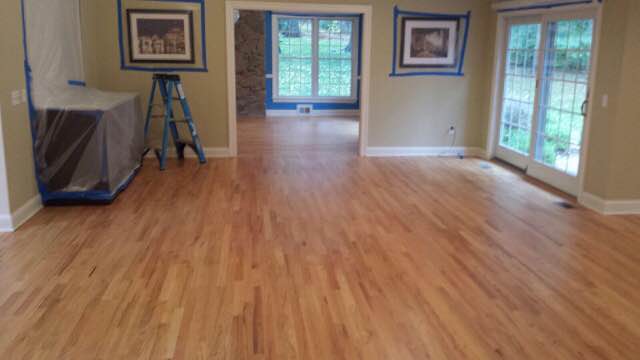
Most Nassau County homeowners don’t walk into a flooring decision with a clear plan. They walk in with a Pinterest board, a vague sense of what they don’t want, and a growing fear of choosing the wrong stain color. If you’re renovating a home in Garden City, Great Neck, Manhasset, or anywhere across Nassau County — especially one built in the 1950s or 60s with original hardwood underneath — the options can feel overwhelming fast. This post is here to cut through that. We’ll cover how design professionals on Long Island approach wood flooring decisions, what the color and stain selection process actually looks like when done right, and what to watch for when you’re ready to move forward.
Hardwood Floor Colors: How Nassau County Designers Actually Choose
Interior designers don’t pick a stain color by holding a 2-inch chip up to the wall. They think about the whole room — the ceiling height, the direction the light comes from, the undertones in the furniture and trim, and how the floor will read at 7 a.m. versus 7 p.m. It’s a process, not a gut call.
What makes Nassau County homes particularly interesting is the housing stock itself. The county is full of post-war colonials, Capes, and ranch homes — most of them built between 1945 and 1975 with original solid hardwood floors that have never been properly refinished. Those floors are almost always red oak, which is more porous than white oak and takes stain beautifully — but it also means the color can read differently than it does on a showroom display. A skilled designer knows this. A skilled flooring contractor does too.
Wood Floor Stain Colors: What Goes Wrong and How to Avoid It
The stain color decision is where most renovation projects stall. Homeowners spend weeks staring at chips, second-guessing themselves, and ultimately picking something that looks nothing like they imagined once it’s across an entire floor under their actual lighting. It’s one of the most common frustrations in the refinishing process — and it’s almost entirely avoidable.
The fix isn’t choosing a more popular color. It’s testing the actual color on your actual floor before you commit. That means having a contractor apply sample stains directly to a small section of your floor — not on a board, not on a chip — so you can see exactly how the stain interacts with your specific wood, in your specific light. This is standard practice among serious flooring professionals, but it’s not universal. A lot of contractors skip it. The ones who don’t tend to have very different reviews.
When it comes to the stains themselves, the options break down into a few broad families. Dark stains — Jacobean, Dark Walnut, Ebony — create a dramatic, grounded look that works well in rooms with strong natural light and higher ceilings. They’re popular in traditional and transitional homes across communities like Roslyn and Old Westbury, where the architecture can support the weight of a darker floor.
On the other end, lighter and more natural stains — Golden Oak, Natural, or a simple clear finish — have been gaining ground steadily. According to the National Wood Flooring Association, 66% of their members expect increased demand for cleaner, more natural wood tones in 2025. That tracks with what we’re seeing on Long Island, where homeowners with LIRR commutes into the city often bring back a preference for the lighter, more Scandinavian-influenced aesthetic that’s popular in Manhattan right now.
The middle ground — Provincial, Special Walnut, Antique Brown — tends to be the most forgiving. These stains work across a wide range of interior styles and lighting conditions, which is partly why they’re so widely used. They’re not a compromise; they’re genuinely versatile. But they’re also the default choice, and if your designer has a specific vision for the space, a custom stain mix might get you closer to exactly what you’re after. Red oak’s porosity makes it particularly well-suited to custom blending — you can shift the undertone warmer or cooler depending on what the rest of the room is doing.
One more thing worth knowing: the finish type affects how the color reads as much as the stain itself does. Oil-based polyurethane adds a warm, amber tone that deepens over time. Water-based finishes dry clearer and cooler. If you’ve chosen a gray or greige stain to complement a contemporary interior, an oil-based finish will fight that color. It’s the kind of detail a designer will catch. It’s also the kind of detail that separates a flooring contractor who understands design from one who just applies what you ask for.
How We Choose to Partner With Homeowners on Long Island
At KO Floors, Inc., we’re not just looking to sand a floor. We’re looking to deliver an experience that reflects well on the design vision you’ve invested in. That’s a higher bar than most homeowners realize, and it’s why the flooring companies that work regularly with interior designers tend to stand out pretty clearly from the rest of the field.
The first thing we evaluate in every project is whether we’re actually listening — not just to what the homeowner wants, but to the design intent behind it. A contractor who can look at a room, understand the direction the designer is taking it, and translate that into a stain color, plank width, and finish combination — that’s genuinely rare. Most contractors are good at executing what they’re told. We participate in the design conversation.
Responsiveness matters more than most people expect. Nassau County’s interior design market is active, particularly in communities like Garden City, Manhasset, and Great Neck, where full-home renovation projects are common. Designers working on those projects are coordinating multiple trades on tight timelines. We answer the phone, show up when we say we will, and communicate clearly throughout the job. That kind of responsiveness isn’t an accident — it’s how we operate.
The other thing we care about deeply is comprehensive project management. Flooring is almost never the only thing happening in a renovation. There are painters, cabinetmakers, electricians, and furniture deliveries to coordinate around. Our team handles furniture moving, prep, sanding, staining, finishing, and cleanup as a single managed process. When a homeowner doesn’t have to coordinate three separate vendors to get their floors done, the whole project runs smoother. That’s the kind of operational reliability that turns a one-time project into an ongoing relationship.
For Nassau County’s older homes specifically, there’s another layer of expertise that matters: knowing what you’re working with. Original hardwood from the postwar era — red oak, white oak, and in some of the older homes, wide-plank pine — has its own character and its own challenges. Pine plank floors, in particular, require a completely different approach than standard oak. They’re softer, they dent more easily, and they need to be handled by someone who’s restored them before. Antique floor restoration is a specialty, not a sideline — and it’s one that’s especially relevant in a county where the average single-family home is about 73 years old.
Wood Flooring Options on Long Island: What Nassau County Homes Actually Need
Not every wood flooring option performs the same way in Nassau County’s climate. Long Island sits between the Atlantic Ocean and Long Island Sound, which means the humidity swings hard — hot and humid in summer, cold and dry in winter. That seasonal cycle causes wood to expand and contract, and if the wrong species or installation method is used, you’ll see the results in your floor within a year or two.
This is why the choice between solid hardwood and engineered hardwood matters more here than it does in drier inland markets. Engineered hardwood — which has a genuine hardwood veneer over a multilayer core — handles moisture fluctuation significantly better than solid wood. It’s not a lesser product; it’s often the smarter one for Nassau County homes, particularly in rooms closer to grade or in coastal communities like Long Beach, NY and Atlantic Beach, NY where salt air adds another variable.
Solid vs. Engineered Hardwood: Which Is Right for Your Nassau County Home?
Solid hardwood is exactly what it sounds like — a single, solid piece of wood milled to a consistent thickness. It’s the traditional choice, and for good reason: it can be sanded and refinished multiple times over decades, which makes it a long-term investment in a home’s character. Most of Nassau County’s older housing stock already has solid hardwood underneath the carpet or vinyl that was laid over it in the 1980s and 90s. When those floors are in decent condition, refinishing them is almost always the right call — it preserves the original wood, maintains the character of the home, and costs significantly less than a full replacement.
Engineered hardwood has a real hardwood surface — typically 2 to 6 millimeters thick — bonded over a plywood or HDF core. The layered construction resists the seasonal expansion and contraction that solid wood is prone to, which is a meaningful advantage in Nassau County’s climate. It’s also the better option for installations over concrete subfloors, which are common in split-level homes and finished basements throughout the county. Engineered hardwood accounted for more than 72% of the hardwood flooring market in 2024, according to Mordor Intelligence — not because it’s trendier, but because it performs better in a wider range of conditions.
The honest answer for most Nassau County homeowners is: if you have original solid hardwood floors, refinish them. They’re almost certainly salvageable, and the result will be better than anything you can install new. If you’re adding flooring to a room that didn’t have hardwood before — a finished basement, a sunroom addition, a home built without original wood floors — engineered hardwood is usually the right direction. The key is having someone assess your specific floors and your specific conditions before you decide, rather than defaulting to whatever the big-box store has in stock.
One thing that often surprises homeowners: the width of the plank matters as much as the species or stain. Narrower planks (2.25 to 3.25 inches) are traditional and work well in smaller rooms or historically styled homes. Wider planks (5 inches and up) create a more open, contemporary feel and are increasingly popular in Nassau County’s renovated colonials and mid-century homes. A wider plank also shows more of the wood’s natural grain — which is either a feature or a liability depending on the species and the look you’re going for. Quarter-sawn white oak, for example, has a tight, linear grain that reads beautifully in wide planks. Plain-sawn red oak has a more pronounced cathedral grain that can feel busy at wider widths.
Frequently Asked Questions About Wood Flooring in Nassau County
**Can my original hardwood floors be refinished, or do they need to be replaced?**
Almost certainly refinished — and that’s true for the vast majority of Nassau County homes. Original hardwood from the 1950s through the 1970s was milled thick, typically three-quarters of an inch, which means it can be sanded multiple times before it’s too thin to work with. The floors that truly can’t be saved are the exception, not the rule. Pet damage, water stains, surface scratches, and even the orange-toned polyurethane finishes from the 1980s are all things a skilled refinisher can address. The only way to know for certain is to have someone look at them in person.
**How do I choose a stain color without regretting it later?**
Don’t choose from a chip. Ask your flooring contractor to apply two or three stain options directly to a section of your actual floor, let them dry fully, and live with them for a day or two before deciding. The color will look different in morning light versus afternoon light, and it will look different once it covers the whole room. Any contractor who skips this step and asks you to commit from a display board is asking you to guess — and guessing on something that covers every square foot of your Nassau County home is a bad idea.
**Does Nassau County’s coastal humidity affect which wood flooring I should choose?**
Yes, meaningfully. The seasonal humidity swings on Long Island — from the wet, salt-air summers to the dry, heated winters — cause wood to expand and contract more than it would in a drier climate. For rooms at or below grade, or in homes close to the water in communities like Long Beach, NY, Lido Beach, NY, or Atlantic Beach, NY, engineered hardwood is often the more practical choice. For above-grade rooms in homes with original solid hardwood, proper acclimation before installation and a quality finish coat go a long way toward protecting the floor through seasonal changes. Moisture testing before any new installation is standard practice — or should be.
**What’s the difference between oil-based and water-based finish, and which should I choose?**
Oil-based polyurethane dries slower, adds a warm amber tone to the wood, and tends to be more durable in high-traffic areas. Water-based finish dries faster, stays clearer, and is lower in VOCs — which matters if you have kids or pets and need to get back into the space quickly. The choice often comes down to the stain color you’ve chosen and the look you’re after. If you’ve gone with a gray or natural stain and want to keep it looking cool and clean, water-based is the better match. If you want warmth and richness and you’re not in a rush, oil-based gives you that depth. We can walk you through both options with samples before you decide.
Getting Wood Flooring Right in Nassau County
Choosing wood flooring is one of those decisions that touches every room in your home — which means getting it right matters more than almost any other renovation choice you’ll make. The species, the stain, the finish, the plank width — all of it adds up to something that either feels like your home or doesn’t.
Nassau County’s housing stock is genuinely well-suited to beautiful hardwood. Most of those original floors are still there, still salvageable, and still capable of looking better than anything you could install new. The homeowners who end up happiest with their floors are the ones who worked with someone who understood the design side of the decision, not just the technical side — someone who showed them samples on their actual floor, guided them through the color choice, and handled the whole project without making them feel like they were managing a construction site.
If you’re at that stage — or getting close to it — we offer free, no-obligation consultations across Nassau County. It’s a conversation worth having before you commit to anything.