
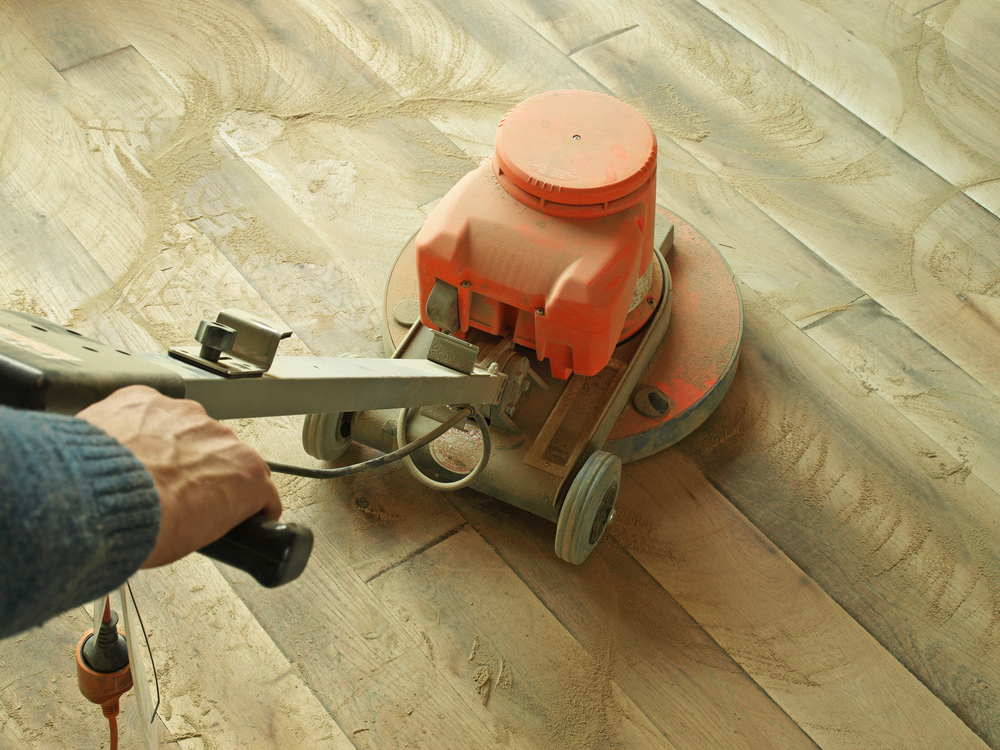
If you’ve ever watched a traditional floor refinishing job, you already know what gets left behind — a fine layer of wood dust on every surface in the house, inside cabinets, coating electronics, sitting in the vents. It lingers for days. And for a lot of Nassau County homeowners, that’s the reason the project keeps getting pushed back.
Dustless floor refinishing exists to solve exactly that problem. But the term gets used loosely, and there’s real confusion in the market about what it means, how it works, and whether every contractor who says “dustless” is actually delivering the same thing. We’re going to answer those questions plainly.
How Dustless Floor Refinishing Actually Works
The core idea is straightforward: instead of letting sanding dust become airborne and settle throughout your home, dustless systems capture it at the source — the moment it’s created — before it ever gets a chance to float into the air.
We accomplish this through vacuum-equipped drum sanders and edge sanders connected by sealed hoses to a containment system. As the sander works across your floor, the dust is pulled directly into the collection unit rather than released into the room. The result isn’t zero dust — no honest contractor will tell you that — but professional-grade systems capture between 95% and 99% of wood dust at the source. What remains is a fraction of what traditional sanding produces.
What HEPA Filtration Does That a Regular Vacuum Can’t
Not all dust containment systems are equal, and this is where a lot of homeowners get misled. Some contractors attach a basic shop vacuum to their sander and call it “dustless.” The problem is that standard vacuums don’t capture the finest particles — the ones smaller than 10 microns that pose the real health risk when inhaled deeply into the lungs.
Professional dustless systems use HEPA filtration, which is rated to capture 99.97% of particles as small as 0.3 microns. To put that in perspective, those particles are roughly 300 times smaller than the width of a human hair. A standard shop vac passes right through them. A HEPA-equipped system traps them.
Many professional setups also include a cyclone separator — a component that uses centrifugal force to pull heavier particles out of the airstream before they even reach the filter. This extends the life of the HEPA filter and improves the overall capture rate. The combination of vacuum-equipped sanders, cyclone separation, and HEPA filtration working together is what separates a genuinely contained refinishing job from one that just looks cleaner on the surface.
This matters for more than comfort. The National Institute for Occupational Safety and Health classifies hardwood dust as a possible carcinogen and recommends an exposure limit of just 1 mg/m³ — fifteen times stricter than OSHA’s permissible limit. A NIOSH study found that every wood dust exposure measurement taken during traditional sanding tasks exceeded that recommended limit. Hardwood species like oak, walnut, ash, and birch have specifically been associated with nasal cancer at high exposures in occupational settings.
When you’re refinishing floors in an occupied home — with kids, pets, or anyone with allergies or asthma — the difference between a shop vac and a true HEPA system isn’t a minor detail. It’s the whole point.
Dustless Sanding vs. No-Sand Refinishing: A Distinction Worth Understanding
This is the misconception we run into most often, and it’s worth addressing directly because it affects the quality of the finished floor — not just the cleanliness of the process.
“No-sand” refinishing — sometimes called a screen-and-recoat — skips mechanical sanding entirely. A technician scuffs the existing finish lightly and applies a new topcoat over it. There’s no real sanding dust because there’s no real sanding. Some contractors market this as “dustless,” which is technically accurate but misleading.
The problem is that a screen-and-recoat only works on floors where the existing finish is still largely intact. If your floors have deep scratches, staining, finish failure, or if you want to change the stain color, a recoat won’t fix any of that. You’re adding a new layer on top of an old, compromised one.
True dustless hardwood floor refinishing still involves full mechanical sanding — drum sander, edge sander, detail work in corners — the same process as traditional refinishing. The difference is that the dust is captured at the source rather than released into your home. You get the full restoration: old finish removed, bare wood exposed, stain applied if desired, and fresh coats of finish laid down. The floor is genuinely renewed, not just refreshed on the surface.
If a contractor quotes you a low price for “dustless” work and the job sounds unusually fast or simple, it’s worth asking directly: are you doing full mechanical sanding, or a screen-and-recoat? The answer tells you everything about what you’re actually getting.
There’s also a finish quality benefit that rarely gets mentioned. When airborne dust particles settle into wet finish coats as they dry, they create surface imperfections — visible in raking light — that most homeowners assume are just part of the process. They’re not. Dustless refinishing keeps the air cleaner during the coating stage, which means fewer particles contaminating the finish as it cures. The result is a smoother, more uniform surface. That’s a quality-of-finish argument, not just a cleanliness one.
Why Dustless Refinishing Matters More in Nassau County
Nassau County’s housing stock is old. The median home was built in 1955, and nearly one in five homes in the county was built before 1940. That’s not a minor footnote — it has direct implications for anyone refinishing floors in an occupied Nassau County home.
Homes built before 1978 may have floors finished with products that predate the lead paint ban. When those finishes are disturbed by sanding, EPA Renovation, Repair, and Painting rules require the use of HEPA vacuums during the work. A dustless system with true HEPA filtration isn’t just the cleaner option in these homes — it’s the responsible one, and in many cases the required one.
Occupied Homes, Families, and the Real Cost of Traditional Sanding
Most floor refinishing jobs in Nassau County happen in occupied homes. Families can’t always leave for a week. Kids are home. Pets are home. Daily routines continue. And in a county where the average single-family home is under 1,900 square feet, there’s nowhere for the dust to go except everywhere.
Traditional sanding dust doesn’t respect room boundaries. It finds its way into HVAC systems, coats the inside of kitchen cabinets, settles on mattresses, and lingers in the air long after the crew has packed up. The cleanup after a traditional job often takes as long as the job itself — and even then, people with allergies or asthma feel it for days.
Dustless refinishing compresses all of that dramatically. Because dust is captured at the source, adjacent rooms stay clean during the work. You don’t need to empty every cabinet, wrap every piece of furniture, or plan for a full household deep-clean before the space is livable again. For families in Rockville Centre, NY, Massapequa, NY, Hewlett, NY, or anywhere else in Nassau County where the home is the center of daily life, that’s not a minor convenience — it’s a meaningful difference in how disruptive the project actually is.
It also matters for the homes themselves. Nassau County’s proximity to the Atlantic Ocean and Long Island Sound means elevated humidity levels, particularly in summer. Dust that settles into HVAC systems in a humid coastal environment creates its own set of problems. Keeping that dust contained from the start is simply the cleaner approach in every sense.
What to Ask Before You Hire a Dustless Floor Refinishing Contractor
Not every contractor who uses the word “dustless” means the same thing by it, and asking the right questions before you book can save you a lot of frustration.
First, ask whether they use HEPA-rated filtration — not just a vacuum attachment. A true HEPA filter captures particles as small as 0.3 microns. If the contractor can’t tell you what filtration standard their system meets, that’s worth noting.
Second, ask whether the job involves full mechanical sanding or a screen-and-recoat. If you’re looking for a genuine restoration — especially if your floors have visible scratches, staining, or finish failure — you need full sanding. A recoat will look better temporarily, but it won’t last, and it won’t address the underlying condition of the floor.
Third, ask about their process for edge work. Edges and corners are where a lot of contractors cut corners on dust containment, because the large drum sander can’t reach them. A thorough dustless job uses vacuum-equipped edge sanders and detail tools for those areas — not just the open field of the floor.
If your home was built before 1978, ask specifically about their lead-containment protocol. In Nassau County, where a substantial portion of the housing stock predates that year, this is a reasonable and important question. A contractor who dismisses it or doesn’t have a clear answer is telling you something.
Finally, ask for a written, itemized estimate before any work begins. Transparent pricing — knowing exactly what’s included and what isn’t — is one of the clearest signals that a contractor runs their business professionally. It protects you from scope creep and gives you something concrete to compare across bids.
At KO Floors, Inc., we show stain samples directly on your floor before we proceed with any work. We handle every aspect of the job — sanding, staining, finishing, stair and handrail work if needed — so you’re not coordinating between multiple contractors. And we stand behind the quality of our work with a 100% satisfaction guarantee. If you want to know what the process looks like for your specific floors, we offer free, no-obligation quotes. You can call or text us at 631-872-8524.
Is Dustless Floor Refinishing Worth It for Your Nassau County Home?
For most Nassau County homeowners, the answer is yes — and not just because it’s cleaner. The combination of older housing stock, occupied homes, and families with real health considerations makes dust containment more than a preference. It’s the standard a quality refinishing job should meet.
The key is understanding what you’re actually getting. True dustless refinishing means full mechanical sanding with dust captured at the source through HEPA-rated filtration — not a surface recoat marketed as dustless because there’s no sanding involved. The distinction matters for the quality of your floor and for your home’s air during and after the job.
If your floors have been on the to-do list for a while and the mess has been the reason you’ve held off, it’s worth having a real conversation about what the process actually looks like. We at KO Floors, Inc. have been doing this work on Long Island for decades, and we’re happy to walk you through it before you commit to anything.