
Every fall, Nassau County homeowners have the same realization — usually sometime in late October, when the family group chat starts filling up with Thanksgiving plans. The floors. They need to be done. And now there’s no time.
It doesn’t have to go that way. If you’re already thinking about refinishing your hardwood floors, you’re ahead of most people. This guide covers why fall is genuinely the best window for this kind of project on Long Island, what the refinishing process looks like from start to finish, and how to do a quick room-by-room check to figure out what your floors actually need before you call us.
How to Refinish Hardwood Floors the Right Way
Refinishing hardwood floors isn’t just sanding and slapping on a coat of polyurethane. Done right, it’s a multi-step process that takes a few days and requires the right equipment, the right conditions, and someone who knows what they’re doing.
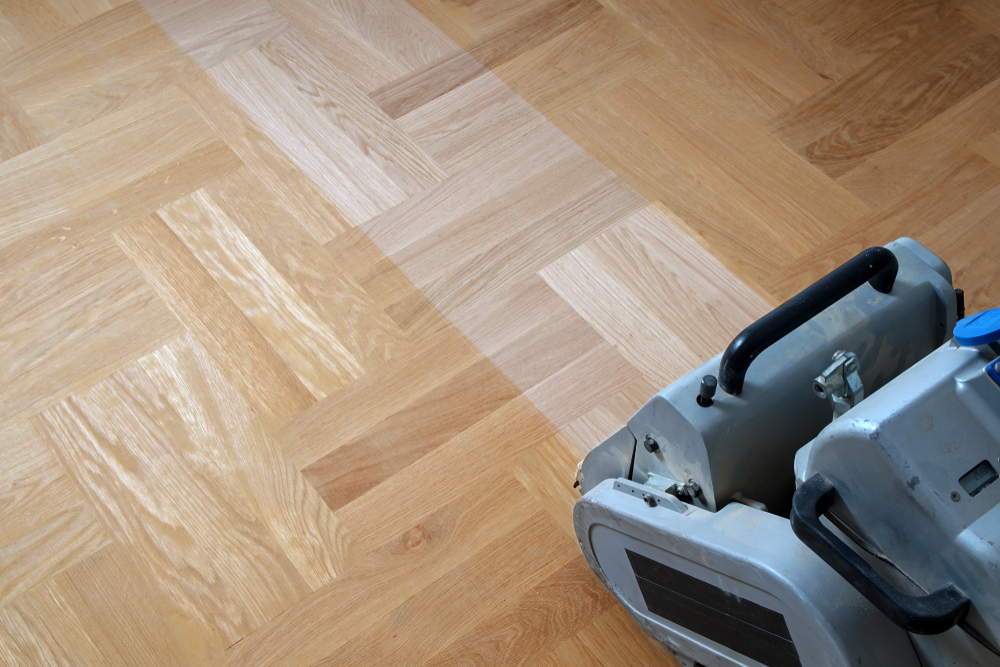
The process starts with a floor evaluation — checking the condition of each board, identifying any that need repair or replacement, and measuring how much wood is left above the tongue-and-groove to confirm the floor can handle another round of sanding. From there, it moves into sanding down to bare wood, edge work, staining if you want a color change, and then multiple coats of finish with drying time between each one.
A standard project for an average-sized home typically takes two to five days. After that, the finish needs time to cure before you’re moving furniture back in and returning to normal life.
Full Sand-and-Refinish vs. Screen-and-Recoat — Which Does Your Floor Need?
This is one of the most common questions homeowners ask, and it’s worth understanding before you get quotes, because the two aren’t interchangeable.
A full sand-and-refinish takes the floor down to bare wood. It removes deep scratches, stains, and years of wear. It also gives you the option to change the stain color entirely — going lighter, darker, or shifting to a gray or natural tone. This is what most people picture when they think about refinishing, and it’s the right call when the floor has significant damage or hasn’t been touched in a decade or more.
A screen-and-recoat is a lighter approach. It scuffs up the existing finish just enough for a new topcoat to bond, then adds one or two fresh coats over what’s already there. It won’t fix deep scratches or change the color, but it refreshes the sheen and adds a layer of protection. It’s faster, less disruptive, and costs less — but it only works if the floor’s existing finish is still in reasonable shape.
The way to tell which one you need is to look at the floor in good light. If you see scratches that catch your fingernail, dull patches that don’t respond to cleaning, or areas where the finish has worn through to bare wood, you’re past the screen-and-recoat stage. If the floor looks a little tired but the finish is still intact, a recoat might be enough.
One thing worth knowing: solid hardwood floors can typically be fully sanded and refinished five to seven times over their lifetime, depending on the thickness of the wood. Many of the homes in Nassau County — especially the Cape Cods, ranches, and colonials built in the postwar decades — have original oak floors that have barely been touched. If yours falls into that category, there’s a good chance a full refinish is not only possible but will make the floor look better than it has in years.
Do a Room-by-Room Floor Inspection Before You Call
You don’t need to be a flooring expert to do a basic assessment of your floors. A simple walk-through with fresh eyes will tell you a lot.
Start by clearing the room as much as you can — furniture, rugs, anything covering the floor. Then get down low and look across the surface at an angle in natural light. This is the best way to see scratches, dips, and uneven areas that you’d otherwise walk right past. Check for boards that feel soft or springy underfoot, gaps between boards that have widened over time, and any spots where the finish has gone completely dull or worn through.
In the kitchen and near exterior doors, look for water damage — dark staining or boards that have started to cup or warp slightly at the edges. These areas take more abuse than the rest of the house and often show wear first. The same goes for hallways and anywhere with heavy foot traffic.
Pay attention to the transitions between rooms too. If the floors in your living room and dining room are connected, you’ll want them refinished at the same time so the color and sheen match. Doing one room now and another later almost always results in a noticeable difference, even if you use the same stain.
If you pull back a corner of carpet in an older Nassau County home and find hardwood underneath — which happens more often than you’d think in homes built between the 1940s and 1960s — take a close look at the condition before assuming it can’t be saved. In most cases, original oak floors that have been protected under carpet for decades are actually in excellent shape. They may need a full sand-and-refinish, but the wood itself is often sound.
When in doubt, get a professional to look at it. We’ll tell you honestly what the floor needs — whether that’s a full refinish, a recoat, a few board replacements, or nothing at all.
Why Fall Floor Refinishing Makes Sense in Nassau County’s Climate
Timing matters more than most homeowners realize, and in Nassau County specifically, the case for early fall is stronger than it is almost anywhere else.
Nassau County sits in a humid coastal climate. Summers here are hot and sticky — humidity regularly climbs into ranges that are genuinely problematic for floor refinishing. When there’s too much moisture in the air, finish takes longer to dry, adhesion suffers, and the results can be inconsistent. By late September and into October, that changes. Humidity drops, temperatures settle into a stable range, and the conditions become much more favorable for the finish to cure properly.
That’s not the only reason fall makes sense. Contractor schedules fill up fast once September hits, and homeowners who wait until October to start calling often find they’re looking at a timeline that runs right up against the holidays.
What Humidity and Temperature Actually Do to Hardwood Floor Finish
This is the part most homeowners don’t know about, and it’s genuinely worth understanding before you schedule any floor refinishing project.
Hardwood finish cures best when indoor humidity stays between 35% and 55% and temperatures hold steady between 65°F and 75°F. Those conditions allow the finish to dry evenly, bond properly to the wood, and reach full hardness on schedule. When conditions fall outside that range — in either direction — things get complicated.
During Long Island’s peak summer humidity (roughly mid-August through mid-September), moisture in the air slows the drying process significantly. Finish that should be ready for a second coat in a matter of hours may still be tacky. More importantly, high ambient humidity can cause the wood itself to absorb moisture and expand slightly during the process, which affects how the finish adheres and how the floor looks once everything dries. Opening windows in August to ventilate actually makes this worse, not better — you’re pulling humid outdoor air directly into the work area.
Winter creates the opposite problem. Heating systems running full blast in a closed house drop indoor humidity well below the ideal range, which can cause the wood to contract and the finish to dry too fast. That leads to cracking and poor adhesion in a different way.
Early fall — late September through October — avoids both extremes. Outdoor temperatures are moderate, indoor heating hasn’t kicked into full gear yet, and humidity levels naturally settle into that 35%–55% sweet spot. It’s the window we consistently prefer on Long Island, and for good reason. The finish cures the way it’s supposed to, the results are more consistent, and the whole project runs more smoothly.
Why Nassau County Contractor Schedules Fill Up Fast Every Fall
Here’s the practical reality: you’re not the only homeowner in Nassau County thinking about floor refinishing in September. Thousands of other people are having the same thought at the same time — and most of them are also thinking about Thanksgiving.
The holiday deadline is real. Homeowners who want their floors done before they host family in November need to book in September at the latest. Factor in that a standard project takes two to five days plus cure time, and the math gets tight fast if you wait until October to start calling.
There’s also a secondary factor that doesn’t get talked about much. Fall is when Nassau County’s real estate market tends to see a surge of activity as families try to close and move before the school year is fully underway or before the winter slowdown. Homeowners prepping to list, buyers who want to refinish before moving in — all of that adds to the demand on local flooring contractors at exactly the same time.
The homeowners who avoid the scramble are the ones who call in August or early September, get on a contractor’s schedule, and have their floors finished and cured well before the holiday rush begins. It’s a simple advantage, but it makes a meaningful difference — both in terms of timing and in getting the crew and attention your project deserves rather than being squeezed in at the end of a packed schedule.
If you’ve been thinking about this for a while, fall is the window. Not because it’s a marketing talking point, but because the climate, the calendar, and the contractor availability all line up in your favor — and that alignment doesn’t last long.
Ready to Refinish Your Hardwood Floors Before the Holidays?
The short version: early fall is the best time to refinish hardwood floors in Nassau County — better conditions, better results, and enough runway to get it done before the holidays arrive. The longer you wait past mid-September, the harder it gets to find availability and the tighter the timeline becomes.
If your floors have been on your list for a while, now is the time to act on it. Do a quick walk-through, take note of what you’re seeing, and get a professional opinion before you commit to anything. We’ll look at the floor honestly and tell you what it actually needs.
We’ve been doing exactly that for Nassau County homeowners for over 50 years at KO Floors, Inc. If you want a free, no-obligation quote and a straight answer about what your floors need, give us a call or send a text to 631-872-8524. We’ll take it from there.