
Here’s the real reason most Nassau County homeowners delay refinishing their hardwood floors: it’s not the price. It’s the mental image. Dust coating every surface. Workers in and out for days. Fumes so strong you’re sleeping at a hotel. That picture — whether it’s based on a neighbor’s experience or something you read online — is enough to make anyone put it off another year.
Dustless hardwood refinishing was built to solve exactly that problem. But before you assume it’s just a marketing term, it’s worth understanding what it actually means, what it doesn’t mean, and whether your family — pets included — can realistically stay home while the work is done.
How Dustless Hardwood Refinishing Actually Works
Traditional floor sanding is effective, but it sends fine wood dust into the air and throughout your home — into your HVAC system, onto your furniture, inside your cabinets. Cleaning up after it can take as long as the job itself.
Dustless refinishing uses industrial vacuum systems equipped with HEPA filtration that attach directly to the sanding equipment and capture dust at the source before it becomes airborne. These systems can capture 90 to 99 percent of the dust generated during sanding. That’s not a rounding error. It’s the difference between a home that’s livable during the project and one that isn’t.
What a Dustless Hardwood Restoration Project Looks Like Day by Day
A standard dustless refinishing project runs two to four days from start to finish, depending on the square footage of your floors, the number of coats being applied, and the drying time required between each one. Here’s a realistic picture of what that looks like inside your home.
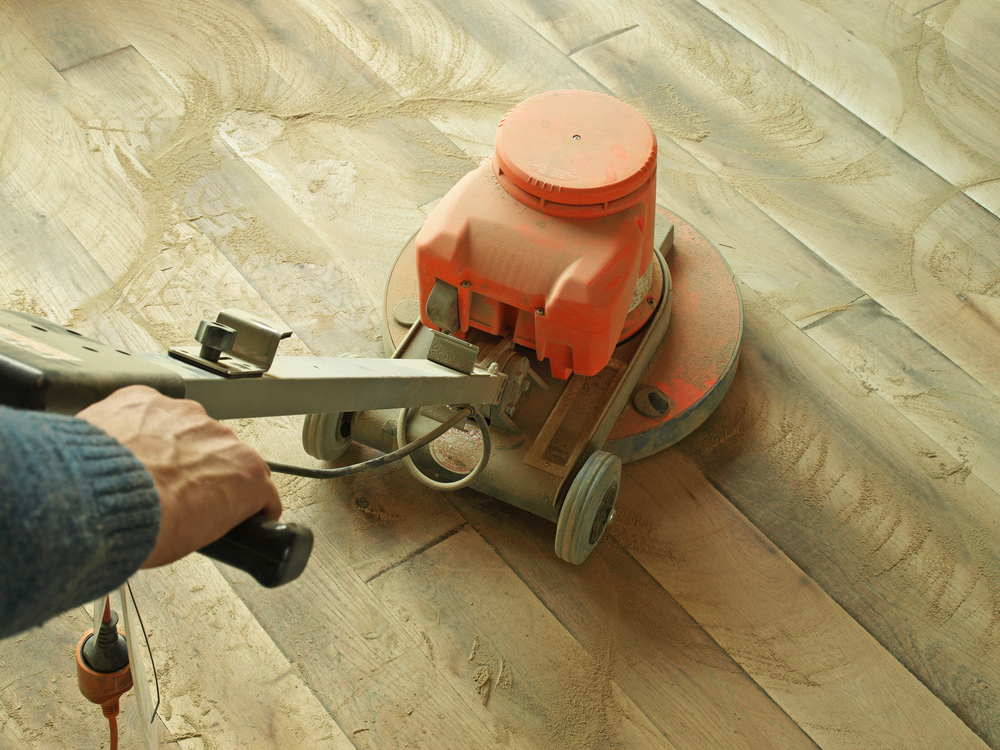
Day one typically involves prep work — furniture is moved, the floor is inspected for structural issues, moisture levels are assessed, and sanding begins with coarser grit to remove the old finish and surface damage. This is the loudest, most active day of the project. The vacuum containment system runs continuously, so the dust you’d expect from traditional sanding largely doesn’t materialize.
Days two and three are where the transformation happens. After progressive sanding passes with finer and finer grit, a sealer coat goes down, followed by stain if you’ve chosen a color change, and then the finish coats — typically two to three layers of polyurethane applied with proper dry time between each. Water-based finishes, which are the lower-odor, lower-VOC option, allow light foot traffic within 24 to 48 hours. Full curing takes five to seven days, but that’s largely invisible — the floors look and feel done well before that.
If you’re in a Nassau County home with original hardwood floors — and given the county’s average home age of 73 years, that’s most homes — the pre-sanding inspection matters more than people realize. Many of these floors have been refinished before, or have varying wood thickness across rooms, or have subfloor issues that need addressing before sanding begins. A thorough pre-project assessment protects both the floor and the timeline.
Is “Dustless” Actually Dust-Free? Here’s What You Should Expect
No. And any company that tells you otherwise isn’t being straight with you.
Dustless refinishing captures the overwhelming majority of sanding dust — up to 99 percent in ideal conditions — but a very small amount of fine particulate will still settle in the room. HEPA filtration systems are designed to capture particles as small as 0.3 microns, which is roughly 300 times smaller than the width of a human hair. That’s the threshold at which airborne particles pose the most significant respiratory risk, so the health benefit is real and meaningful.
What you won’t experience with a proper dustless system: dust coating your furniture, dust in your HVAC ducts, dust on your countertops, or the white-film-on-everything aftermath that defines traditional sanding. The difference is dramatic. But it’s worth setting accurate expectations — “dustless” means dramatically reduced, not zero.
The reason this matters is that some homeowners have heard “dustless” before and still ended up with a mess. That usually comes down to equipment quality and how the crew uses it. Containment systems only work if they’re properly maintained, correctly fitted to the sanding machines, and operated by people who know what they’re doing.
For families in Nassau County with children, elderly relatives, or anyone managing asthma or allergies — and Long Island has historically elevated rates of respiratory conditions — the dust reduction alone is a meaningful health consideration. Add in the lower VOC levels of water-based finishes (as few as 50 to 200 grams per liter, compared to roughly 450 grams per liter for traditional oil-based polyurethane), and the air quality difference between dustless and traditional refinishing is substantial.
Can Your Family and Pets Stay Home During Dustless Refinishing?
For most households, yes. That’s the short answer, and it’s the reason dustless refinishing has become our standard for occupied homes.
The longer answer depends on a few variables: which finish is being used, how sensitive your family members are to odor or particulate, and how the project is staged. Water-based finishes produce significantly less off-gassing than oil-based alternatives, which means the window of real fume concern is much shorter. Most families can stay in unaffected areas of the home while work is being done in others, moving room to room as sections are completed and cleared.
Pets and Kids During Refinishing: What Nassau County Families Should Know
Pets and young children are the two groups Nassau County homeowners ask about most when they’re considering a refinishing project — and it’s a fair question, because both are more vulnerable to airborne particles and chemical off-gassing than healthy adults.
With a dustless system and water-based finishes, the risk profile drops considerably. The dust that would otherwise circulate through your home is largely captured at the source. The fumes from water-based polyurethane dissipate much faster than oil-based alternatives — typically within a day or two of the final coat, rather than the week or more that oil-based finishes can require. For most families, keeping children and pets out of the active work area during sanding and during finish application is the practical precaution. Once a section is done and the finish has dried, it’s generally safe to return.
If you have a family member with severe asthma, a newborn, or a pet with known respiratory sensitivities, a conversation with your contractor before the project starts is worth having. We walk homeowners through the specific products being used, the ventilation plan for your home, and a realistic day-by-day schedule so you can plan accordingly. Nassau County’s predominantly owner-occupied, year-round-occupied homes mean that most families can’t simply vacate — and we’re built around that reality.
One practical note: if your home has original hardwood floors from the postwar era — common throughout communities like Massapequa, Merrick, Bellmore, and Levittown — those floors have often been covered by carpet or vinyl for decades. Discovering them and refinishing them is genuinely exciting, but the pre-project assessment is especially important for these older floors. Thickness, moisture content, and subfloor condition all affect how the project should be approached.
What to Look for When Hiring a Hardwood Floor Repair Specialist in Nassau County
This is one of the most important questions homeowners don’t ask until after something goes wrong. Nassau County requires a Home Improvement Contractor license for any work over $200 — verifying that license is the first step, not an afterthought. Beyond that, general liability insurance and workers’ compensation coverage protect you from financial exposure if something happens on your property during the project.
After the basics, look for a contractor who will give you a written estimate with a clear scope of work. Vague quotes that leave room for add-ons mid-project are a common source of frustration. A contractor who walks your floors before quoting — who checks wood thickness, assesses existing finish type, and looks for structural issues — is doing the job right. One who quotes over the phone without seeing the space is not.
Portfolio photos and verifiable reviews matter, but so does the specificity of those reviews. Generic five-star praise tells you less than a review that describes the crew arriving on time, handling furniture carefully, and leaving the home clean at the end of each day.
For Nassau County homeowners specifically, the seasonal timing of your project is worth thinking about. Spring — when you can open windows for ventilation and the humidity is manageable — is the most popular time to refinish floors on Long Island, and for good reason. Summer’s humidity can slow curing time. Winter’s cold affects finish adhesion. If you’re planning a project, the March through May window tends to produce the best conditions and the most predictable results.
Ready to Refinish Your Nassau County Hardwood Floors?
The disruption you’ve been imagining is mostly the memory of how floor refinishing used to work. Dustless refinishing — done properly, with the right equipment and the right finish — is a different experience. Most Nassau County families stay home throughout the project. Most homes are back to normal within a few days. The floors look better than they have in years, sometimes decades.
If your home has original hardwood floors that haven’t been touched since the 1970s or earlier, or if you’ve been living on scratched, faded wood and telling yourself you’ll deal with it eventually — this is the process that makes “eventually” feel manageable.
We’ve been serving Nassau County homeowners for over 30 years, with a team that brings more than 50 years of combined hardwood flooring experience to every project. If you’re ready to find out what your floors could look like — and what the process would actually involve for your specific home — reach out to us for a free, no-obligation quote.