
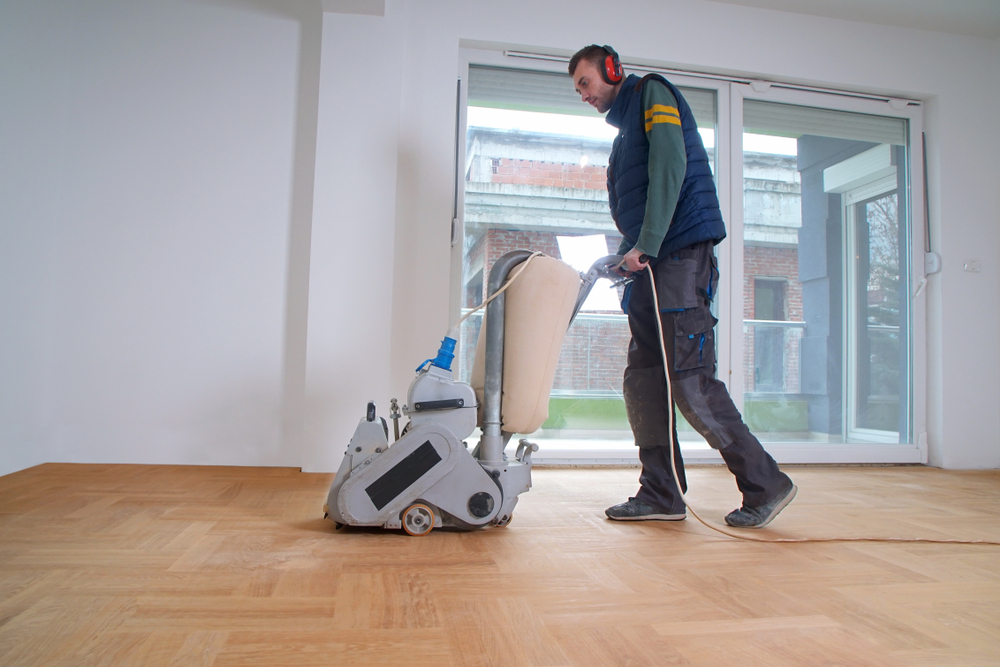
Most people searching for a floor sanding contractor already know their floors look bad. What they don’t always know is what happens next — what the contractor actually does when they show up, what determines whether your floors can be saved, and how to tell the difference between someone who knows what they’re doing and someone who doesn’t.
This page answers all of that. No fluff, no upselling — just a clear, honest walkthrough of what professional floor sanding involves, what to watch for, and what questions are worth asking before you commit to anyone.
Hardwood Floor Inspection: What Happens Before the Sanding Starts
The first thing a qualified floor sanding contractor does isn’t sand anything. It’s look — carefully. A proper pre-sanding inspection is what separates a contractor who understands floors from one who just runs equipment.
Before any machine touches your floor, we check the structural integrity of the boards, identify the wood species (red oak, white oak, maple, and pine all behave differently under a sander), and assess moisture content. High moisture in the wood — common in Nassau County, NY homes near the water or in basements — can cause a freshly refinished floor to cup or crack within weeks if it isn’t caught beforehand.
We also measure how much usable wood remains above the tongue-and-groove joint. This is what determines whether sanding is even viable. A floor that’s been sanded too many times, or one where the boards have been worn down significantly, may not have enough material left for another full sanding cycle. We tell you that upfront — not after we’ve already started.
What We Look for During a Hardwood Floor Inspection
Here’s what a thorough inspection should cover — and why each piece matters.
Wood species identification comes first. Different species have different hardness ratings, different grain patterns, and different reactions to stain. Maple, for example, is notoriously difficult to stain evenly because of its tight grain. If we don’t identify the species before choosing our approach, we’re already starting off on the wrong foot.
Next is structural assessment. We walk the floor, listen for squeaks, check for loose or damaged boards, and look for any signs of subfloor movement. A floor that flexes underfoot or has boards that shift when you walk on them isn’t just a cosmetic issue — it’s a structural one, and sanding alone won’t fix it.
Moisture content is a big one, especially in Nassau County, NY. Long Island’s coastal climate means homes here experience real humidity swings throughout the year. A moisture meter reading that’s too high tells us to pause, address the source of moisture, and let the wood stabilize before proceeding. Skipping this step is one of the most common causes of refinishing failures — floors that cup, crack, or peel within a year of being done.
Finally, we evaluate whether any boards need to be replaced before sanding begins. Dark stains from pet urine, localized water damage, or boards that are cracked or splintered beyond repair are better addressed before the sander comes out — not discovered mid-project. In Nassau County, NY’s older housing stock, particularly the post-WWII Cape Cods and ranches built through the 1940s and 1960s, it’s common to find isolated boards that need to be swapped in before the rest of the floor can be refinished. Spotting this early saves you time, money, and a very frustrating conversation later.
Hardwood Water Damage: Can It Be Fixed, or Does the Floor Need to Go?
Water damage is probably the most common reason Nassau County, NY homeowners assume their floors are beyond saving — and it’s also one of the most commonly misread situations in this industry.
Here’s what actually matters: the type of water damage, how deep it goes, and whether the structural integrity of the boards is still intact.
Surface-level water staining — the dark rings or discoloration left behind by a leaky appliance, a pet, or a window left open during a nor’easter — can often be sanded out entirely. The stain lives in the finish and the top layer of the wood. Once that layer is removed, the floor underneath is frequently clean. It doesn’t always work perfectly, especially with older, more porous wood, but it works more often than people expect.
Cupping — when the edges of a board rise higher than the center — is a sign that moisture entered the wood unevenly, usually from below. In many cases, once the moisture source is eliminated and the wood is allowed to dry and stabilize, the cupping reduces significantly. At that point, sanding can level the surface and restore the floor. This is a situation where patience matters more than a power tool.
The cases where replacement is genuinely necessary tend to involve structural rot, severe buckling where boards have lifted completely off the subfloor, or water damage so deep that the wood has lost its integrity. Nassau County, NY saw a lot of this after Hurricane Sandy in 2012, and some of those floors truly did need to come out. But many didn’t — and homeowners who had a thorough inspection done before making a decision were often surprised by how much could be saved.
Don’t assume water damage means replacement. Have someone who actually knows floors look at it first.
Refinish or Replace Hardwood Floors: How to Make the Right Call
This is the question most Nassau County, NY homeowners are really asking when they search for a floor sanding contractor. Not “how does sanding work?” but “do I even need to do this, or should I just put in new floors?”
The honest answer depends on a few specific factors — and the cost difference between the two paths is significant enough that it’s worth understanding before you make any decisions. Refinishing typically runs $3–$8 per square foot. New hardwood installation typically runs $6–$12 or more per square foot. For a 1,000 square foot floor, that’s potentially a $4,000 to $8,000 difference in favor of refinishing — assuming refinishing is actually the right move.
When Refinishing Is the Right Choice (and When It Isn’t)
Refinishing makes sense when the damage is primarily cosmetic — scratches, dullness, worn finish, minor staining — and when there’s enough usable wood remaining to support another sanding cycle. Solid hardwood floors can typically be sanded and refinished multiple times over their lifetime. A floor that’s never been refinished, or one that was last done 15 or 20 years ago, almost certainly has enough material left.
This is especially relevant in Nassau County, NY, where a significant portion of the housing stock was built in the post-WWII era. Homes in communities like Massapequa, Baldwin, Levittown, and East Meadow were commonly built with solid oak strip flooring — floors that are now 60 to 80 years old. If those floors have only been refinished once or twice, they likely have plenty of life remaining. Refinishing them is almost always the better financial decision, and the aesthetic result is often indistinguishable from a new floor.
Refinishing is not the right call when the boards themselves are structurally compromised — rotted, severely warped, or so thin from previous sandings that there’s nothing left to work with. It’s also not the right call when the subfloor has been damaged and needs to be addressed before any surface work can happen. We’re honest about this and will tell you when replacement is the better path, even if it means a larger job.
The refinish-or-replace decision is often made incorrectly because homeowners are comparing bids from contractors who haven’t done a thorough inspection. A low bid that recommends replacement without a proper assessment isn’t necessarily the most accurate read of the situation — it may just be the easiest one to give.
Refinishing Engineered Wood Floors Without Sanding: What Are the Options?
Engineered hardwood is common in Nassau County, NY homes built from the 1980s onward, and it comes with its own set of rules when it comes to refinishing. The core question is always the same: how thick is the veneer layer?
Engineered floors are constructed with a thin layer of real hardwood bonded over a plywood or composite core. That top layer is what gets sanded. If it’s thick enough — generally speaking, thick enough to survive a sanding pass without cutting into the core — then a full sand-and-refinish is possible, usually once or twice over the floor’s lifetime. If it’s too thin, full sanding will damage the floor rather than restore it.
This is where the option of refinishing engineered wood floors without sanding becomes relevant. Screen-and-recoat is the most common alternative: instead of sanding down to bare wood, the existing finish is lightly abraded with a buffer to give the new coat something to bond to, and a fresh finish is applied on top. It won’t fix deep scratches or staining that’s penetrated the wood, but it will restore the sheen and protect the floor for several more years. Chemical etching is another option that achieves a similar result without even the light abrasion step.
The honest limitation of these methods is that they address the finish, not the wood itself. If the floor has visible scratches, dents, or discoloration in the wood — not just the finish — a screen-and-recoat won’t make them disappear. For that, you need to actually remove wood, which means full sanding, which means the veneer needs to be thick enough to handle it.
If you’re not sure what type of floors you have or how thick the veneer is, that’s exactly the kind of thing we sort out during a proper inspection. It’s not a complicated question to answer once someone who knows what they’re looking at takes a look.
How to Choose a Floor Sanding Contractor in Nassau County, NY
The process of sanding and refinishing hardwood floors isn’t complicated to understand — but it is easy to get wrong, and the results of getting it wrong are hard to undo. The contractor you choose matters more than most people realize until after the fact.
What you’re looking for is someone who inspects before they quote, explains what they find, and gives you a clear picture of what the work involves before anything is agreed to. Someone who shows you stain samples on your actual floor — not just on a sample board — before any color decision is locked in. Someone who handles the whole job, including the parts most contractors quietly leave to you.
In Nassau County, NY, where homes carry real value and floors are a meaningful part of that, it’s worth taking the time to find someone who does this right. We offer free, no-obligation quotes and will give you a straight answer about what’s worth doing and what isn’t. Reach out to KO Floors, Inc. to talk through what your floors actually need.