
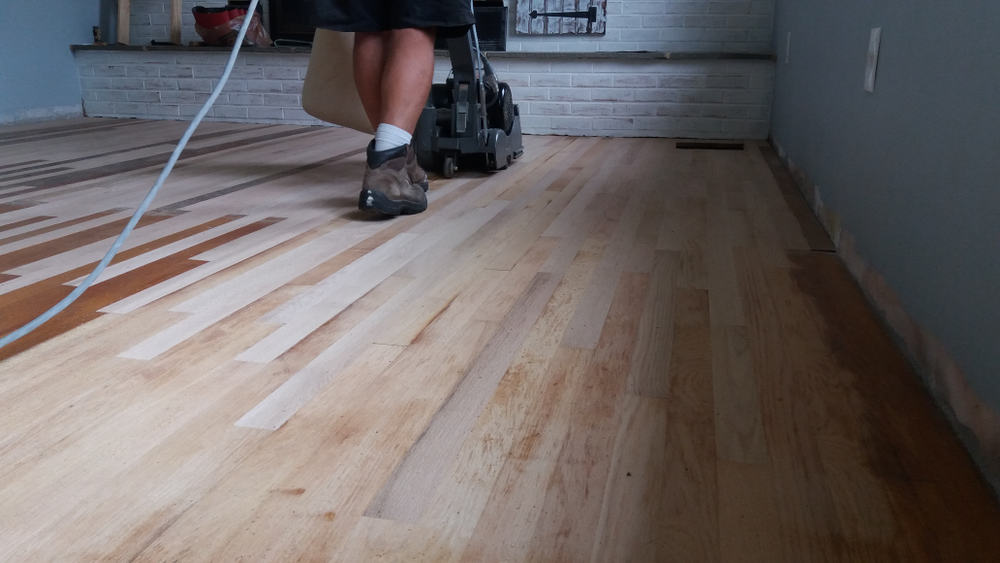
A lot of Nassau County homeowners come to us the same way — they pulled up a corner of old carpet during a renovation and found something they weren’t expecting: original hardwood floors, still solid after 60 or 70 years, just waiting underneath. Others have floors they’ve lived with for years, floors that have been scratched, dulled, and worn down by kids, pets, and Long Island winters. Either way, the question is the same: can these floors actually be saved?
Almost always, the answer is yes. And it starts with floor sanding.
What Hardwood Floor Resurfacing Actually Involves
Floor sanding isn’t just running a machine across your floors and calling it done. It’s a multi-step process that strips away the old finish, removes surface scratches and stains, and levels the wood so it’s ready to accept a new stain and topcoat. Done right, it’s what makes a 1960s Levittown oak floor look like it was just installed.
The process typically starts with an inspection — checking for loose boards, protruding nails, moisture issues, or any damage that needs to be addressed before sanding begins. Then the sanding itself happens in passes, moving from coarser grits to finer ones until the surface is smooth and bare. After that comes staining (if you want a color change), followed by two to three coats of finish. Each coat needs time to dry before the next goes on.
It takes patience. It takes the right equipment. And it takes experience knowing when the floor is actually ready for the next step — not just when it looks like it might be.
Dustless Wood Floor Refinishing: What It Means and Why It Matters
One of the first questions we hear from Nassau County homeowners — especially those with kids, pets, or anyone in the house with allergies — is some version of: “Is my whole house going to be covered in sawdust?” It’s a fair concern. Traditional floor sanding generates a significant amount of fine dust that gets into everything: vents, furniture, clothing, cabinets. Cleaning it up can take days.
Dustless hardwood floor refinishing uses commercial-grade vacuum systems attached directly to the sanding equipment. The dust gets captured at the source before it has a chance to spread through the room. It’s not a perfect zero-dust process — no system is — but the difference compared to traditional sanding is dramatic. Most of the dust that would otherwise settle across your home ends up in the collection unit instead.
For occupied homes, this matters a lot. Nassau County families don’t always have the option of vacating for a week. When you’re working around a household that’s still functioning — people working from home, kids coming back from school, a dog that needs to be somewhere — the cleanliness of the process isn’t a luxury, it’s a practical necessity.
Beyond dust control, the equipment used for dustless refinishing tends to be more consistent and precise. The vacuum attachment keeps the sanding head moving at a steadier rate, which reduces the risk of uneven sanding or swirl marks that show up under finish. It’s a better process in almost every way, which is why we’ve made it standard for all our residential work.
When you’re getting quotes from hardwood refinishing contractors in Nassau County, ask specifically whether they use dustless equipment. It’s a simple question that tells you a lot about how seriously a company takes the quality of their work — and how much they respect your home while they’re in it.
Eco-friendly hardwood floor finish: Water-based vs. oil-based polyurethane
Once the sanding is done, the finish you choose affects both how the floor looks and how long it holds up. The two main categories are water-based and oil-based polyurethane, and each has real trade-offs worth understanding before you decide.
Oil-based finishes have been the industry standard for decades. They cure harder, tend to be more durable under heavy foot traffic, and give wood a warm amber tone that a lot of homeowners love — especially on red oak, where that warmth complements the natural color of the grain. The downside is cure time. Oil-based finishes take longer to dry between coats and longer to fully harden after the final coat. You may be keeping furniture off the floors and limiting foot traffic for several days.
Water-based finishes dry faster, which means quicker turnaround — often a significant advantage when you’re trying to get back into a room. They also stay clearer over time, which is important if you’re going for a grey, white, or natural stain and don’t want the finish adding any yellow cast. They’re also lower in VOCs, which is a meaningful consideration for households that are sensitive to fumes or trying to minimize chemical exposure.
Nassau County’s summer humidity is worth factoring in here too. High ambient moisture can affect how finishes cure — both types — and we account for conditions on the day of application rather than just following a standard schedule. That’s the kind of judgment call that only comes from doing this work for a long time in this specific climate.
There’s no universally right answer between the two. The best choice depends on your wood species, your stain color, your timeline, and how the floors are used. We’ll walk you through the options and give you a real recommendation — not just tell you what you want to hear.
Choosing a stain color for wood floor sanding and staining
Stain color is where a lot of homeowners get stuck. You’ve seen grey floors on Instagram, jacobean-stained floors in a design magazine, and your neighbor just did something that looks like natural white oak and it looked incredible. Now you’re trying to figure out what will actually look right in your house — with your lighting, your furniture, your wood species — and it feels like a commitment you’re not sure you’re ready to make.
That uncertainty is completely normal. And it’s one of the reasons we spend real time on color consultation before any stain goes down.
Jacobean stain on oak and other dark wood floor stain colors
Dark stains have been popular for years, and jacobean is one of the most requested. It’s a deep, rich brown with chocolate undertones — warm but not orange, dark but not black. On red oak, it reads beautifully when applied correctly, though it does require careful surface preparation because dark stains make every imperfection more visible, not less. Any sanding swirl marks or uneven areas will show through a dark finish in a way they simply wouldn’t under a lighter stain.
Other popular dark wood floor stain colors include ebony (which pushes toward near-black), dark walnut (slightly warmer and more brown than jacobean), and espresso tones that sit somewhere in between. Each one interacts differently with the grain and natural color of the wood underneath.
One thing worth knowing: if your current floors are dark and you want to go lighter, that requires a full sand back to bare wood. You can always go darker over an existing stain with a recoat, but going lighter means starting from scratch. The sanding itself is what makes that possible.
DuraSeal is one of the most widely used professional stain lines in the industry, and it offers a broad range of colors — from natural and classic hardwood tones all the way to the darker jacobean and ebony options. Seeing actual stain samples applied to your specific wood species in your specific space is the only reliable way to know how a color will look. Photos from the internet are helpful for general direction, but lighting, species, and grain pattern change everything.
For Nassau County homes with red oak floors — which is the dominant species in the mid-century housing stock throughout communities like Levittown, Merrick, Wantagh, and Massapequa — dark stains like jacobean tend to deliver a dramatic, high-contrast result that photographs well and reads as a significant upgrade from the original finish.
Grey hardwood floor stain colors and white oak floor stain colors
Grey floors have moved from a trend to a mainstream preference over the last decade, and the demand for them hasn’t slowed down. But grey stains are also the most misunderstood category in wood floor coloring — and the most common source of disappointment when homeowners don’t get what they were picturing.
Here’s the issue: grey stains behave very differently on red oak versus white oak. Red oak has warm, pinkish undertones and an open, pronounced grain. When you apply a grey stain over red oak, those warm undertones fight the grey pigment. The result can look muddy, purple-toned, or inconsistent — especially in natural light. Achieving a true, clean grey on red oak usually requires a base coat or wood conditioner to neutralize the underlying warmth before the grey goes on.
White oak is a different story. It has cooler, more neutral undertones and a tighter grain pattern, which means grey stains — and the full range of white oak stain colors, from silver to driftwood to charcoal — tend to sit cleanly and evenly on the surface. If you’ve fallen in love with a grey floor you saw somewhere and you have white oak, you’re in luck. If you have red oak, the conversation is a bit more nuanced, and you need a contractor who understands that difference rather than just applying whatever you ask for.
White floor stains — including whitewash, white-wash grey, and natural/matte finishes — follow similar logic. They tend to perform better on white oak and require careful preparation on red oak to avoid blotchiness. For homeowners in Garden City, Great Neck, or Manhasset who are renovating higher-end homes and want a Scandinavian or coastal aesthetic, these lighter stain options can be stunning when done correctly. They just require more skill and more careful surface prep than a standard stain application.
The bottom line on stain color: bring in a professional who will apply actual samples to your floor — in your space, under your lighting — before committing. No amount of online research replaces seeing the color on your actual wood.
Finding the right hardwood refinishing contractors in Nassau County
Floor sanding and refinishing is one of those projects where the difference between a good job and a bad one isn’t always obvious on day one. It shows up six months later, in the form of peeling finish, visible sanding marks, or a stain color that looked fine in dim light but reads completely wrong in the afternoon sun.
The things worth asking about before you hire anyone: Do they use dustless equipment? Will they apply stain samples before committing to a color? Who is actually showing up to do the work — and is there someone accountable if something goes wrong? Nassau County requires Home Improvement Contractor licensing, so that’s worth verifying too.
We’ve been doing this work across Nassau County for over 50 years, and the projects we’re most proud of are the ones where a homeowner wasn’t sure their floors could be saved — and walked back in to something that looked completely transformed. If you’re at that point in your research, KO Floors, Inc. is happy to take a look and give you a straight answer about what’s possible.
—
**Floor sanding and refinishing: Common questions from Nassau County homeowners**
**Can I refinish my floors lighter if they’re currently dark?** Yes — but it requires a full sand back to bare wood, not just a recoat. Sanding removes the existing stain entirely, which is the only way to go lighter. Once you’re back to raw wood, you can choose any color you want. This is one of the most common reasons homeowners across Nassau County pursue a full refinishing rather than a simple recoat.
**What do hardwood floor stain samples actually look like — and how do I test them?** Stain samples are small patches of color applied directly to your floor in an inconspicuous area before the full job begins. We do this as a standard part of the process. The sample dries, gets a coat of finish over it, and you see exactly what the final result will look like — on your wood, in your light. Don’t skip this step. What looks like a warm brown in a showroom can read completely different on your specific floor.
**Is gunstock stain a good choice for oak floors in Nassau County homes?** Gunstock is a medium-warm brown with orange undertones — it’s one of the most traditional stain colors for red oak, and it works well precisely because it complements red oak’s natural warmth rather than fighting it. In older Nassau County homes where the floors have original red oak strip flooring, gunstock can give a result that looks classic and intentional rather than dated. If you’re going for something more contemporary, there are better options — but gunstock on oak is a reliable, low-risk choice that holds up well over time.
**Can water-damaged hardwood floors be refinished, or do they need to be replaced?** It depends on the extent of the damage. Surface-level water stains and minor discoloration can often be sanded out entirely — the floor comes back clean with no trace of the stain. Deeper damage, like boards that have cupped, warped, or developed black staining from prolonged moisture exposure, may require individual board replacement before refinishing can proceed. The only way to know for sure is to have someone look at the floors in person. Nassau County’s coastal humidity and the moisture that comes in off the water during storm seasons mean we see water-related floor damage regularly — it’s not always as bad as it looks.