
You’ve been looking at those floors for years — the scratches near the entryway, the dull patches in the hallway, maybe an orange-toned finish that felt dated before you even moved in. You know refinishing is the answer. What you don’t know is what you’re actually signing up for when you call a contractor.
Most homeowners do their research, get a few quotes, and still end up surprised. Not because they weren’t paying attention — but because there are things most contractors don’t volunteer until the job is already underway. This is what we think you should know before any of that happens.
What Hardwood Floor Refinishing Actually Involves
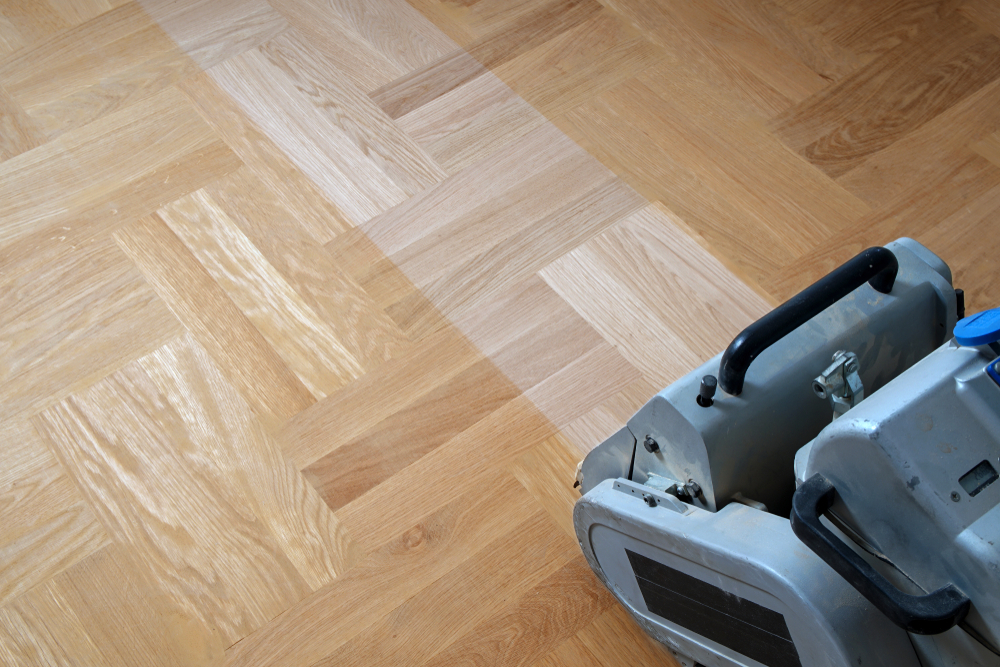
At its core, hardwood floor refinishing means sanding the existing floor down to bare wood, applying a stain if you want a color change, and then laying down multiple coats of finish — typically two to three — with light buffing between coats. It’s not a surface treatment. It’s a full reset.
That distinction matters because it’s also why refinishing works so well on older floors. Most solid hardwood can be refinished several times over its lifetime, which means those original oak floors in a 1950s Wantagh or Massapequa home aren’t worn out — they’re just overdue. The wood itself is often in better shape than people expect, especially once you get below the surface damage.
Screen-and-Recoat vs. Full Sand-and-Refinish: Which One Do You Actually Need?
This is one of the most common points of confusion — and occasionally a source of disappointment when homeowners realize they paid for the wrong service.
A screen-and-recoat is a lighter process. We scuff the existing finish with a buffer, then apply a new topcoat. It refreshes the sheen and adds a layer of protection, but it doesn’t remove scratches, stains, or color problems. If your floor looks dull but isn’t damaged, a screen-and-recoat can extend its life without the disruption of a full refinish. It’s also less expensive.
A full sand-and-refinish is what most people picture when they think about refinishing. The floor gets sanded down to bare wood — removing the old finish, surface scratches, light staining, and any unevenness — and then rebuilt from scratch with stain and finish coats. This is the process that can genuinely transform a floor.
The problem is that some contractors will recommend a screen-and-recoat for floors that actually need a full refinish, either to keep the price competitive or because it’s faster. If your floors have deep scratches, visible staining, or a finish that’s peeling or flaking in spots, a screen-and-recoat won’t fix any of that. It’ll just put a new coat of finish over existing damage.
Ask the contractor directly: is the existing finish still bonding well to the wood? If there’s any doubt, a full refinish is the right call. Wood floor refinishing done properly — meaning a genuine sand-and-refinish — is also the only process that gives you the option to change your stain color entirely. If you’ve been living with a honey-toned floor from 1994 and want something closer to a modern matte gray or a natural white oak look, that’s only possible when you’re starting from bare wood.
What “Dustless” Sanding Really Means — and What It Doesn’t
“Dustless” is one of the most misunderstood terms in the flooring industry, and it creates a lot of unrealistic expectations. Here’s the honest version: dustless sanding uses commercial vacuum equipment attached directly to the sander, capturing most of the dust at the source before it becomes airborne. It’s significantly cleaner than traditional sanding. But it is not zero dust.
Fine particles still find their way into the air and onto surfaces. Homeowners with allergies or asthma will still want to plan accordingly. HVAC vents should be covered. Electronics and kitchen appliances — especially anything with an open surface — are worth protecting.
That said, the difference between dustless and traditional sanding is substantial. If a contractor is still running a drum sander without any vacuum containment, expect a cleanup situation that extends well beyond the floors themselves. Dustless equipment is an investment in professional-grade tools, and it signals that a contractor takes the condition of your home seriously — not just the floors.
For Nassau County homeowners, this matters more than it might in other markets. Many of the homes here were built in the postwar era, and many have HVAC systems, finished basements, and open floor plans where dust travels fast. Asking whether a contractor uses dustless equipment isn’t being difficult — it’s a reasonable baseline question for any hard floor refinishing job.
Hardwood Refinishing Contractors: What to Ask Before You Hire
Getting quotes is easy. Knowing what you’re actually comparing is harder. Two bids at very different prices might include completely different scopes of work — or one contractor might be cutting corners you won’t discover until the finish starts peeling six months later.
There are a few things worth asking any contractor before you sign anything. Do they carry general liability insurance and workers’ compensation? Are they licensed through the Nassau County Office of Consumer Affairs, which requires home improvement contractors operating in the county to be registered? These aren’t formalities — they’re real consumer protections, and established contractors with a genuine local presence will have no problem answering.
The Stain Color Question Most Contractors Gloss Over
Stain color is where a lot of refinishing jobs go sideways. Not because the contractor did the work wrong, but because the homeowner approved a color based on a small wood chip — and then the full floor looked nothing like what they imagined.
Here’s why that happens. Stain colors behave differently depending on the species of wood, the grain pattern, the age of the floor, and the light in the room. A color that looks warm and golden on a chip can pull orange on older oak. A gray that looks sophisticated in a photo can read almost purple on certain wood tones.
The only way to know what a color will actually look like on your floor is to test it on your floor — a small section, in your actual space, under your actual lighting. Before any stain gets applied, we test colors directly on your floors so you can see exactly what you’re committing to. It sounds like a small thing, but it’s the difference between a result you love and one you’re already planning to redo.
It’s also worth asking about what happens after the stain coat. Most quality refinishing jobs involve at least two to three finish coats, with buffing between applications. A single coat of finish is a shortcut — it might look fine initially, but it won’t hold up the way a properly built finish does. Ask how many coats are included in the quote, and what type of finish they’re using.
Oil-based polyurethane takes longer to dry but is more forgiving in humid conditions — relevant on Long Island, particularly in the summer months. Water-based finishes dry faster and have less odor, but they require more precision in application.
How Long Will You Actually Be Off the Floors?
This is one of the most frequently asked questions we hear — and one of the most frequently mishandled by contractors who just want to close the job without getting into logistics.
The honest answer has a few layers. Most refinished floors are safe for foot traffic within 24 hours. Furniture can typically go back after 72 hours. But area rugs should stay off for two to four weeks, because the finish continues to cure long after it feels dry to the touch. Putting a rug down too early traps moisture in the finish and can cause it to soften, discolor, or peel.
This matters especially in Nassau County homes where families are working around school schedules, pets, and the general rhythm of daily life. We try to be upfront about this from the start — not to complicate the project, but because the homeowners who follow the cure timeline are the ones who are still happy with their floors five years later.
One more thing worth knowing: if you have a continuous floor running through your living room, dining room, and hallway, those spaces should all be refinished at the same time. Refinishing one room and leaving the others means you’ll have a visible color difference where the floors meet — even if you’re using the same stain. The existing finish on the untouched areas will have aged differently, and the new finish will read lighter or darker by comparison.
It’s a detail that’s easy to plan around upfront and nearly impossible to fix after the fact. Hardwood floor resurfacing done in stages across connected rooms is one of the most common sources of post-job disappointment we hear about from homeowners who worked with other contractors.
Finding the Right Hardwood Refinishing Contractors in Nassau County
Nassau County has a lot of housing stock that’s worth protecting. The original hardwood floors in homes built across Rockville Centre, Garden City, Long Beach, and Great Neck are often the best-quality wood in the house — solid oak laid down decades ago, built to last far longer than most of what gets installed today. They just need the right hands to restore them.
What separates a good refinishing job from a regrettable one usually isn’t the materials — it’s the process, the communication, and whether the contractor treats your home like it matters. That means testing stain colors on your actual floor. It means being clear about cure times, what’s included in the quote, and what dustless sanding actually does and doesn’t cover.
If you’re at the stage where you’re ready to talk specifics — scope, timeline, what your floors actually need — KO Floors, Inc. has been doing this work on Long Island for over 50 years, and we’re straightforward about what we find when we look at your floors. Reach out for a no-obligation quote and we’ll start there.