
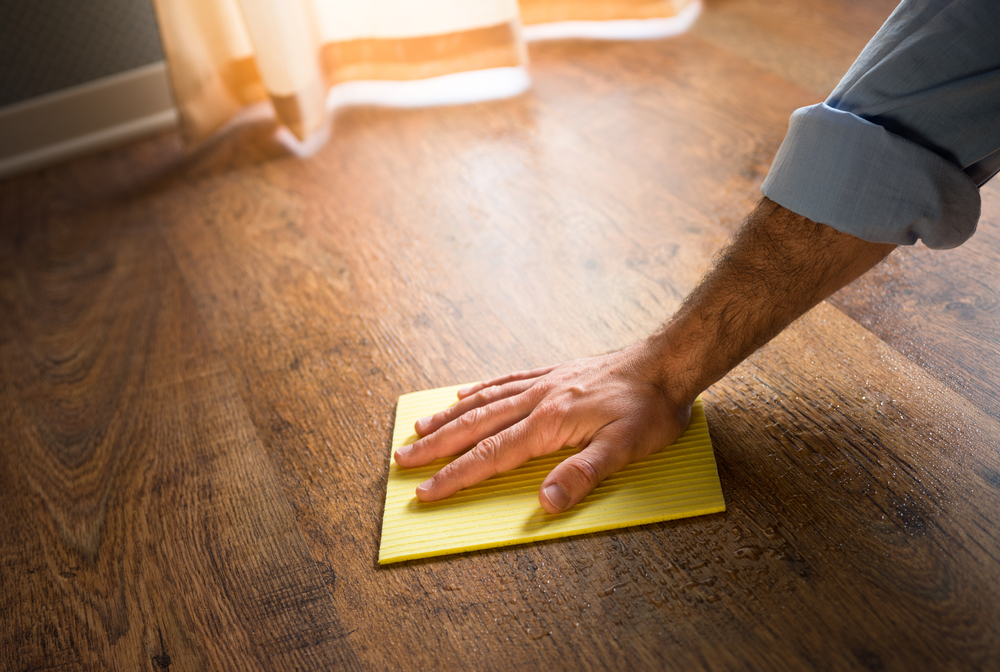
If you’ve been mopping your hardwood floors regularly and they still look dull, you’re not doing anything wrong — you’re just hitting the limit of what mopping can do. Embedded grit, finish wear, and the kind of buildup that comes from Nassau County’s humid summers and dry winters eventually gets ahead of any surface cleaning routine. At some point, the floor needs more than a mop. This guide is for homeowners who want to know what that looks like — what to use, what to avoid, when to clean, when to recoat, and when to call us.
How to Clean Hardwood Floors Without Damaging the Finish
The single most important rule in hardwood floor cleaning is to control moisture. Wood and water have a complicated relationship — hardwood can absorb up to 40% of its weight in moisture, according to the National Wood Flooring Association, and even routine over-mopping adds up over time. The goal is always a damp mop, never a wet one.
Beyond moisture, the cleaner itself matters more than most people realize. pH-neutral, hardwood-specific cleaners are the professional standard. Generic all-purpose sprays and DIY solutions — including vinegar, which is one of the most widely repeated myths in floor care — can degrade polyurethane and other protective finishes over time. Your floor might look fine after one vinegar clean. After fifty, you’ll start to notice the dullness.
For day-to-day maintenance, a soft-bristle broom or a microfiber mop does the job well. If you’re vacuuming, make sure the beater bar is off — the rotating brush that works great on carpet will scratch hardwood. These aren’t complicated rules, but they’re the ones that separate floors that last from floors that don’t.
Why Steam Mops and Hardwood Floors Don’t Mix
Steam mops have become popular for good reason — they clean without chemicals and feel thorough. On hardwood floors, though, they’re one of the faster ways to cause lasting damage. The combination of heat and moisture they introduce is exactly what hardwood finish is designed to keep out. Over time, steam penetrates the finish, gets into the wood itself, and causes the kind of swelling, cupping, and warping that can’t be undone with a recoat. You’d be looking at a full sand and refinish — or worse, board replacement.
No professional flooring organization recommends steam mops for hardwood. The National Wood Flooring Association is explicit about it. And yet they remain one of the most common culprits we see when a homeowner calls us wondering why their floors have started to cup or show finish failure in concentrated areas.
This is especially relevant in Nassau County, where the climate already puts hardwood through a seasonal workout. Summers here are genuinely humid — relative humidity regularly climbs past 70 or 80 percent in July and August, which causes hardwood to expand. Then the heat kicks on in winter, indoor air dries out, and the wood contracts. That cycle alone puts stress on the finish. Adding steam mopping into the routine accelerates the damage significantly.
If you’ve been using one, it’s worth stopping now and assessing the finish condition before it gets worse. A professional cleaning and inspection can tell you exactly where things stand. The right swap is simple: a microfiber mop lightly dampened with a pH-neutral hardwood cleaner. It removes dirt and grime without introducing the moisture or heat that causes structural problems.
How Often Should Hardwood Floors Be Professionally Cleaned?
For most households, professional hardwood floor cleaning once or twice a year is the standard recommendation. That frequency keeps embedded dirt and grime from building up to the point where it starts acting like sandpaper underfoot — which is exactly what fine grit particles do when they’re ground into the finish with every step. Regular mopping keeps the surface clean, but it doesn’t reach what’s worked its way into the texture of the finish over months of foot traffic.
In Nassau County, a few local factors push that number toward the higher end. Homes near the water — Long Beach, Oceanside, Baldwin, Point Lookout — deal with elevated ambient moisture and salt air that accelerates finish breakdown faster than inland communities. Families with dogs face a similar situation: pet nails create micro-scratches that trap dirt, and the high-traffic patterns around doors and feeding areas tend to wear finish faster than the rest of the floor.
Post-WWII homes are another consideration specific to Nassau County. A significant portion of the housing stock was built between the late 1940s and the mid-1960s — the Levittown era and the communities that followed it. Those homes often have original red oak floors that are now 60 to 80 years old. They’ve been through decades of cleaning, foot traffic, and refinishing cycles. The finish on an older floor is often thinner and more vulnerable than it looks, and aggressive cleaning or the wrong products can push it past the point where a simple professional clean solves the problem. Annual professional cleaning on floors like these isn’t a luxury — it’s maintenance that prevents a much larger expense later.
Hardwood Floor Damage Repair: When Cleaning Isn’t Enough
There’s a point where cleaning stops being the right answer. Scratches that go through the finish, boards that have started to cup or buckle, gaps that have widened beyond seasonal norms — these aren’t cleaning problems. They’re repair problems, and treating them with a mop just delays the conversation you’ll eventually need to have.
The good news is that hardwood is one of the most repairable flooring materials available. Most solid hardwood floors can be refinished multiple times over their lifespan, and many issues that look serious — surface scratches, minor water damage, localized finish failure — are well within the range of professional restoration without replacing any boards.
Hardwood Floor Scratch Repair: Surface Scratches vs. Deep Damage
Not all scratches are the same, and the distinction matters before you decide how to address them. Surface scratches — the kind that catch light at a certain angle but haven’t broken through the finish layer — can often be addressed with a screen and recoat. That process lightly abrades the existing finish, then applies a fresh coat on top. It’s significantly less disruptive and less expensive than a full sand and refinish, and it can make a floor that looks tired look nearly new again.
Deep scratches are a different situation. When the scratch has gone through the finish and into the wood itself, recoating covers it cosmetically but doesn’t fix the underlying damage. Over time, those exposed wood fibers absorb moisture and dirt, and the scratch becomes more visible, not less. A full refinish — sanding down to bare wood, applying stain if desired, and laying down new finish coats — is the right solution for floors with significant scratch penetration.
Pet owners in Nassau County deal with this constantly. Dog nails, especially on larger breeds, create patterns of fine scratches across the finish that accumulate quickly in high-traffic areas. The scratches themselves aren’t always deep, but the sheer density of them can make recoating less effective than a full refinish. It depends on how far things have progressed. When we look at a floor, we can tell pretty quickly which approach makes sense — and we’ll give you a straight answer rather than automatically recommending the more expensive option.
One thing worth knowing: engineered hardwood floor repair follows different rules than solid hardwood. Engineered floors have a real wood veneer over a plywood core, but that veneer is only so thick. Most engineered floors can be lightly sanded and recoated once, maybe twice. After that, the veneer is too thin to sand again without going through it. If you have engineered hardwood, it’s worth knowing how many times it’s been refinished before assuming it can go through the process again.
Water Under Floorboards: What to Do and How Fast to Do It
Water damage is the scenario that separates quick action from a full floor replacement. The 24-hour window is real — acting within the first day of water exposure gives you a genuine chance to dry, sand, and refinish the affected boards without replacing them. After 48 hours, mold risk escalates, and the structural damage to the wood itself becomes harder to reverse. After a week, you’re often looking at board replacement rather than restoration.
The signs of water damage aren’t always obvious right away. Cupping — where the edges of a board rise higher than the center — is one of the earliest indicators that moisture has gotten under the floor. Buckling, where boards actually lift off the subfloor, is a more advanced stage. Crowning, where the center of the board is higher than the edges, sometimes appears after a floor has been dried too quickly following a flood. Each of these conditions tells a different story about what happened and what the floor needs.
If you’ve had a pipe leak, appliance failure, or flooding in a room with hardwood floors in Nassau County, the first step is to remove standing water immediately and get air moving through the space. Fans, dehumidifiers, and open windows help. What you don’t want to do is apply heat directly to the floor — a space heater or hair dryer aimed at wet boards can cause them to dry unevenly and warp in ways that make the damage worse, not better.
Water damage accounts for nearly 24% of all homeowners’ insurance claims nationally, with an average cost of over $11,000 per incident. That number climbs when hardwood floors are involved and the response is delayed. For Nassau County homeowners near the water — or anyone dealing with Long Island’s heavy summer rain seasons — knowing what to do in the first hour matters more than most people realize. If you’re not sure how bad the damage is, a professional assessment is always the right call before you decide whether to repair or replace.
Hardwood Floor Care in Nassau County: What It Really Comes Down To
Long Island is a genuinely tough environment for hardwood floors. The humidity swings, the salt air in coastal communities, the aging housing stock, the real estate pressure to keep everything looking sharp — it adds up to floors that need more thoughtful care than a standard cleaning guide accounts for. Most of the damage we see isn’t from neglect. It’s from good intentions and the wrong products.
The routine itself isn’t complicated: pH-neutral cleaner, a damp microfiber mop, no steam, and a professional deep clean once or twice a year. The harder part is knowing when the floor has moved past maintenance and into repair territory — and making that call before a recoat becomes a refinish, or a refinish becomes a replacement.
If your floors are looking dull despite regular cleaning, showing scratches that haven’t responded to surface treatment, or if you’ve had any water exposure recently, it’s worth getting a professional set of eyes on them. We’ve been working with Nassau County homes for decades, and a free estimate costs nothing. Sometimes the answer is simpler than you think.
]