
Most Nassau County homeowners don’t think about their floors until company’s coming. Then they look down, really look, and notice the scratches, the dull patches, the finish that’s been wearing thin for years. The instinct is to call around and get it sorted before Thanksgiving — which is the right instinct. The problem is timing. Hardwood floor resurfacing isn’t a one-day job, and the contractors who do it well book up fast once September hits. We’ve put together this guide to help you understand what the process actually involves, how to figure out what your floors need, and why acting now — not in October — makes all the difference.
What Is Hardwood Floor Resurfacing, and Is It What Your Floors Actually Need?
The word “resurfacing” gets used loosely in the flooring industry, and that inconsistency costs homeowners real money. Some contractors use it to mean a light recoating — buffing the existing finish and applying a fresh topcoat without ever sanding down to bare wood. Others use it to describe a more comprehensive process that involves full sanding, repairs, and new finish coats from scratch. These are not the same thing, and getting the wrong one means either paying for work your floors didn’t need or getting a fix that won’t hold.
Understanding the difference matters before you call anyone. A recoat, sometimes called a screen and recoat, makes sense when the finish is dull or lightly worn but the wood itself is in decent shape. A full refinish — sanding to bare wood, staining if desired, and applying multiple coats of finish — is the right call when there are deep scratches, significant discoloration, or years of accumulated wear that a surface buff won’t touch. The floor tells you which one it needs, if you know what to look for.
How to Tell If Your Nassau County Home’s Floors Need a Full Refinish or Just a Recoat
Here’s a simple way to think about it. Pour a small amount of water on the floor. If it beads up, the finish is still doing its job and a recoat may be all you need. If it soaks in, the finish has broken down and a full refinish is the more honest answer.
For most homes in Nassau County, full refinishing is the more common recommendation, and for good reason. The majority of single-family homes here were built between the 1940s and 1970s — Levittown, the colonials in Garden City, the ranches in Valley Stream and Oceanside. These postwar homes produced a massive inventory of original solid hardwood floors now 50 to 80 years old. Many have been refinished once or twice over their lifetime, if at all. Solid hardwood floors of that era are typically three-quarters of an inch thick, which means they can be professionally refinished five to eight times before replacement even enters the conversation. Most of them have several cycles left.
The catch is that floors this old have usually accumulated more than surface wear. There may be deep scratches from decades of furniture, staining from old area rugs, or sections that need patching where walls were removed during renovations. A screen and recoat won’t address any of that. What it will do is put a fresh layer over problems that will show through within a year. A full refinish gets underneath the damage and gives you a result that actually lasts.
The good news for Nassau County homeowners is that floors this age are often the most satisfying to refinish. The wood itself — old-growth oak, maple, or pine milled before modern harvesting practices changed the grain — tends to be denser and more beautiful once the surface wear is removed. The transformation can be dramatic in a way that newer floors simply don’t deliver.
What the Hardwood Floor Refinishing Process Actually Looks Like, Day by Day
Once you understand what your floors need, the next question is almost always: how disruptive is this going to be? It’s a fair concern, and the honest answer is that it depends on the finish type and the scope of the project — but it’s rarely as bad as people fear.
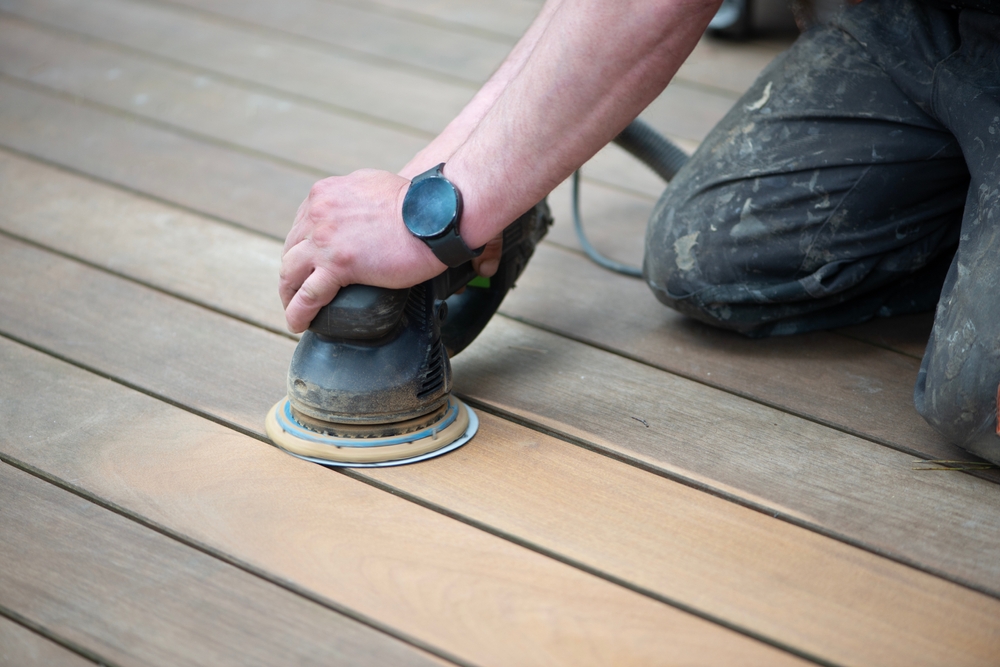
A full refinish typically takes three to five days of active work. Day one usually involves moving furniture, prepping the space, and beginning the sanding process. Sanding happens in multiple passes using progressively finer grits — coarse to medium to fine — to remove the old finish and any surface damage without gouging the wood. Skipping grits is one of the most common shortcuts a less careful contractor will take, and it shows up as visible scratches under the new finish.
After sanding comes any staining, if a color change is desired, followed by two to three coats of finish with adequate dry time between each coat. With oil-based polyurethane — still the most durable option for high-traffic areas — plan to be out of the house for roughly three to four days while the finish off-gasses. Full hardness takes up to 30 days, though the floors are walkable in socks well before that.
Water-based finishes dry significantly faster and produce far less odor, making them the better choice for families with young children, pregnant household members, pets, or anyone with respiratory sensitivities. The trade-off is a slightly different sheen, though modern water-based products have closed much of the durability gap.
Before committing to a stain color, we always apply samples directly to your actual floor — not a generic chip to hold up to your wall. The same stain can look dramatically different depending on the wood species, the grain, and the light in your specific room. Seeing it on your floor before the work begins eliminates the most common source of post-project regret.
Hardwood Floor Maintenance After Resurfacing: Making the Results Last
Getting your floors refinished is the easy part. Keeping them looking that way requires a bit of intentional maintenance — nothing complicated, but specific enough that it’s worth knowing before the crew packs up and leaves.
The first two weeks after refinishing are the most important. Avoid dragging furniture across the floor, keep pets off until the finish has fully cured, and use only pH-neutral hardwood floor cleaners — no vinegar, no steam mops, nothing that will compromise the finish before it’s had time to harden fully. Felt pads under furniture legs are a small investment that pays off significantly over the life of the finish.
How Long Do Refinished Hardwood Floors Last, and When Should You Schedule the Next Cycle?
A professionally refinished hardwood floor, properly maintained, should hold up well for ten to fifteen years before the finish shows meaningful wear — sometimes longer, depending on foot traffic and household activity. High-traffic areas like hallways and kitchen thresholds tend to show wear first, while rooms with less daily use can go significantly longer between refinishing cycles.
The most useful thing you can do is pay attention to the finish rather than the wood. When the finish starts to look dull even after cleaning, when you notice light scratches accumulating, or when water no longer beads on the surface in high-traffic zones, it’s time to start thinking about the next refinishing cycle. Catching it at that stage — before the finish wears through entirely and the wood itself starts taking damage — is what keeps your floor on a healthy refinishing schedule and off a replacement timeline.
For Nassau County homeowners with original hardwood floors from the postwar era, this is worth thinking about in terms of the full lifespan of the floor. A floor that was laid in 1955 and properly maintained can still be in excellent condition in 2025 — and with a professional refinish, it can look better than it has in decades. These floors were built to last. They just need the right attention at the right intervals.
One thing that accelerates wear in Nassau County specifically is the seasonal humidity cycling. Long Island summers are humid; winters are dry. Wood expands and contracts with those changes, and over years, that cycling stresses the finish. Homes in coastal communities like Long Beach, Oceanside, and Merrick also deal with salt air and tracked-in sand that act as abrasives on the finish surface. If your home falls into either category, a slightly more frequent refinishing schedule — or at minimum, more attentive day-to-day maintenance — is a smart approach.
Floor Refinishing Before the Holidays: The Booking Timeline Nassau County Homeowners Miss
Here’s the part most homeowners don’t find out until it’s too late. If you want your floors done before Thanksgiving, you need to book by early to mid-October at the latest. That’s not a sales tactic — it’s just the math. Three to five days of active work, plus time for the finish to cure to a point where you can move furniture back in and live normally, adds up quickly. Factor in the time needed to schedule a quote, confirm the job, and fit into a contractor’s calendar, and the window is shorter than it looks on paper.
The fall booking surge in Nassau County is real. Homeowners preparing for holiday gatherings — Thanksgiving dinners in Mineola, Christmas parties in Great Neck, New Year’s in Manhasset — all have the same idea at roughly the same time. Contractors who do quality work book up four to six weeks out by mid-October. The ones still available in late October and November are often available for a reason.
There’s also a technical argument for fall that goes beyond the calendar. September through November brings lower humidity levels to Long Island compared to the summer months. That matters for hardwood floor refinishing because finishes cure more evenly in stable, drier conditions. Wood is also more dimensionally stable in fall — less prone to the expansion and contraction that summer humidity drives. You get better conditions and better results by acting now rather than waiting until the spring selling season, which is the next major booking window.
If you miss the pre-holiday window, you’re looking at living with worn floors through the entire holiday season and booking into the post-winter rush in January or February. That’s a perfectly valid time to refinish — but it’s a different experience than walking into Thanksgiving with floors that look the way they did when the house was new.
Ready to Refinish? What Nassau County Homeowners Should Do Next
If your Nassau County floors have been on the list, fall is the window — and it closes faster than it looks. The process is less disruptive than most people expect, the results on older Long Island hardwood are often genuinely remarkable, and the contractors worth hiring are already filling their October calendars.
Know what your floors actually need before you call anyone. Understand the difference between a recoat and a full refinish. Ask about stain sampling on your actual floor, ask who moves the furniture, and ask about finish options if you have health concerns in the household. Those questions separate a good outcome from a frustrating one.
If you’re in Nassau County and ready to get a real look at what your floors need, we at KO Floors, Inc. offer free, no-obligation quotes and have been doing this work on Long Island for over 50 years. Reach out before the calendar fills up.