
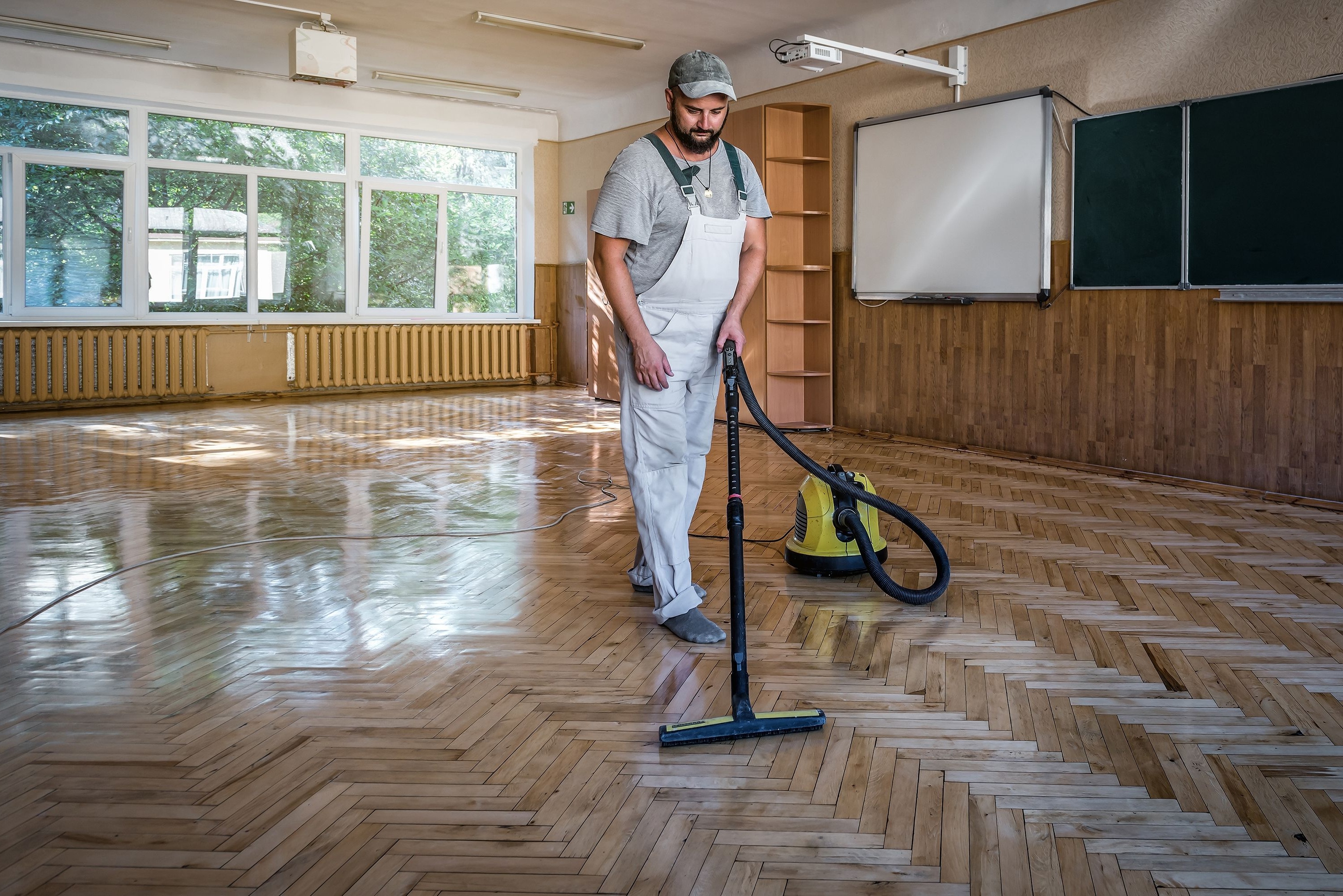
You’ve mopped the floors twice this week and they still look dull. Or maybe you tried a DIY cleaner you found online and now there’s a haze you can’t get rid of. Either way, you’re here because regular cleaning isn’t cutting it — and you’re not sure what to do next without making things worse.
That’s a reasonable place to be. Hardwood floors are one of the most valuable features in a home, and they’re also one of the easiest to damage with the wrong approach. The good news is that most floors that look tired or dingy aren’t beyond saving. They just need the right kind of attention.
What Deep Cleaning Hardwood Floors Actually Means
There’s a difference between cleaning a floor and deep cleaning it. Regular mopping picks up surface dust and light grime. A deep clean goes after the buildup that regular mopping leaves behind — old product residue, wax layers, embedded dirt, and the fine abrasive particles that gradually dull and scratch the finish from underneath.
Every time someone walks across an uncleaned floor, those particles get ground into the finish. Over time, that creates microscopic scratches that thin the protective barrier. Once the finish is compromised, the raw wood underneath becomes vulnerable to staining and discoloration that can’t be mopped away.
A true deep clean removes that buildup before it causes permanent damage. It’s not a magic fix — but done right, it can make a floor that looks worn look genuinely restored.
Hardwood Flooring Cost Per Square Foot: Deep Clean vs. Recoat vs. Refinish
One of the most common mistakes we see Nassau County homeowners make is jumping straight to refinishing — or worse, replacement — when a professional deep clean is all their floors actually need. Understanding what each option involves helps you make the right call without overspending.
A professional deep clean is the least invasive option. It uses commercial-grade equipment and finish-specific cleaning products to remove buildup without touching the finish itself. It’s appropriate when the finish is still intact but the floor looks dull, streaky, or discolored from accumulated grime and old product residue.
A screen and recoat sits in the middle. It involves lightly abrading the existing finish and applying a fresh coat on top — no sanding down to bare wood. This is a good option when the finish is worn but not completely gone. It restores protection and sheen without the cost or disruption of a full refinish.
Full refinishing — sanding down to bare wood and applying new stain and finish coats — is only necessary when the finish has worn through entirely, when there’s significant surface damage, or when you want to change the color or sheen level. It’s the most expensive and most disruptive option, and it’s also the one some contractors are quickest to recommend even when it isn’t warranted.
For context, new hardwood installation costs significantly more per square foot than refinishing, and refinishing costs significantly more than a deep clean. The point isn’t to give you a number to hold contractors to — it’s to help you understand that there’s a spectrum of options, and the right one depends entirely on the actual condition of your floors. Anyone who recommends full refinishing without first assessing whether cleaning or a recoat would do the job isn’t giving you honest advice.
We’ve seen Nassau County homes where the homeowner was quoted for a full refinish when a professional deep clean brought the floors back completely. We’ve also seen floors that looked like they just needed cleaning but turned out to need more. The only way to know is an honest assessment — which starts with actually looking at the floor, not just assuming the most expensive fix is the right one.
Engineered Hardwood vs. LVP: Does the Cleaning Approach Change?
A lot of Nassau County homeowners aren’t entirely sure what type of flooring they have — and it matters more than most people realize. Solid hardwood, engineered hardwood, and luxury vinyl plank (LVP) all look similar underfoot but respond very differently to cleaning products and methods.
Solid hardwood is exactly what it sounds like — a single piece of wood from top to bottom. It’s what you’ll find in most Nassau County homes built before 1980, including the post-war Levittown-era homes that make up a large portion of the county’s housing stock. These floors can be sanded and refinished multiple times over their lifetime, but they’re also sensitive to moisture. Too much water — even from a damp mop — can cause swelling, cupping, and finish damage over time.
Engineered hardwood has a real wood veneer on top bonded to layers of plywood underneath. It’s more dimensionally stable than solid hardwood in humid environments, which makes it a reasonable choice for Long Island’s coastal climate. Cleaning methods are similar to solid hardwood, but the veneer layer is thinner, which limits how many times it can be sanded. Moisture management is still important.
LVP is not wood at all — it’s a synthetic product designed to look like wood. It’s more water-resistant than either type of hardwood, which is why it’s become popular in kitchens, bathrooms, and basements. But it has its own care requirements, and it cannot be refinished the way hardwood can. Using hardwood-specific products on LVP — or vice versa — can cause surface damage or leave residue that’s difficult to remove.
The reason this matters for deep cleaning is simple: the products and techniques that are safe and effective for one floor type can damage another. Steam mops, for example, are marketed as a “natural” cleaning solution, but the heat and moisture they produce can warp solid hardwood, delaminate engineered hardwood, and even damage LVP seams. Vinegar — another popular DIY recommendation — is acidic enough to gradually dull and strip modern polyurethane finishes. These aren’t edge cases. They’re some of the most common ways well-intentioned homeowners accidentally damage their floors.
If you’re not certain what type of flooring you have, that’s a good reason to get a professional assessment before you do anything.
Floor Restoration: When a Deep Clean Isn’t Enough
Sometimes you clean a floor and it looks great. Other times, the cleaning reveals what the grime was hiding — scratches that go through the finish, areas where the wood has started to gray, or spots where moisture has caused the boards to cup or separate. That’s when the conversation shifts from maintenance to restoration.
Floor restoration covers a range of services — from a light screen and recoat to full sanding and refinishing — and the right approach depends on what the floor actually needs. The goal is always to do the least invasive thing that achieves the result, not the most comprehensive thing that generates the highest invoice.
Why Nassau County’s Older Homes Make Floor Restoration More Complex
Nassau County’s housing stock is old by national standards. The average single-family home in the county is around 73 years old, which means a significant portion of the homes in communities like Garden City, Rockville Centre, Massapequa, and Mineola still have their original hardwood floors — floors that were installed in the late 1940s through the 1960s using old-growth oak that simply isn’t available anymore.
Those floors are worth protecting. They’re structurally sound in ways that newer materials often aren’t, and they carry a character that’s impossible to replicate. But they also present challenges that don’t come up with newer floors.
For one, finish history matters. A floor that’s been waxed, polished, stripped, and refinished multiple times over seven decades has layers of product buildup that require careful removal. Using a standard polyurethane-compatible cleaner on a waxed floor — or vice versa — can cause clouding, streaking, or adhesion problems if refinishing is later needed. Identifying what’s actually on the floor before you touch it isn’t optional; it’s the starting point of any responsible cleaning or restoration process.
Road salt is another factor that’s specific to Long Island winters. Salt tracked in on shoes and boots through December, January, and February is corrosive to hardwood finishes. It doesn’t cause visible damage immediately, but it accelerates finish degradation over time — which is why spring is consistently the busiest season for professional floor cleaning and restoration in Nassau County. By the time March arrives, floors that looked fine in October have taken a real beating.
Humidity is a third variable. Nassau County’s proximity to the Atlantic Ocean and Long Island Sound means ambient humidity runs higher here than in inland areas. High humidity causes hardwood to expand, and repeated seasonal expansion and contraction — year after year, decade after decade — can cause boards to cup, crack, or develop gaps. A professional assessment can distinguish between cosmetic issues that cleaning will resolve and structural issues that need more attention.
We’ve worked on original floors in Nassau County homes that homeowners assumed were beyond saving. In many cases, they weren’t. Professional cleaning and targeted restoration brought them back to a condition the homeowners didn’t think was possible. But it requires knowing what you’re dealing with before you start — not guessing.
Wood Floor Cost Per Square Foot: What Matters Before You Sell in Nassau County
Nassau County’s real estate market is one of the most competitive in the country, with median home prices around $800,000. In that environment, the condition of hardwood floors carries real financial weight. Buyers notice floors immediately — they’re one of the first things a person sees when they walk into a room — and floors that look dull, scratched, or poorly maintained signal neglect in a way that’s hard to overcome with staging or fresh paint.
The instinct for many homeowners preparing to list is to refinish the floors. And sometimes that’s the right call. But full refinishing before a sale isn’t always necessary, and it isn’t always the highest-return option. A professional deep clean — or a deep clean followed by a screen and recoat — can produce a result that photographs beautifully and impresses buyers in person, often at a fraction of the cost and disruption of full refinishing.
The wood floor cost per square foot for new installation is the ceiling of what you’d ever need to spend on existing floors. Refinishing costs less. A recoat costs less than that. And a professional deep clean is the most cost-effective option of all when the finish is still intact. Working through that decision tree honestly — rather than defaulting to the most aggressive fix — is how you get the best return on what you spend before a sale.
There’s also a timing consideration. Nassau County’s listing season runs hot in the spring, which means homeowners who want their floors done before they list are typically scheduling in February and March. That’s also when post-winter salt and grit damage is most visible. Getting ahead of that window — or at least planning for it — avoids the last-minute scramble that leads to rushed work and rushed decisions.
If you’re not sure whether your floors need a deep clean, a recoat, or a full refinish before you list, the honest answer is: you need someone to look at them. Not a sales call — an actual assessment. What we find determines what we recommend, and what we recommend is based on what the floor actually needs.
When to Call a Professional for Hardwood Floor Cleaning in Nassau County
If your floors look dull despite regular cleaning, if you’ve used a product that left a haze or residue, if you’re not sure what finish you have, or if you’re getting ready to sell — those are all good reasons to get a professional opinion before you do anything else. A real assessment costs you nothing and tells you exactly where you stand.
With more than 50 years of experience working on Long Island homes, we’ve seen what Nassau County floors go through — the winters, the humidity, the decades of accumulated product buildup, and the original oak floors that homeowners thought were gone for good. Most of the time, there’s more life in them than people expect.
If you’re ready to find out what your floors actually need, reach out to KO Floors, Inc. for a free, no-obligation estimate. No pressure, no assumptions — just an honest look at what you’re working with.