
You’ve been meaning to do something about those floors for a while now. Maybe they’re dull, scratched, or just worn down from years of foot traffic. And now Thanksgiving is suddenly a few weeks away and you’re realizing — if this is going to happen before the family shows up, you need to move.
The good news is it’s probably still doable. The not-so-great news is the window is tighter than most people assume. This guide breaks down the real timeline for professional hardwood floor refinishing, what the process involves, and what Nassau County homeowners specifically need to know before they book.
How Long Does It Take to Refinish Hardwood Floors?
The work itself — sanding, staining, and applying finish coats — typically takes three to five days for a standard-sized job. That’s the part most people account for. What catches homeowners off guard is everything that comes after.
Once the final coat goes down, your floors need time to dry and then time to fully cure. Those are two different things. Dry means you can walk on them in socks. Cured means they’re actually hard enough to handle furniture, pets, and a house full of Thanksgiving guests without picking up scratches or dents that weren’t there before.
With water-based finishes, you’re looking at roughly seven days for a full cure. Oil-based finishes take significantly longer — up to 30 days in some cases. That distinction matters a lot when you’re working backward from a holiday deadline.
The Thanksgiving Countdown: When You Actually Need to Book
Here’s where it gets real. Work backward from Thanksgiving and the math gets tight fast.
If Thanksgiving falls on the last Thursday of November, your floors need to be fully cured — not just dry — before guests arrive. For water-based finishes, that means the final coat needs to be down at least seven days before the holiday. For oil-based, you’d want to be finished even earlier. That puts your project completion deadline somewhere around the second week of November, at the absolute latest.
Now add the three to five days of actual work. That means the crew needs to start no later than the first week of November to give you any real margin. And that’s cutting it close.
Here’s the part most Nassau County homeowners don’t factor in: quality contractors book four to six weeks out during peak fall season. September and October are the busiest months of the year for floor refinishing — everyone is trying to get their home ready before the holidays. If you call in late October hoping to get on the schedule, there’s a real chance you’ll be told the earliest available slot is December.
The practical booking deadline for a Thanksgiving-ready floor is late September to mid-October. That’s not a sales tactic. It’s just the calendar.
There’s also an environmental reason fall is the right time. Nassau County’s summer humidity can interfere with how finishes dry and cure — high moisture in the air slows the process and can affect the final result. Once September arrives and humidity drops, conditions become much more predictable. Moderate temperatures, lower moisture, and good ventilation make for cleaner, more consistent results. It’s genuinely the best window of the year for this kind of work, which is exactly why everyone is trying to get it done at the same time.
If you’re reading this in early-to-mid September, you’re in good shape — but not indefinitely. If it’s already October, you need to call this week, not next week.
Floor Refinishing Companies Near Nassau County: What to Look for Before You Hire
Not all floor refinishing companies operate the same way, and the difference shows up in the finished product. Nassau County has no shortage of contractors, but a few things separate the ones worth hiring from the ones you’ll regret calling.
The first thing to look for is owner involvement. There’s a meaningful difference between a company where the owner shows up and one where you get a crew you’ve never met and a phone number that goes to voicemail. When the person responsible for the work is actually on the job — or at minimum checking in on it — the standard tends to be higher. It’s accountability that’s hard to fake.
Experience with Nassau County’s specific housing stock matters too. A large portion of the county was built out in the post-war decades, and those homes — the Cape Cods in Levittown, the colonials in Merrick, the split-levels in Massapequa and Wantagh — often have original solid hardwood floors that are now 60 to 80 years old. Those floors have history. They may have been sanded before, stained multiple times, or had carpet laid over them for decades. Knowing how to read that and work with it takes real experience, not just equipment.
You also want a contractor who will walk you through the stain and finish selection process, not just execute whatever you point to on a color chart. Color choices look different in different light, and what works in a showroom can look completely off once it’s on your floor under your home’s specific lighting. A good refinisher will help you think through that before the first sander touches the wood.
Finally, ask about dust containment. Modern sanding systems significantly reduce airborne dust, which matters if you have kids, pets, or anyone in the house with respiratory sensitivities. It’s a reasonable question to ask before you commit.
Professional Hardwood Floor Refinishing: What the Process Actually Looks Like
A lot of homeowners picture refinishing as a single-day job — someone comes in, runs a sander over the floor, and it’s done. The reality is more involved, and understanding the sequence helps you plan better.
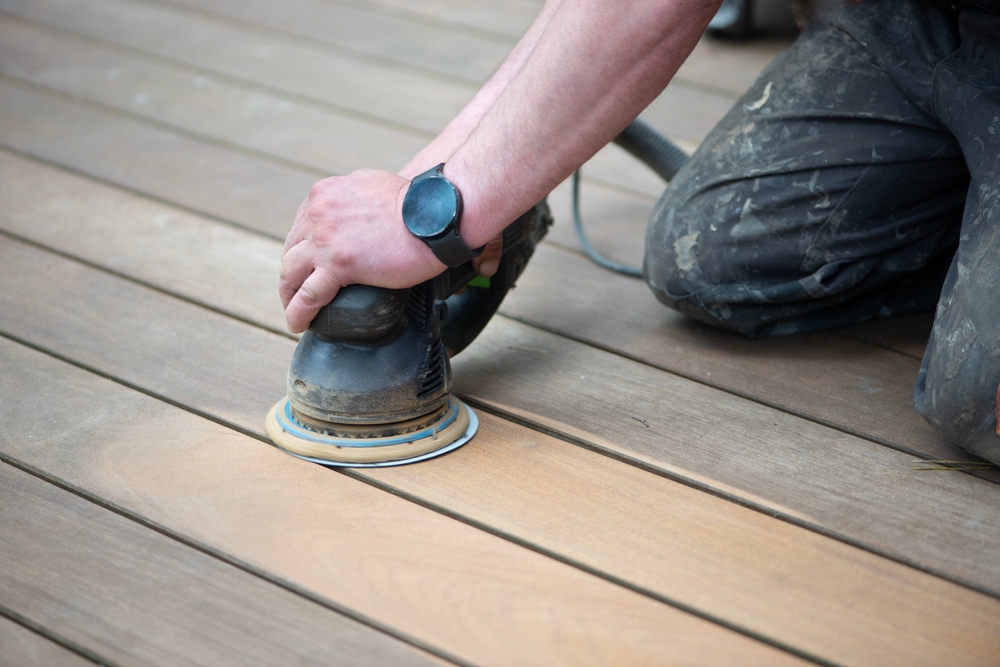
The process starts with an assessment of the floor’s condition, followed by sanding in multiple passes using progressively finer grits to strip the old finish and level the surface. Then comes optional staining, followed by two to three coats of finish with drying time between each coat. The final result depends heavily on how carefully each step is executed — rushing the grit progression or applying finish before a coat is fully dry leads to problems that are hard to fix after the fact.
Can My Nassau County Floors Still Be Refinished, or Do They Need to Be Replaced?
This is one of the most common questions we hear, and the answer is almost always more optimistic than homeowners expect.
Solid hardwood floors — the kind found in most Nassau County homes built between the 1940s and 1980s — are typically three-quarters of an inch thick. That’s enough wood to be refinished multiple times over the course of a lifetime. Most floors in that era have significant life left in them, even if they look rough on the surface. Scratches, dullness, and uneven color are almost always surface-level problems that sanding resolves.
The floors that genuinely can’t be refinished are ones with structural damage — deep gouges that go through the wear layer, significant water damage that has warped or buckled the boards, or floors that have already been sanded down to the point where there’s not enough material left. That last scenario is less common than people assume, especially in homes where the floors have been carpeted for years. Carpet, as unglamorous as it is, actually protects the hardwood underneath. We’ve pulled up carpet in Nassau County homes and found floors in remarkably good condition — floors the homeowner had no idea were there.
If you’re not sure whether your floors are candidates for refinishing, the right move is to get an honest assessment before assuming the worst. A knowledgeable contractor can tell you quickly whether you’re looking at a refinishing job or something more involved.
There’s also a cost dimension worth understanding. Refinishing is dramatically more affordable than full replacement — industry data puts refinishing in the range of $2 to $8 per square foot, while new hardwood installation runs considerably higher. For a Nassau County homeowner with a home valued at $700,000 or more, protecting and restoring original hardwood floors is almost always the smarter financial move, not just the aesthetically preferable one.
What Should I Do to Prepare My Home for Hardwood Floor Refinishing?
Preparation makes a real difference in how smoothly a refinishing project goes, and most of it falls on the homeowner before the crew arrives.
The biggest task is furniture. Everything needs to be off the floor — not just moved to one side of the room, but fully cleared. If you have heavy pieces you can’t move yourself, ask us about it ahead of time. We move furniture as part of the project when needed, which removes one of the bigger logistical headaches for homeowners, particularly in older Nassau County homes where large dining room sets and bedroom furniture have sometimes been in place for decades.
You’ll also want to remove any area rugs, floor vents if accessible, and anything stored in closets with hardwood floors. Pets need to be out of the home during the work and for at least 24 to 48 hours after the final coat — both for their safety and to protect the finish from paw prints and scratches before it has a chance to harden.
Plan for some level of disruption to your daily routine. The sanding phase produces noise and some dust even with containment systems in place. The finishing phase requires good ventilation — windows open, fans running — and the fumes from oil-based finishes in particular mean most families choose to stay elsewhere for at least the first night after the final coat. Water-based finishes are lower-odor and allow for faster re-entry, which is worth discussing with us if staying out of the house is a concern.
One thing that catches people off guard: the floors will look and smell done before they actually are. Walking on them too early, dragging furniture back in, or letting pets run on them before the cure period is complete can leave permanent marks in a finish that’s otherwise perfect. The cure window is the chemistry of the product doing what it needs to do. Respecting it is the difference between floors that look great at Thanksgiving and floors that already show wear by the time the dishes are cleared.
Ready to Book Hardwood Floor Refinishing in Nassau County Before the Holiday Rush?
The Thanksgiving window is real, and it closes earlier than most people expect. If your floors need refinishing and you want them guest-ready by the holiday, the time to act is now — not after you’ve thought about it for another two weeks.
The good news is that Nassau County homes, with their original hardwood floors and solid construction, are almost always excellent candidates for refinishing. The process is straightforward when it’s handled by someone who knows what they’re doing, and the result — floors that look the way they did when the house was new — is worth every day of the project.
KO Floors, Inc. has been doing this work on Long Island for over 50 years. If you want a straight answer about whether your floors can be refinished, how long it will take, and what it will cost, reach out for a free, no-obligation estimate. You can call or text us directly at 631-872-8524. The schedule fills up fast this time of year — the sooner you’re on it, the better.