
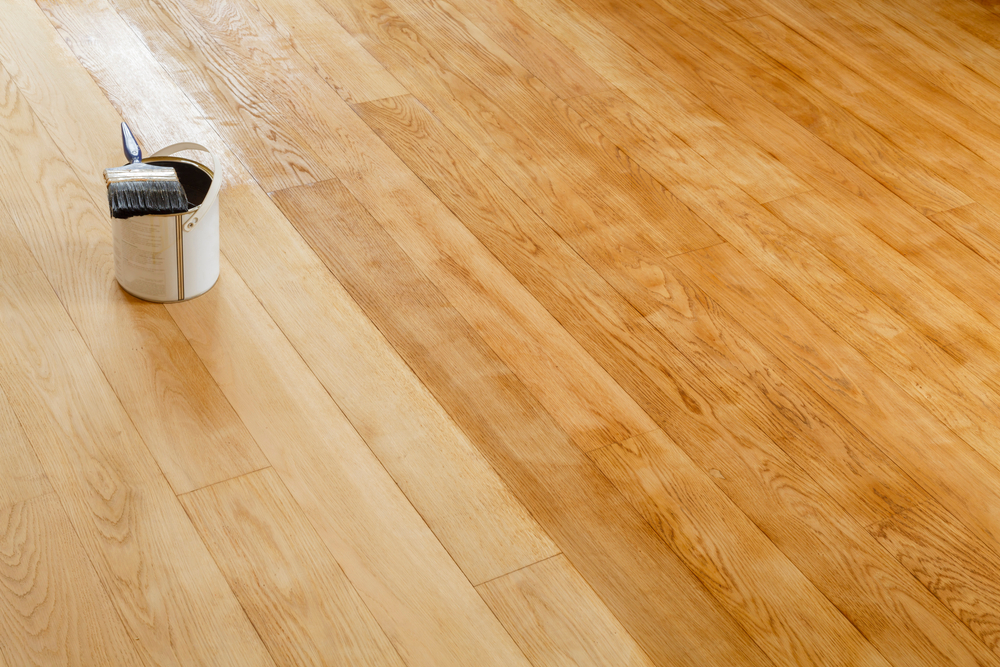
You pulled up the old linoleum, or you finally got sick of the scratches, and there it is: a maple floor. So you search for advice and find a pile of warnings. Maple blotches. Maple burns. Don’t stain it unless you like the blotchy look.
Some of that is true. None of it means your floor is a lost cause. Maple just plays by different rules than oak, and knowing those rules before you call anyone puts you in a much better position. Here’s what’s going on with your floor, starting with why maple is so picky.
Why Maple Refinishing On Long Island Requires Different Techniques Than Oak
Oak has open pores that drink stain evenly, which is why a lot of refinishing advice assumes you’re working with oak. Maple is a dense, tight-grained wood with very few of those pores, so stain soaks in unevenly. Soft spots in the grain pull in more pigment and the dense spots resist it. That’s where the blotchy look comes from.
It’s how the species behaves, not a mistake by whoever applied the stain. Hard maple is also tougher than oak, at roughly 1,450 on the Janka scale against about 1,290 for red oak. It’s the wood used on every NBA court. That hardness makes sanding slower and gives maple a habit of burning if the work is rushed.
Can You Stain Maple Floors Without Getting The Blotchy Look?
Yes, but not the way you’d stain oak. If someone tells you maple can’t go darker, they’re skipping a step. If someone tells you to stain it the same as everything else, they’re skipping a different one.
There are really three routes to color. A conditioner or washcoat goes down first to even out how the wood absorbs stain, and it helps most with lighter tones. A gel stain sits more on the surface and is generally the most dependable way to get a consistent tone. Dye goes in evenly too, though it can fade over time if the floor gets a lot of sun. And the fourth option is no stain at all, just a clear finish. Plenty of people end up happiest with natural maple once they see it.
Your finish matters as much as your stain. Oil-based polyurethane ambers maple noticeably, while water-based keeps it lighter and brighter. One of our customers told us she finally had the light wood floor she’d always wanted, and that came down to choices made before a single coat went on.
That’s why we put samples on your own floor before the work moves forward. A small chip from a showroom tells you very little about how your maple will take color. Your floor, in your light, tells you everything. If a sample looks wrong, we find out while it’s still a patch you can sand away, not a finished room.
Is Your Long Island Maple Floor Hard Maple, Soft Maple, Or Too Worn To Refinish?
This is the question we get most often from people who just bought an older Long Island home or opened up a kitchen remodel. Nobody knows what’s under the linoleum or carpet until it comes up. Sometimes it’s beautiful maple. Sometimes it’s original hardwood in one room and plywood in the next.
First, it matters whether it’s hard or soft maple. Soft maple is considerably softer than red oak, in the range of 700 to 950 on the Janka scale depending on the source. It dents more easily and needs to be handled differently. Don’t assume yours behaves like the hard stuff.
Second, how much floor is left to sand? The industry guideline, from the National Wood Flooring Association, is that a floor shouldn’t be sanded once less than 3/32 of an inch of wear layer remains. A contractor who measures that before promising you anything is protecting you. We’ll tell you straight if your floor can’t take another sanding, and we’ll tell you if you don’t need one. Sometimes a buff and recoat does the job. Other times the answer is restoring the floor with board repair, and where a few boards are past saving, we can replace and blend them so the floor reads as one continuous surface.
One more thing for older homes. If your house was built before 1978, ask any contractor about lead-safe work practices before sanding starts.
How We Refinish And Restore Maple Floors Across Nassau And Suffolk Counties
We’re KO Floors, Inc., based in Huntington Station, and we work throughout Nassau and Suffolk Counties. Our recent jobs have ranged from homes to restaurants in Huntington. A refinish with us starts with a conversation at your house, where we look at the floor, check what’s left to sand, and talk through color before anything is decided.
From there, we handle the whole job, including moving your furniture out and back in. One customer said the only thing she had to arrange was a storage box. Our crews show up on time and keep the work area clean, and you get a straight answer if refinishing isn’t what your floor needs.
What Do Long Island’s Humidity Swings Mean For Your Refinished Maple Floor?
Long Island is hard on wood floors, and not because of any one storm. It’s the seasons. Summer humidity here regularly sits between 60 and 75 percent in July and August, and once the heat comes on in winter, indoor air can fall to 20 to 30 percent. The recommended range for hardwood is 35 to 55 percent year-round, so your floor spends a lot of the year outside it.
That’s why you’ll see thin gaps between boards in January that close up by summer. Those are normal. Cupping, where board edges rise, is a different problem and worth having looked at. A dehumidifier in summer and a humidifier in winter go a long way toward keeping the floor settled.
Timing matters for the refinish too. Spring and fall are easier on a floor than the middle of summer, when humidity can slow drying and curing. If you’re planning to sell, finish the floors well before you list. A finish needs time to cure, and last-minute refinishing sometimes shows.
People also ask how long a refinish should last. As a general guideline, many Long Island floors are refinished every seven to ten years, though foot traffic, pets and sun exposure change that. We don’t promise exact curing times over the phone, because they depend on the finish and the weather. What we do is lay out the timeline in writing before we start, so you know when furniture goes back and when you can walk on the floor. Whether you’re in Huntington Station, Babylon, Kings Park, Kensington or Lawrence, that plan is the same.
Should You Rent A Sander Or Hire A Long Island Refinisher For Maple?
Renting a drum sander for the weekend sounds like the smart move until you try it on maple. The wood is so hard that it can take heavy, patient passes to get started, and a sander left a second too long in one spot burns or leaves chatter marks you’ll see forever. Forums are full of DIYers who regret it. One source puts the cost of fixing a bad refinish at $3,000 to $8,000 on about 1,000 square feet, if it can be fixed at all. That’s the number to compare against a professional estimate.
If you hire, hire carefully. In Nassau County, home improvement contractors need a county license, so ask for the license number and write it down. Ask for proof of liability insurance and workers’ comp. Then get the scope in writing: the species, the color, the type of finish, the number of coats, the timeline and the payment schedule. Be wary of anyone who wants full payment up front.
Get two or three estimates, and be careful with the one that’s far lower than the rest, because it usually means something was left out. We don’t publish prices because every floor is different, but our estimates are free. We’d rather you compare us against other bids than guess.
Ready To Refinish Your Maple Floors On Long Island? Start With A Free Estimate
Maple takes more thought than oak, and it’s worth it. Plan the color with the grain in mind, choose a finish that fits the look you want, measure what’s left to sand, and be honest about whether you need a full refinish at all. Do those things and the blotchy-maple horror stories mostly stay stories.
If you’re looking at a maple floor somewhere on Long Island and aren’t sure what you’ve got or what it can handle, we’ll come take a look. Reach out to KO Floors, Inc. for a free estimate, and we’ll put samples on your actual floor before anything gets decided.