
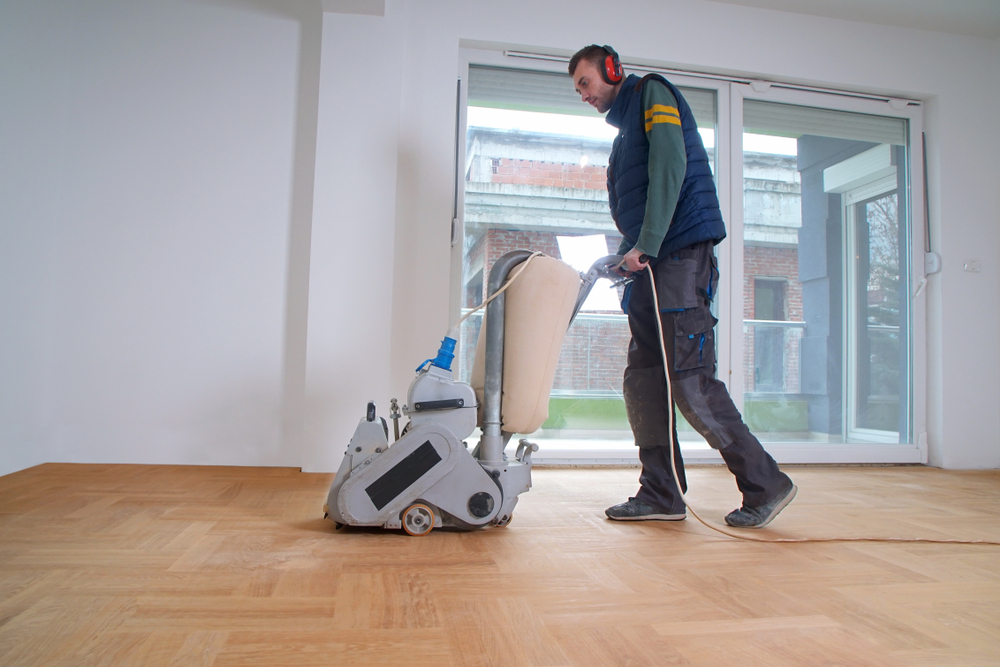
You’ve noticed your floors are looking dull. Maybe there are light scratches, a faded finish, or just that tired look that sets in after years of foot traffic. You’ve heard about sandless floor refinishing—faster, less disruptive, no dust everywhere—and you’re wondering if it’s the right move.
It might be. But it also might not be, and knowing the difference before you commit matters. We’ll walk you through exactly how sandless refinishing works, the conditions where it genuinely delivers, and the situations where it’ll leave you disappointed. No oversell, no runaround—just a straight answer so you can make the right call for your home.
What Is Sandless Floor Refinishing and How Does It Work?
Sandless floor refinishing—sometimes called no-sand restoration or screen and recoat—is a process that refreshes the surface of your hardwood floors without mechanically sanding them down. Instead of grinding away the existing finish, a technician uses a chemical etching solution to lightly abrade the surface, which allows a new coat of finish to bond to what’s already there.
The result is a floor that looks cleaner, shinier, and more protected—without the multi-day disruption of a full sand job. Most no-sand restorations complete in six to eight hours, and you can typically walk on the floor carefully within a few hours. Normal use resumes within 48 to 72 hours, depending on the finish used.
It’s a genuine option—just not an unlimited one. The process works on the finish layer, not the wood itself. That distinction is everything.
When Sandless Refinishing Actually Makes Sense
The clearest way to think about it: are you trying to fix the finish, or are you trying to fix the wood? Sandless refinishing is the right answer when the wood itself is still doing its job—when the scratches and dullness live in the finish layer, not in the boards underneath.
If your floors have light surface scratches, a worn or cloudy topcoat, or just lost their luster over time, sandless refinishing can bring them back without the mess or expense of full sanding. It’s also a smart choice for floors that have already been sanded once or twice before. Most hardwood floors can only be sanded three to five times in their lifetime before the wood becomes too thin to sand again. Sandless refinishing doesn’t remove any wood at all, which makes it a practical option for preserving what’s left.
This matters more in Nassau County, NY than most places. The average single-family home here is about 73 years old—most of them built during the post-WWII boom when red oak hardwood was the standard flooring material. If you’re living in a home from the 1950s or 1960s, there’s a real chance those original red oak floors have already been through at least one full refinishing. Sandless refinishing might not just be the more convenient option—it could be the one that keeps your floors viable for another decade.
Cost is also a factor worth naming honestly. Sandless refinishing typically runs 30 to 50 percent less than full sanding and refinishing. For floors that qualify, it’s a meaningful savings without meaningful sacrifice.
When Sandless Refinishing Falls Short
Here’s where most contractors go quiet, and where we’d rather just be straight with you.
Sandless refinishing has a short list of hard limits, and if your floor runs into any of them, the process won’t give you what you’re hoping for. Deep scratches and gouges that reach into the wood itself won’t disappear—the new topcoat will sit over them, not fill them. Pet stains that have soaked through the finish into the boards won’t be covered. Cupping, warping, or boards that have buckled over time are structural problems that no surface treatment can correct.
There’s also a compatibility issue that doesn’t get talked about enough. If your floors were ever treated with a wax-based product or an oil-based conditioner—things like tung oil or linseed oil—a new finish applied over the top won’t bond properly. It can peel, bubble, or look uneven within months. A legitimate contractor checks for this before recommending anything.
And then there’s the color question, which is probably the most common source of confusion. Sandless refinishing cannot change the color of your floors. The process applies a clear protective topcoat over the existing finish—whatever color your floors are now is the color they’ll stay. If you want to go grey, go lighter, or make any meaningful color change, sandless refinishing isn’t the path. That requires full sanding down to bare wood.
This is worth saying plainly because a lot of Nassau County, NY homeowners searching for sandless refinishing are also searching for grey stain colors or ways to lighten their floors at the same time. Those are two different projects, and knowing that upfront saves you from a result you didn’t want.
Red Oak Hardwood Stain Colors: What Nassau County Homeowners Are Actually Working With
If your home was built between the 1940s and 1970s—which describes most of Nassau County’s housing stock—you almost certainly have red oak hardwood floors. Red oak was the dominant flooring material for Long Island’s post-WWII construction, and it’s still under foot in hundreds of thousands of homes across the county.
Red oak is a beautiful wood, but it has one characteristic that catches homeowners off guard: a natural pink undertone. Without the right stain selection, that pink can pull through the finish in ways that feel dated or orange-toned—especially if a clear oil-based sealer was used at some point. Understanding how stain interacts with red oak is the difference between a floor that looks modern and one that looks like it hasn’t been touched since 1994.
Grey Hardwood Floor Stain Colors on Red Oak: What You Need to Know
Grey floors have been popular for years, and plenty of Nassau County, NY homeowners want them. The challenge is that red oak and grey stain don’t always cooperate. The pink undertones in red oak can interfere with grey pigments, pulling the final color in unexpected directions—sometimes toward lavender, sometimes toward a muddy brown-grey that looks nothing like the sample.
White oak takes grey stain more predictably because it doesn’t carry the same pink tones. If you have white oak floors, grey is a straightforward conversation. If you have red oak, it’s a more involved one.
That said, grey on red oak is achievable—it just requires the right products and the right approach. Some contractors use a blend of Duraseal Ebony and Bona White to neutralize the pink before the grey reads true. Others use Rubio Monocoat Fumed, which works by reacting with the tannic acid naturally present in the wood, causing it to shift toward grey organically rather than just coating over the pink. Both methods require full sanding to bare wood first. There’s no shortcut here—and any contractor who tells you sandless refinishing can get you a grey floor is telling you something that isn’t true.
The other thing worth knowing: as of 2025, grey floors are reportedly declining in popularity, with warmer honey and teak tones coming back into style. That doesn’t mean grey is wrong for your home—your floor, your choice—but it’s worth knowing before you commit to a color that’s trending in the other direction. We’re happy to walk through stain samples with you before anything gets decided.
Eco-Friendly Hardwood Floor Finish Options Worth Knowing About
Whether you’re going with sandless refinishing or full sanding, the finish you choose matters—not just for durability, but for what you and your family are breathing during and after the job.
Traditional oil-based polyurethane releases roughly 450 grams of VOCs per can. Water-based alternatives cut that down to around 200 grams. The difference is real, especially in a closed-up house during winter, when Nassau County, NY homes aren’t exactly well-ventilated. The EPA has noted that indoor air quality can be two to five times worse than outdoor air—finish application is one of the contributors.
For families with young children, pets, or anyone with respiratory sensitivities, there are genuinely better options now. Rubio Monocoat contains zero VOCs—no harsh fumes during application, no off-gassing afterward. It bonds at the molecular level with the wood fiber, which means it doesn’t sit on top of the surface the way traditional finishes do. Bona Traffic HD is another strong option: it’s GREENGUARD Children & Schools certified, which means it meets strict chemical emission standards, and it’s highly durable—often outperforming traditional finishes even after just 24 hours of curing.
The eco-friendly angle used to mean making a tradeoff on durability. That’s no longer the case. The better water-based and oil-modified finishes available today hold up as well as or better than what was standard a decade ago, and they do it without the fume load. If this matters to your household, it’s worth asking about specifically—we can walk you through what makes sense for your floor type and your situation.
How to Know Which Refinishing Option Is Right for Your Nassau County Home
Sandless floor refinishing is a real solution for the right situation—and an expensive disappointment for the wrong one. The honest answer is that no one should recommend a method without first looking at your floors, checking for prior treatments, and understanding what you actually want the end result to look like.
For Nassau County, NY homeowners with original red oak floors in older homes, the conversation is almost always more layered than it looks from the outside. Wood thickness, existing finish condition, color goals, and family health concerns all factor in. Getting the right answer upfront saves you from redoing the work in two years.
If you’re not sure where your floors stand, that’s exactly what a free estimate is for. We at KO Floors, Inc. have been working with Long Island homes for more than 50 years—we know the housing stock, we know the wood, and we’ll tell you straight what your floors actually need.