
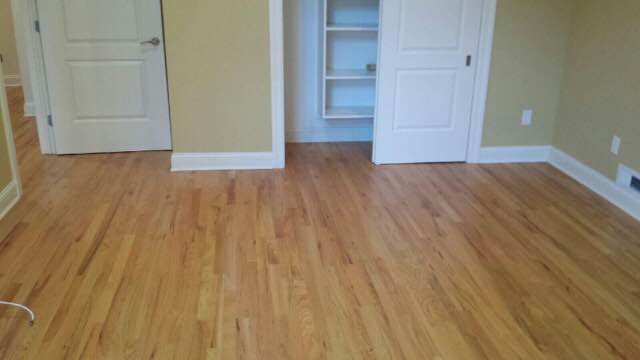
If you’ve been putting off your basement floor because you’re not sure what can actually survive down there, you’re not alone. Many Nassau County homeowners — especially those in south shore communities like Freeport, Oceanside, and Long Beach — have written off the idea of a nice basement floor entirely. One bad storm, one failed laminate installation, and suddenly it feels like the only option is bare concrete.
That’s not the full picture. The right flooring, matched to what your basement actually deals with, can be durable, attractive, and worth every dollar. Here’s what you need to know before you make a decision.
Best Flooring for Basements That Get Wet
The single most important thing to understand about wet basements is that “wet” isn’t one thing. There’s a big difference between a basement that floods during a major storm and one that just feels damp year-round from coastal air. The right flooring for each situation isn’t always the same material, and treating them as identical is how installations fail.
For basements with any real moisture exposure — whether that’s seasonal flooding, groundwater pressure, or the kind of persistent humidity that comes with living close to the water in Nassau County — you need a flooring material with a waterproof core, not just a water-resistant surface. That distinction matters more than most people realize.
Which Flooring Materials Actually Hold Up in a Wet Basement?
Luxury vinyl plank, commonly called LVP, is the most versatile option for wet basements and the one we recommend most often in Nassau County homes. It has a fully waterproof core, it can handle temperature swings without warping, and — this is the part most people don’t know — if your basement takes on water during a storm, LVP can often be unclicked, dried off, and reinstalled. That’s a meaningful advantage when you’re living in a market where nor’easters and tropical storms are a fact of life, not a rare event.
Ceramic and porcelain tile are also genuinely waterproof options. Tile doesn’t absorb moisture at all, and it holds up well in high-humidity environments. The tradeoff is that it’s harder underfoot, colder in winter, and more labor-intensive to install — especially if your slab has any unevenness to it, which we’ll address shortly.
Epoxy and polyaspartic coatings are a category that surprises many homeowners who associate them with garages. Modern coating systems — including custom metallic epoxy and decorative flake systems — create floors that are completely waterproof, seamless, and genuinely attractive. For basements that experience real flooding, a coating applied directly to the concrete slab eliminates the gap between flooring and subfloor where mold and moisture problems typically start. This is an area where our affiliated brand, Knockout Concrete Coatings, specializes — offering everything from four-layer epoxy flake systems with a polyaspartic topcoat to one-of-a-kind metallic epoxy floors that look nothing like a garage.
What doesn’t belong in a wet basement is solid hardwood — full stop. Solid wood expands and contracts with every moisture swing, and below-grade conditions will eventually cause it to warp, cup, or gap. There’s no installation technique that makes solid hardwood a safe bet in a basement that sees real moisture.
Best Engineered Wood Flooring for Basements
If you want the look and warmth of real wood in your basement, engineered hardwood is the answer — but only under the right conditions, and only when it’s installed correctly.
Engineered hardwood is not the same as laminate, and that’s a misconception worth clearing up. Laminate uses a photographic image layer to simulate wood grain. Engineered hardwood has a genuine hardwood veneer on top — the same species, the same grain, the same feel — bonded to a cross-layered plywood core. That core construction is what makes it dimensionally stable enough to handle the humidity swings that would destroy solid wood below grade.
That said, engineered hardwood is not unconditionally waterproof. It performs well in basements that have controlled humidity — typically between 35 and 55 percent relative humidity — but it is not the right call for a basement that floods, even occasionally. If your basement takes on water during storms, LVP or a concrete coating system will serve you better and cost you less in the long run.
When engineered hardwood is the right fit, installation matters enormously. The flooring needs to acclimate to the basement environment for at least 48 hours before it goes down, so it adjusts to the temperature and humidity of the space before it’s locked into place. A proper moisture barrier between the concrete slab and the flooring is non-negotiable. And the subfloor needs to be assessed before anything is installed — not assumed to be flat and dry just because it looks that way.
For plywood-core engineered hardwood specifically, the cross-grain construction provides better moisture resistance than HDF-core options, which is why we prefer it for below-grade applications when conditions are right. It’s a detail that doesn’t come up in most contractor conversations, but it’s the kind of thing that separates a floor that lasts from one that doesn’t.
Best Flooring for an Uneven Basement Floor in Nassau County
Here’s a problem that comes up constantly in Nassau County, and one that most basement flooring content completely ignores: the concrete slab isn’t flat. In homes built before 1980 — which describes the majority of Nassau County’s housing stock — basement slabs have often settled unevenly over decades. Cracks form, sections shift, and what you’re left with is a floor that no contractor wants to deal with.
If you’ve been told your basement floor is “too uneven” for flooring, that may not be the whole story. It depends on the material, the degree of variation, and whether proper prep work is part of the plan.
Can You Install Flooring Over an Uneven Concrete Basement Slab?
The short answer is: often yes, but not with every material and not without the right preparation.
LVP with a click-lock installation system can tolerate a certain degree of subfloor variation, but it has limits. If your slab has dips or high spots beyond what the product’s specifications allow, those imperfections will telegraph through the floor over time — you’ll feel them underfoot, and the locking joints can be stressed in ways that lead to separation. For more significant unevenness, self-leveling compound is applied to the concrete first, filling low spots and creating a flatter surface before the flooring goes down. It’s an added step, but it’s the right one.
Epoxy and polyaspartic coating systems are actually well-suited to imperfect slabs, provided the surface preparation is done correctly. The process starts with mechanical diamond grinding — a method that opens up the concrete surface, removes existing coatings or contaminants, and allows the coating to bond properly. The grinding process also helps identify and address surface irregularities before the coating goes on. It’s not a patch job; it’s a systematic prep that produces a durable, lasting result.
Tile is less forgiving of an uneven slab than LVP, but with proper leveling it can be installed successfully. The labor cost tends to be higher because the prep work is more involved.
What doesn’t work on a significantly uneven basement floor is any floating floor system installed without addressing the subfloor first. Skipping that step is a shortcut that creates problems — squeaking, movement, joint failure — that show up months after the installation is done.
Do You Need to Waterproof Your Basement Before Installing Flooring?
This is one of the most common questions we hear, and it’s one where the answer genuinely depends on what your basement is dealing with.
If you have active water intrusion — water seeping through foundation cracks, coming up through the slab, or entering through window wells — that needs to be addressed before any flooring goes down. Installing flooring over an actively leaking basement is a way to spend money twice. The flooring will eventually fail, and you’ll be back at square one, except now you have a remediation project on top of a flooring replacement.
If your basement doesn’t have active intrusion but has elevated ambient humidity — which is extremely common in Nassau County, particularly in communities close to the south shore bays and the Atlantic — a moisture barrier installed between the concrete and the flooring may be all that’s needed. Moisture testing before installation is a step we take seriously, because the results determine which approach is right for your specific situation. Assuming the slab is dry because it looks dry is a mistake that leads to mold growth and flooring failure down the line.
It’s also worth knowing that in New York State, any mold remediation project covering 10 square feet or more requires a contractor with a specific NYS Department of Labor license. If your basement has visible mold growth before the flooring project starts, that work needs to be done by a licensed remediator — not bundled into the flooring installation. Nassau County homeowners should also be aware that the county’s Office of Consumer Affairs administers Home Improvement Contractor licensing, and any reputable flooring contractor working in Nassau County should be able to confirm their HIC license. It’s a simple verification that tells you a lot about who you’re dealing with.
Choosing a Basement Flooring Installation Company in Nassau County
Getting basement flooring right in Nassau County means understanding what your specific basement is dealing with — not just picking a material because it looked good in a showroom or came in at the lowest quote. The moisture profile, the condition of the slab, the way the space is used — all of it shapes the right answer.
What we’ve seen over more than 50 years of combined experience on Long Island is that the installations that fail almost always skip a step: the moisture test, the subfloor prep, the acclimation period, the honest assessment of whether a space is actually ready for the flooring being proposed. The installations that last are the ones where those steps aren’t optional.
If you’re working through this decision for a home or commercial space in Nassau County, NY, KO Floors, Inc. offers free, no-obligation quotes and the kind of straightforward conversation that helps you figure out what you actually need — not just what’s easiest to sell.