
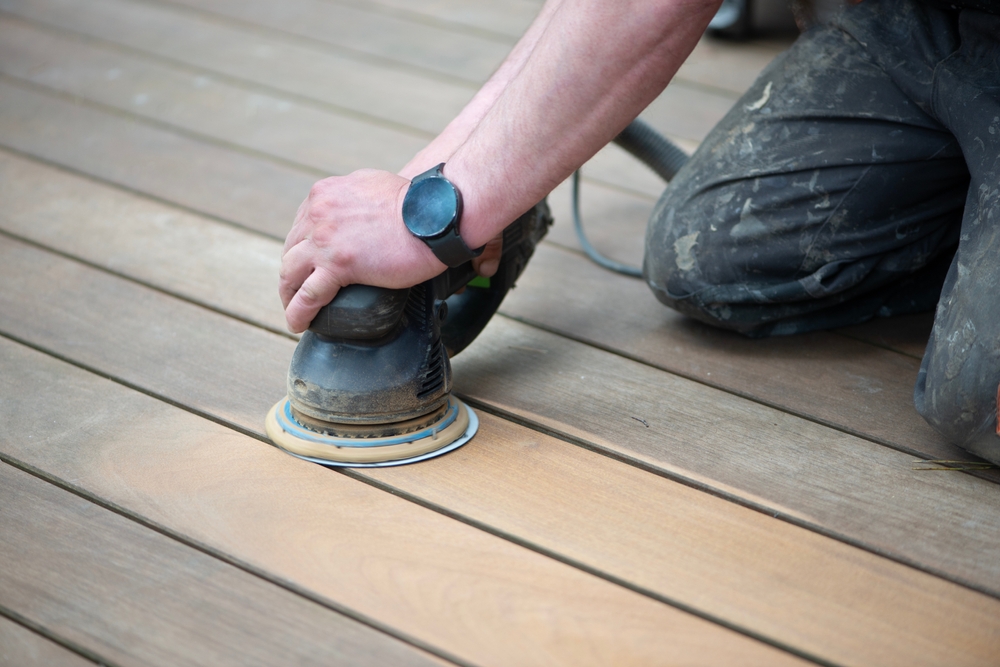
The short answer is: mostly, yes — but not completely, and any contractor who tells you otherwise is overselling it. Dustless floor sanding is a real process that captures the vast majority of airborne particles before they have a chance to spread through your home. The difference compared to traditional sanding is significant. But “dustless” doesn’t mean the same thing in every contractor’s hands, and that gap matters — especially in Nassau County, where the average home is over 70 years old and the floors have stories to tell. Here’s what’s actually happening when our crew shows up with dustless equipment, and how to know whether what they’re using is the real thing.
What Dustless Hardwood Floor Refinishing Actually Means
Dustless sanding doesn’t mean zero dust. It means the equipment is designed to capture dust at the source — right at the sanding head — before it becomes airborne and drifts through your home. Professional systems use industrial-grade vacuums with HEPA filtration, connected directly to the sander through sealed hoses. The captured dust routes into a containment unit, often a trailer parked outside. It never gets the chance to settle on your furniture, coat your window sills, or migrate into your ductwork.
The industry standard for a quality dustless system is roughly 95 to 99 percent dust capture. The best systems push closer to 99.8 percent. That remaining fraction — the 1 to 5 percent — is real, but it’s minimal. You might notice a faint haze in the air during active sanding. You won’t be wiping down every surface in your house for the next three days.
How the dustless sanding process works, step by step
Before any sanding starts, we do a pre-sanding inspection — checking for protruding nails, staples, or debris that could tear sandpaper and gouge the floor. That step matters more than most homeowners realize, because skipping it is one of the most common shortcuts low-end operators take.
Then comes something most contractors never mention to their customers: sealing the HVAC vents. Before sanding begins, the vents in the work area get sealed off. This is critical. Traditional sanding drives fine particles directly into ductwork, where they can circulate through the rest of your house for weeks after the job is done. A crew that can’t explain this step — or skips it — isn’t doing true dustless work, regardless of what their website says.
The sanding itself happens in multiple passes, moving from coarser grits to progressively finer ones. Each pass removes a layer of old finish or surface damage, working down to bare wood. The industrial vacuum runs continuously, pulling captured dust through sealed hoses to the containment unit outside. The sanding process is identical to traditional refinishing — what’s different is the containment system attached to the equipment.
After sanding, the floor is cleaned, and the finishing process begins: staining if you want a color change, then sealing, then the topcoat. Water-based finishes dry faster and have lower odor. Oil-based finishes take longer but are often preferred for their depth and durability. Either way, the dustless process applies only to the sanding phase — the finishing stages have their own dry times and ventilation needs that we’ll walk you through before the job starts.
The whole thing is straightforward when the crew knows what they’re doing. The problem is that “dustless” is an unregulated term. A contractor with a shop vac strapped to a belt sander and one with a sealed industrial HEPA system both call themselves dustless — but the performance difference is enormous. The former captures maybe 70 to 80 percent of dust. The latter captures 99 percent or more. That’s not a minor distinction when you’re talking about the air quality inside your home.
How to tell if a contractor is actually using real dustless equipment
This is the question most homeowners don’t think to ask until after they’ve had a bad experience. The term “dustless” appears in nearly every flooring contractor’s marketing on Long Island. It doesn’t mean they’re all using the same equipment — or that the equipment they’re using performs at the same level.
When you’re talking to a contractor, ask them specifically what system they use. A contractor who can describe their vacuum setup, explain how it connects to the sander, and tell you where the captured dust goes is operating at a different level than one who says “we use dustless equipment” and changes the subject. Ask whether they seal the HVAC vents before sanding. Ask what percentage of dust their system captures. These aren’t trick questions — they’re the basics of the process, and any experienced crew should answer them without hesitation.
Also ask for a written estimate. A detailed, written quote is a baseline expectation for any legitimate flooring contractor. Vague verbal quotes and pressure to sign quickly are red flags in any trade, but especially in one where the work happens inside your home over multiple days.
References and reviews matter too, but look for specifics. A review that says “Kevin’s crew was neat and professional — their equipment captured all the dust and residue” tells you something real. A generic five-star rating with no detail tells you almost nothing. In Nassau County’s market, where there’s no shortage of flooring contractors, the ones with detailed, named reviews from actual homeowners are the ones worth calling first.
Dustless sanding produces the same quality results as traditional sanding. The sanding itself is identical — the only difference is what happens to the dust. A clean working environment can actually improve the finish, because dust particles don’t settle into the wet topcoat the way they can when traditional sanding fills the air.
Wood floor sanding and staining in Nassau County’s older homes
Nassau County’s housing stock is older than most people outside the area realize. The average single-family home here is roughly 73 years old. That means a significant portion of the floors being refinished across communities like Garden City, Massapequa, Rockville Centre, and Great Neck were installed in the 1940s, 50s, and 60s — and many of them have never been properly refinished, or have been refinished multiple times with layers of old finish stacked on top of each other.
That history changes the math on dust. Older floors with multiple finish layers generate considerably more sanding material per pass than a floor with a single modern coat. The dustless containment system isn’t just a comfort feature in these homes — it’s doing real work, managing a significantly higher volume of material than it would on a newer floor.
Why Nassau County homes specifically benefit from dustless refinishing
Beyond the age of the floors themselves, there are a few things about Nassau County as a market that make dustless sanding more relevant here than in other parts of New York.
The homes are close together. Many Nassau County neighborhoods were developed in the postwar era with tight lot lines and limited space between houses. That means less opportunity for aggressive cross-ventilation during sanding — you can’t always throw every window open and let the air do the work. Dustless containment becomes more practical, not just more comfortable, in that kind of environment.
The real estate market here is also high-stakes. With median home values in Nassau County running well above $700,000, floor condition is a meaningful factor in how a home presents and what it sells for. Homeowners refinishing before a listing — which is a significant portion of the refinishing work done on Long Island every spring — don’t have the luxury of a botched job or a cleanup period that delays their timeline. Dustless sanding’s faster post-job cleanup and lower disruption profile fit that window better than traditional methods.
Long Island’s allergy seasons add another layer. Spring tree pollen and fall ragweed already push air quality concerns to the front of mind for many Nassau County families. Adding a significant volume of airborne hardwood dust to a home during peak allergy season is a genuinely bad idea for anyone with respiratory sensitivity. OSHA classifies hardwood dust as a respiratory hazard, and the health case for minimizing airborne particles during refinishing is real.
Families with pets feel this especially. Nassau County is a pet-heavy market, and pet owners are often the most motivated to choose dustless methods — both because animals are sensitive to airborne particles and because they want to return pets to the home as quickly as possible after the work is done.
Dustless wood floor refinishing: What to expect before, during, and after
Knowing what the process looks like from your side of it makes the whole thing less stressful. Before our crew arrives, you’ll want to clear the room of furniture — or confirm with us that we handle that as part of the job. We move furniture as part of our process, and we’re careful with it. That’s worth confirming with any contractor you hire, because it’s not universal.
During the sanding, expect some noise and some faint smell from the old finish being removed. The room will be closed off, vents will be sealed, and our crew will be working in a contained environment. You don’t need to leave the house, but most people prefer to stay out of the immediate work area. If anyone in your household has significant respiratory sensitivity, stepping out during the active sanding portion is a reasonable precaution even with dustless equipment — that remaining 1 to 5 percent of particles is still real, even if it’s minimal.
After sanding, the finishing stages begin. Dry times vary depending on whether you’re using a water-based or oil-based finish — water-based finishes can allow light foot traffic within hours, while oil-based finishes typically need 24 hours or more before you walk on them, and longer before furniture goes back. We’ll give you a specific timeline based on what’s being applied, not a vague estimate.
Once the job is done, there are a few practical things worth doing regardless of how good the dustless system was. Replace your HVAC filters — even with vents sealed, it’s good maintenance after any significant work in the home. Wipe down surfaces in adjacent rooms with a damp cloth before assuming everything is clean. Take a close look at the finished floor in good light before we pack up. Any reputable contractor will address concerns before they leave — and if something needs a follow-up visit, that conversation is much easier to have on the day of completion than a week later.
Floor sanding and refinishing done right: What Nassau County homeowners should take away
Dustless floor sanding is real, and it works — but it’s only as good as the equipment and the crew behind it. The term itself doesn’t guarantee anything. What matters is whether the contractor can explain their process, name their equipment, and answer straightforward questions about how they actually contain the dust. If they can’t, keep looking.
For Nassau County homeowners specifically, the stakes are higher than in a lot of markets. Older floors, higher home values, tight neighborhoods, and families with kids and pets all make the quality of the refinishing process matter more — not less. Choosing a contractor based on the lowest quote is a reasonable instinct, but it’s one that often costs more in the long run when the job has to be redone or the cleanup extends for days.
If you’re thinking about refinishing your floors and want to understand what the process would actually look like in your home, KO Floors, Inc. is happy to walk you through it — no pressure, no obligation, just a straight conversation about what your floors need and what the work involves.